Header: French + Tye
Architecture and interior design practice Templeton Ford has completed Clay Rise, a three-bedroom home in the bucolic village of West Hoathly, West Sussex. The house explores the relationship between local tradition and form through its tiered roofline and contextually driven material palette.
Shortlisted for the prestigious 2025 Manser Medal, Clay Rise is Templeton Ford’s debut project. Architect Andre Templeton Ford and stylist Jessica Templeton Ford launched the practice in 2025, following decades-long careers in leadership positions at award-winning international architecture offices and in creative direction, design, and the arts.
A contemporary take on the traditional Sussex home
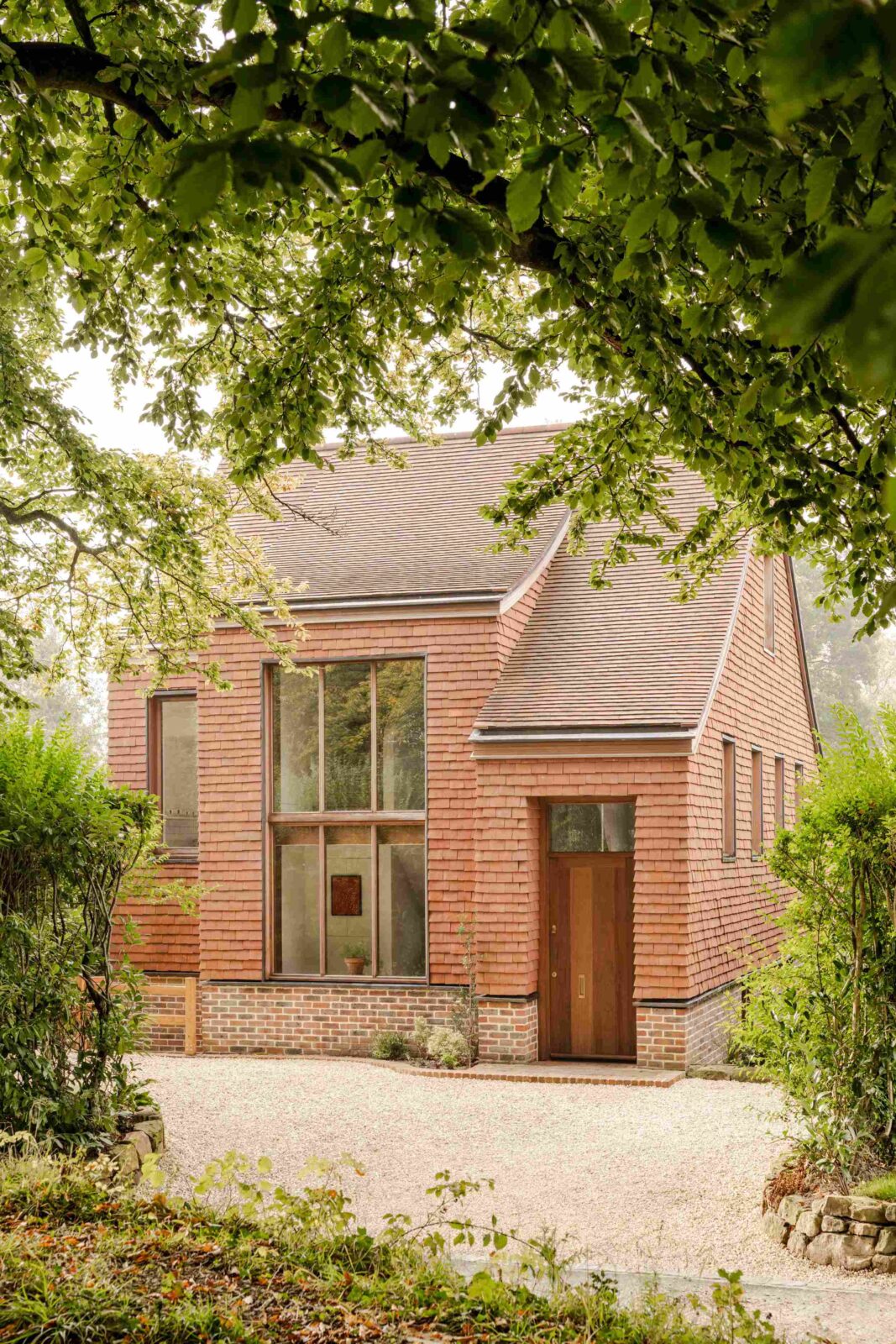
Clay Rise embodies many of Templeton Ford’s ideas: craftsmanship, materials, and place. The home is a highly site-specific work set on the neighbouring plot of Ford’s childhood home. West Hoathly’s built character (the clay-tiled cottages, handmade brickwork and rich tradition of craft) inspired and guided the selection of materials.
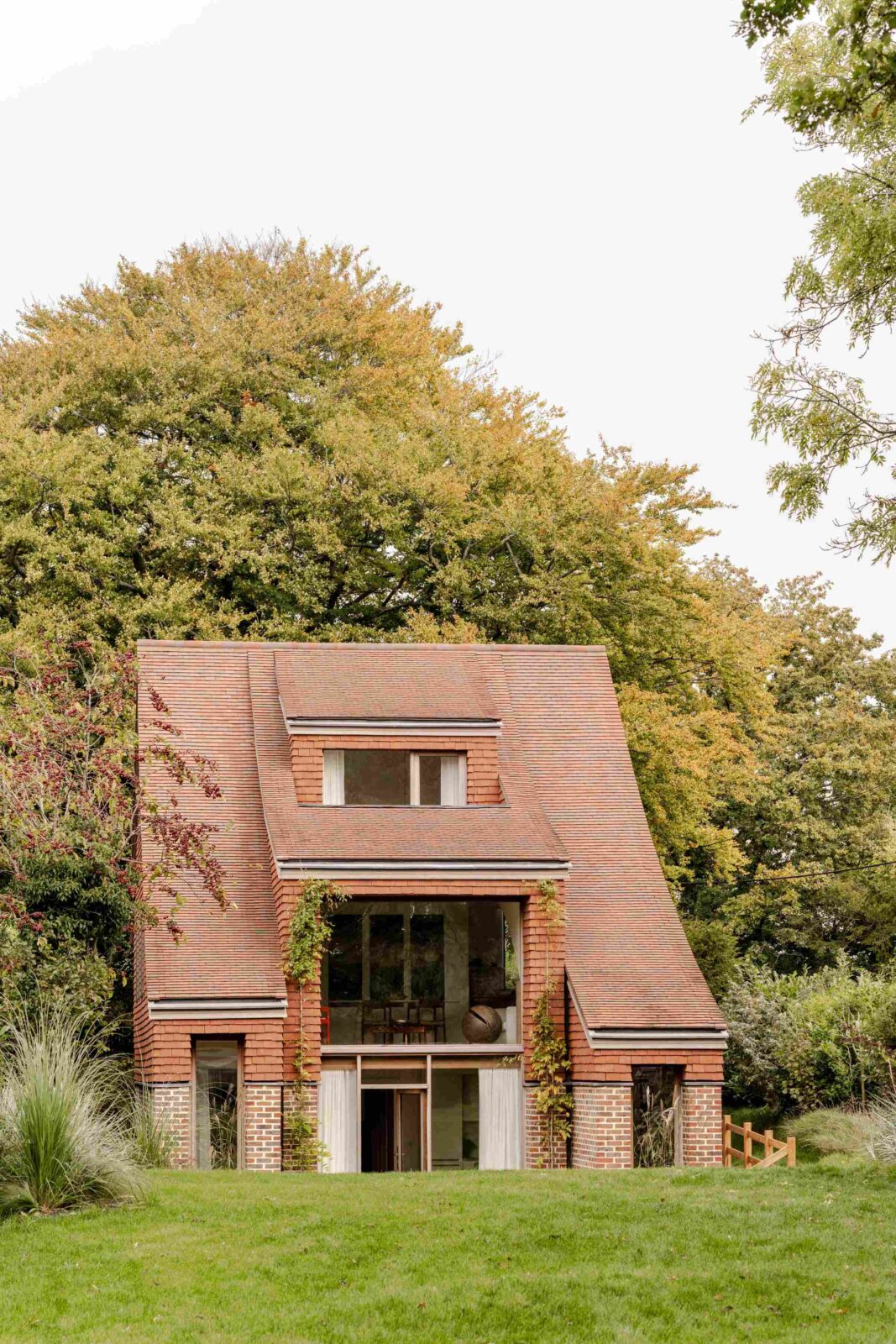
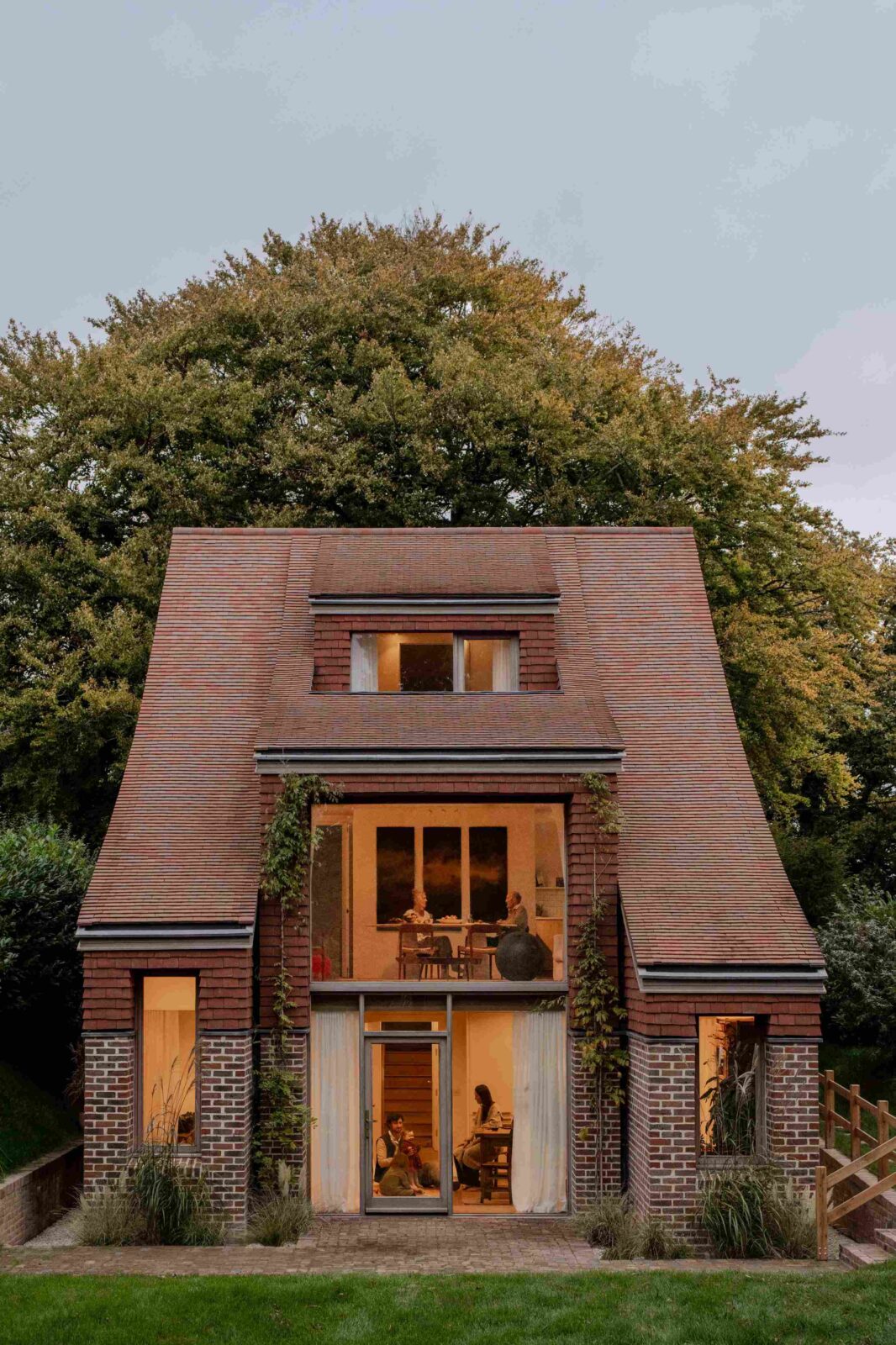
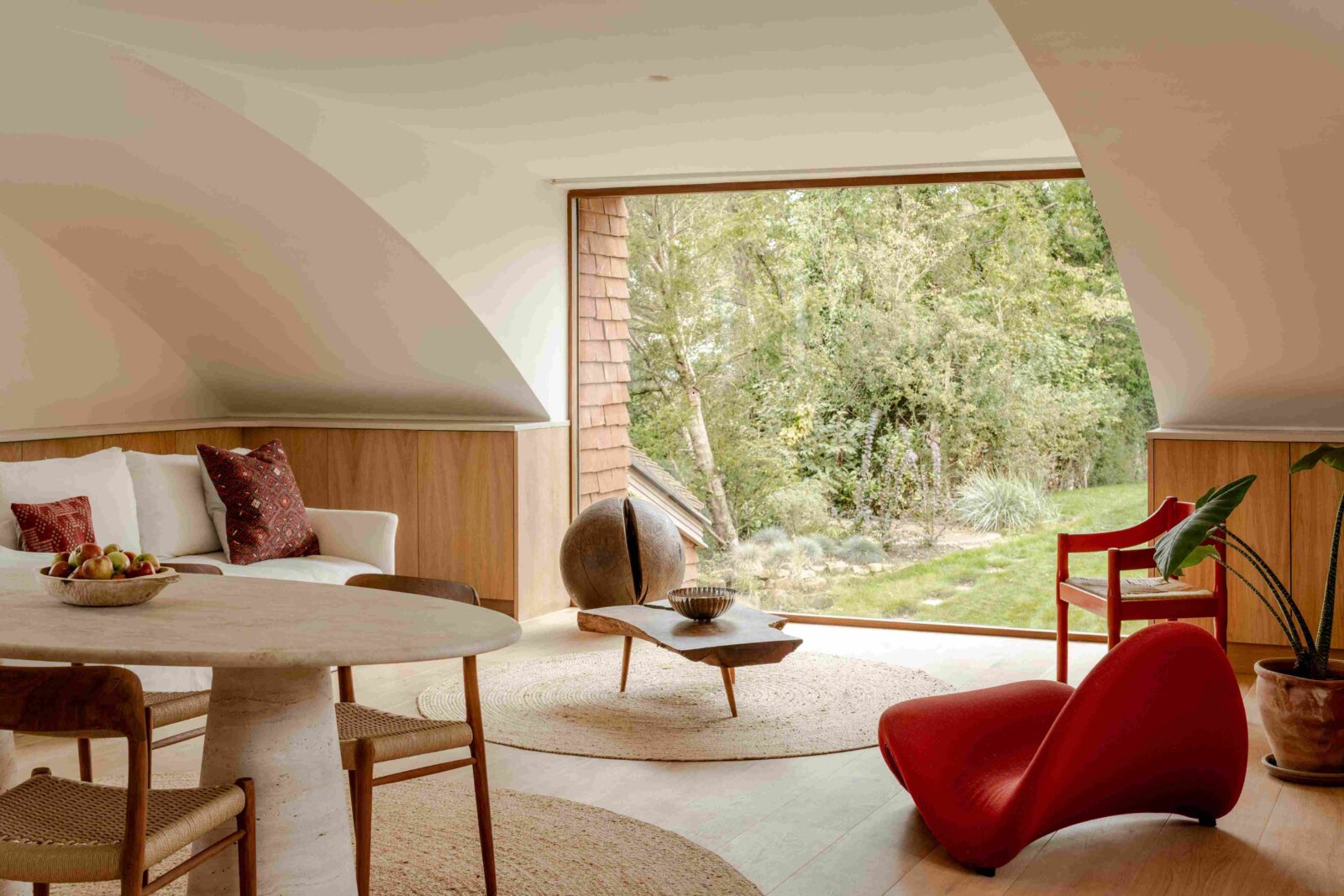
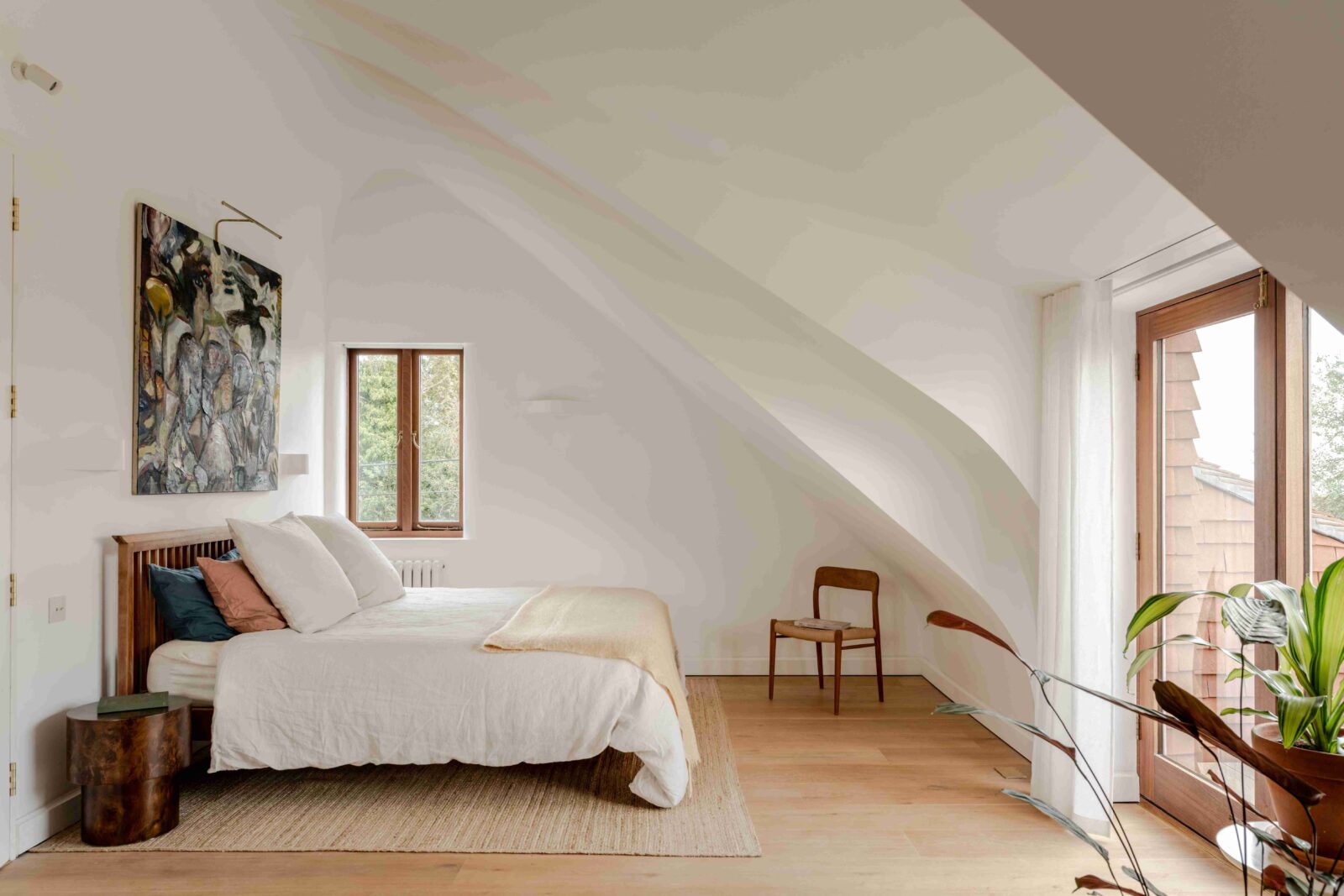
The house balances heritage and contemporary architectural expression, combining the solid forms of traditional Sussex brick homes with a curved, sloping roofline. Layered sweeping curves roll from the top of the pitch down to frame windows on all three floors, which overlook neighbouring fields and the South Downs in the distance.
Carefully chosen materials
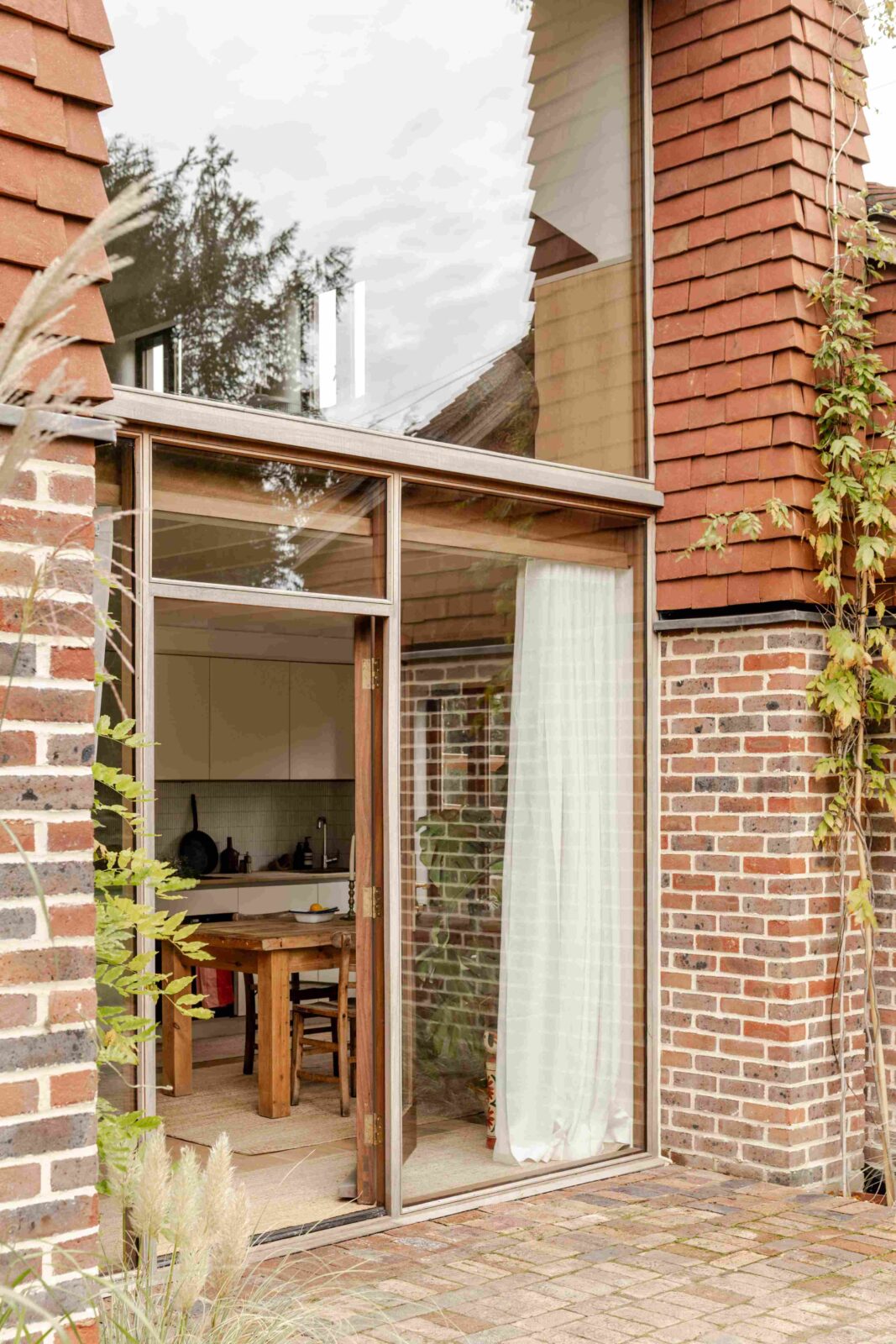
The material language of Clay Rise is inseparable from its place. The house is constructed from a prefabricated panelised timber frame system, chosen for precision, speed, affordability and environmental credentials, and was erected in just two weeks. Local bricks, made from the same clay originally found in the soil underneath Clay Rise, make up the external skin of the building. A datum line wraps around the home, where brick and red clay tiles meet. More bricks were used at the rear of the home, where the house has been lowered into its hillside position by 1.5 metres.
A house for a large family
By embedding Clay Rise deep into the site, Templeton Ford has created a split-level arrangement of floors inside and a natural grassy slope to the rear garden. It has the dual effect of creating a deeper slope to the rear, making way for a dramatic curved form.
Originally designed as a multigenerational family dwelling, the split-level floorplan allows the house to function as two independent spaces: a self-contained two-bedroom apartment on the ground floor and the generous main living quarters above, including the standout living room and kitchen and the main bedroom suite with far-reaching views.
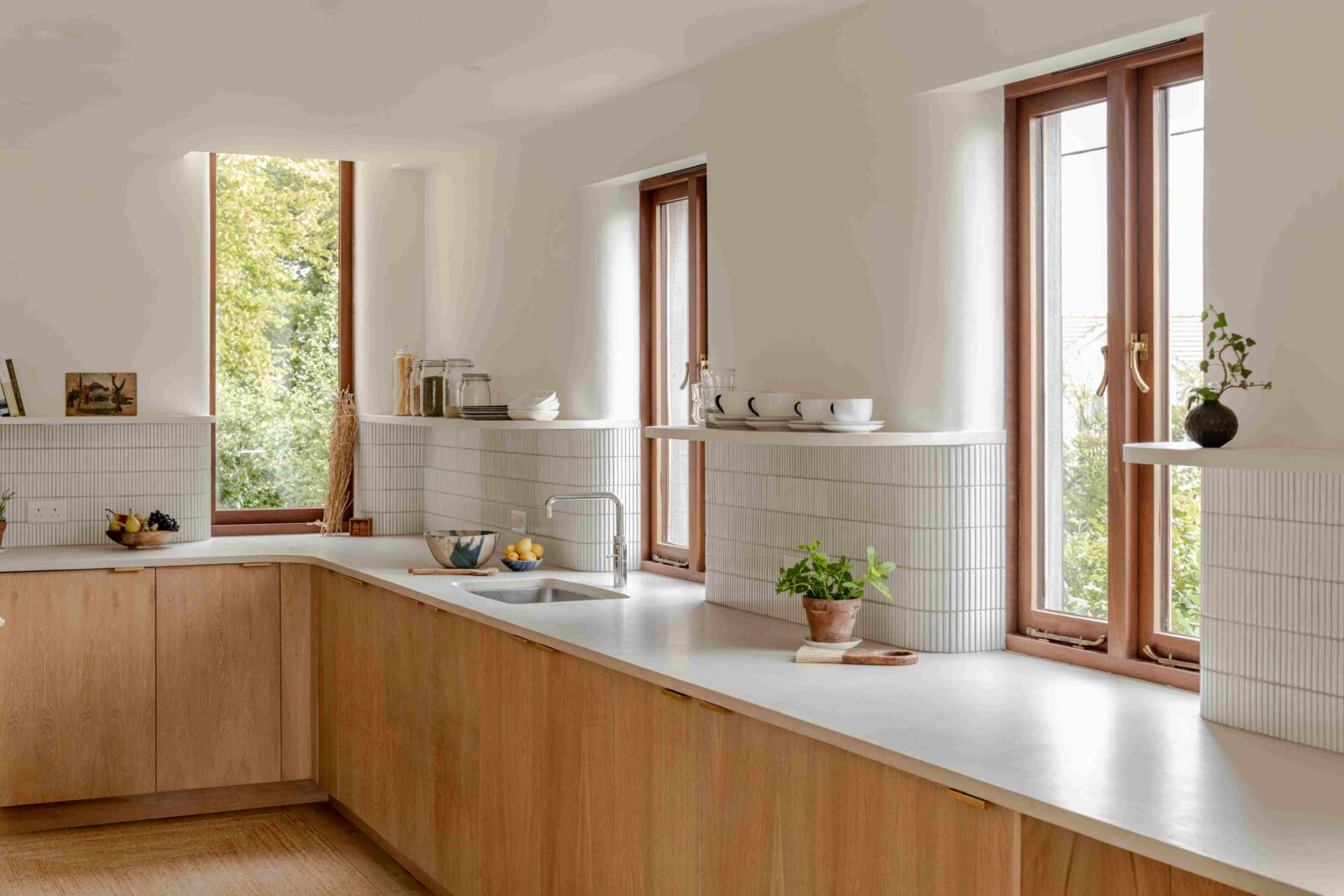
An interior of “bespoke and found” elements
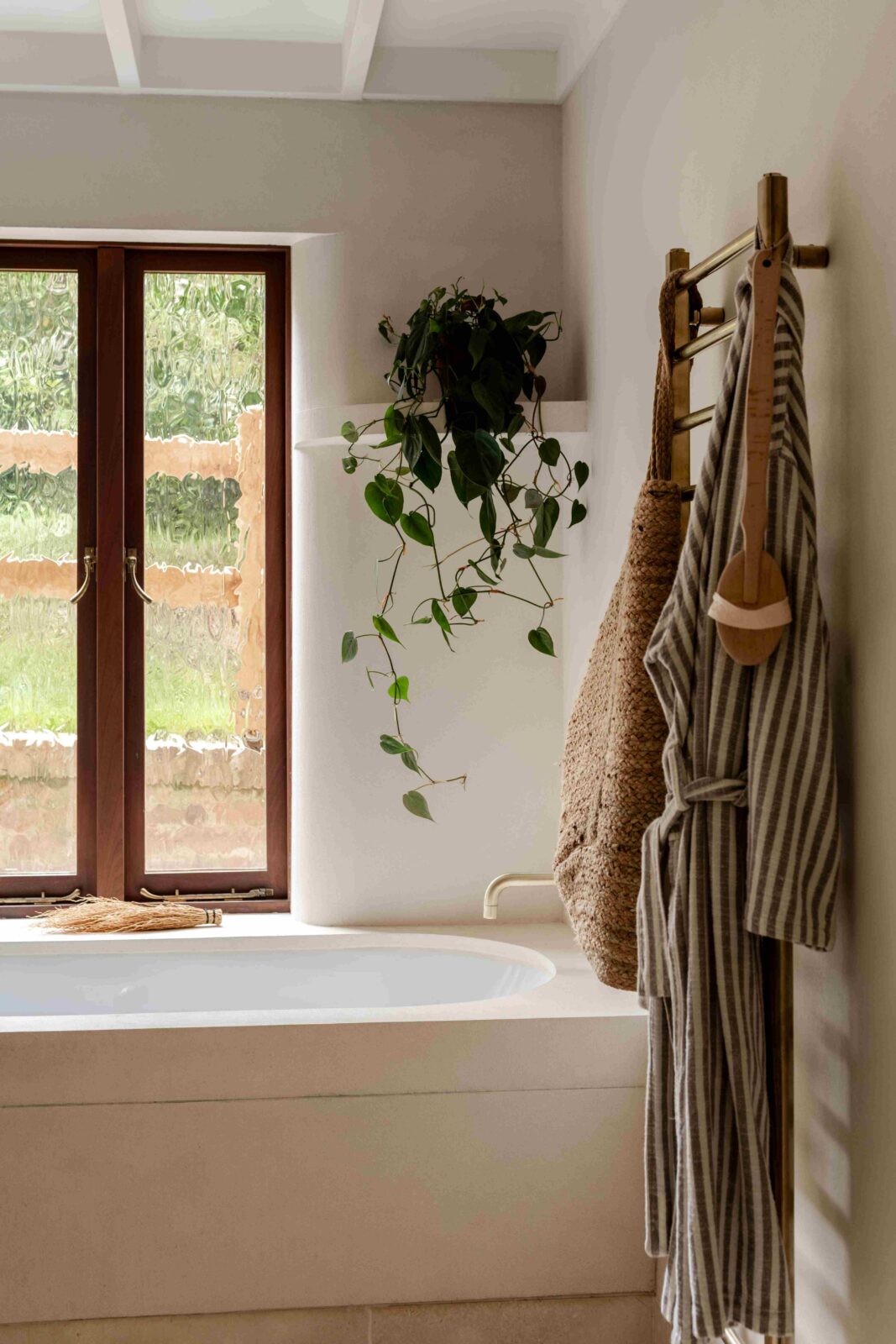
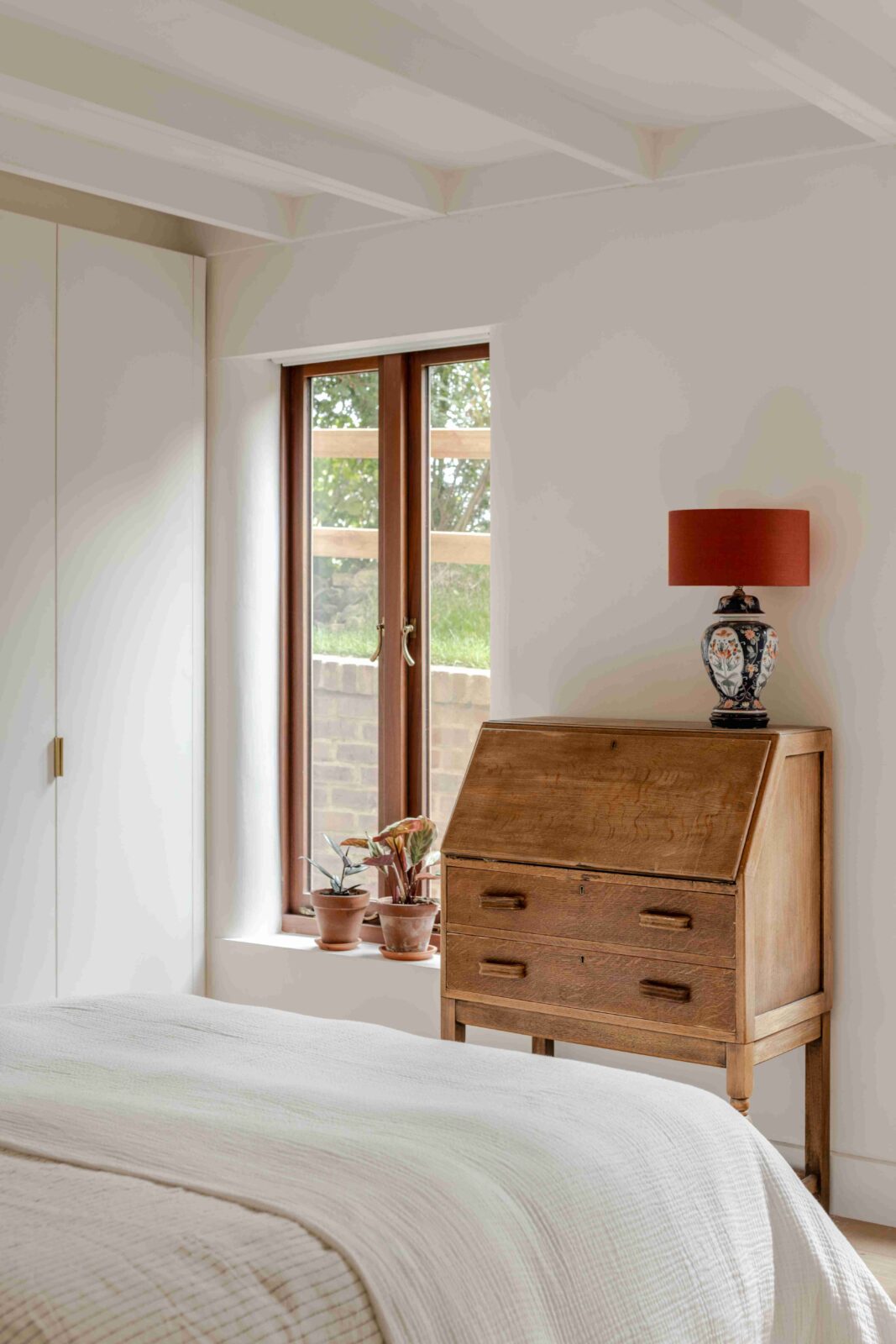
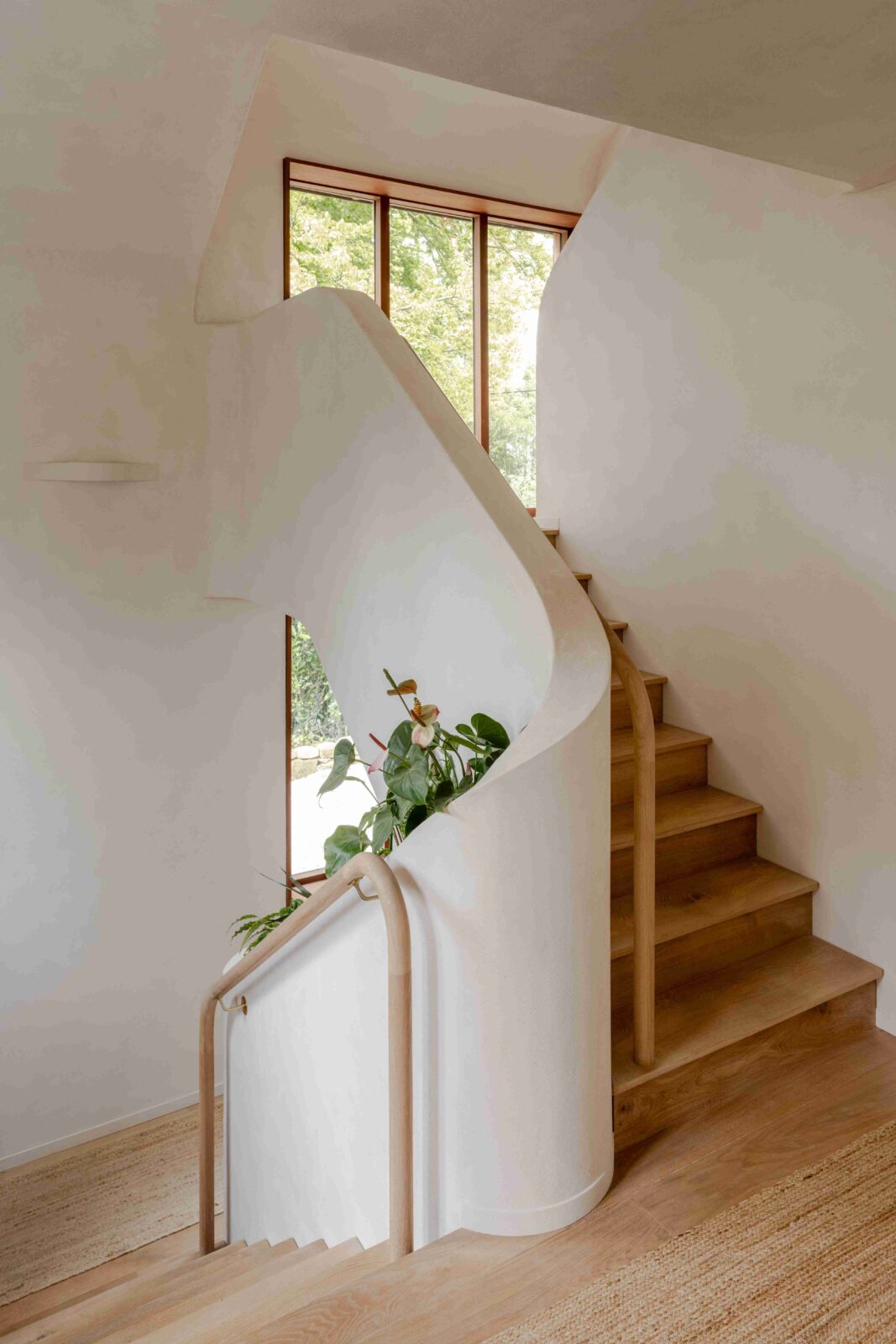
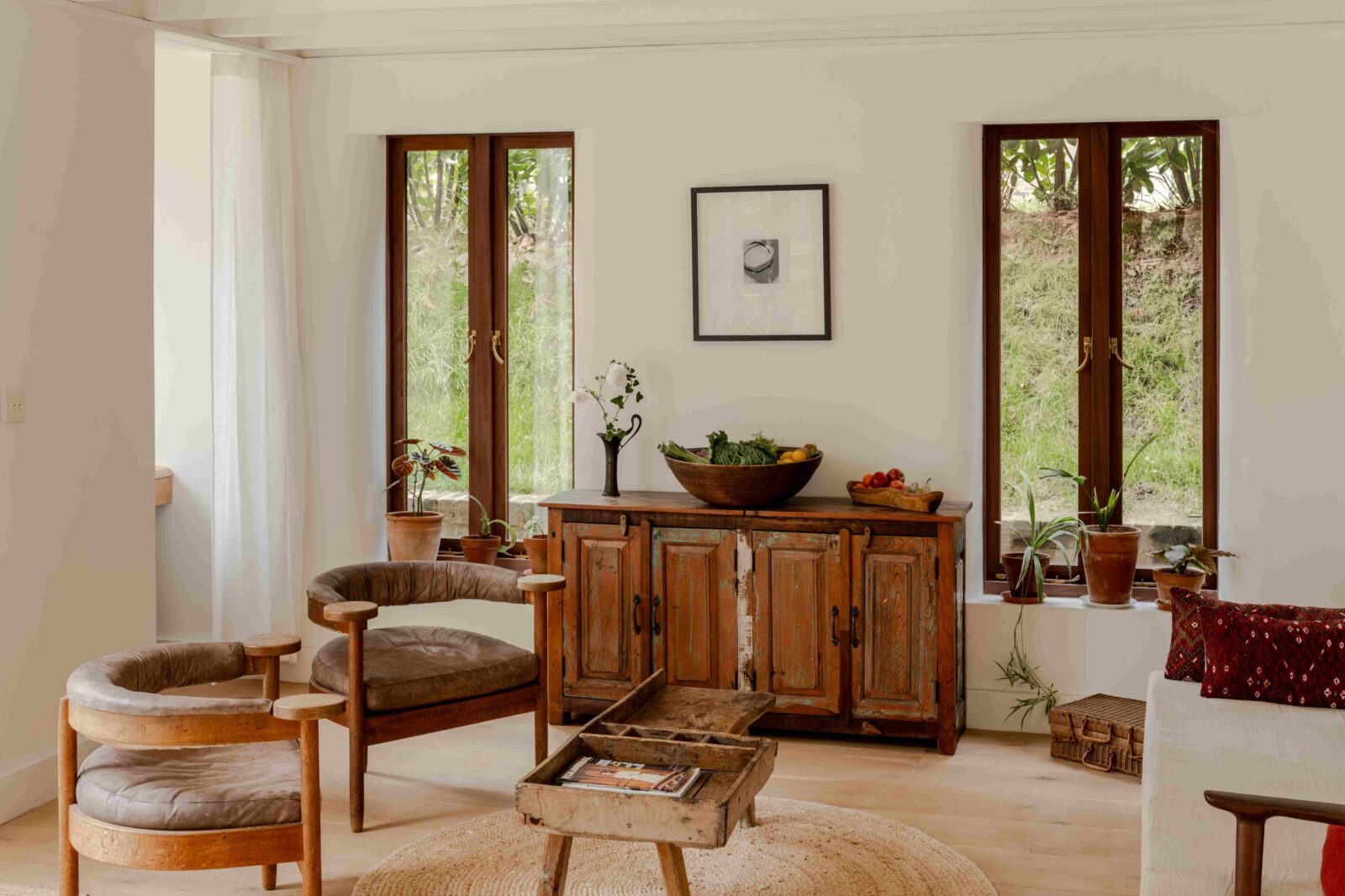
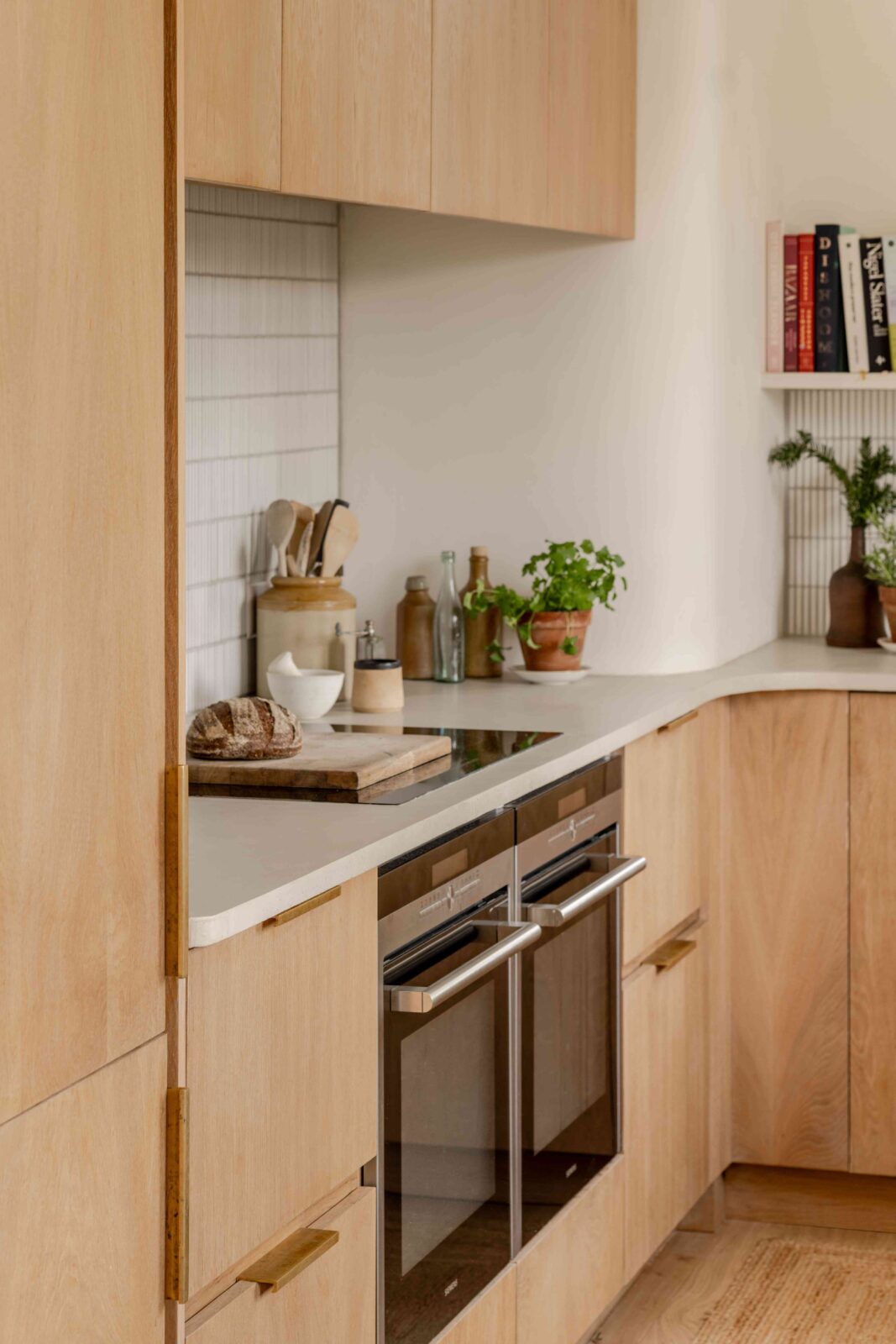
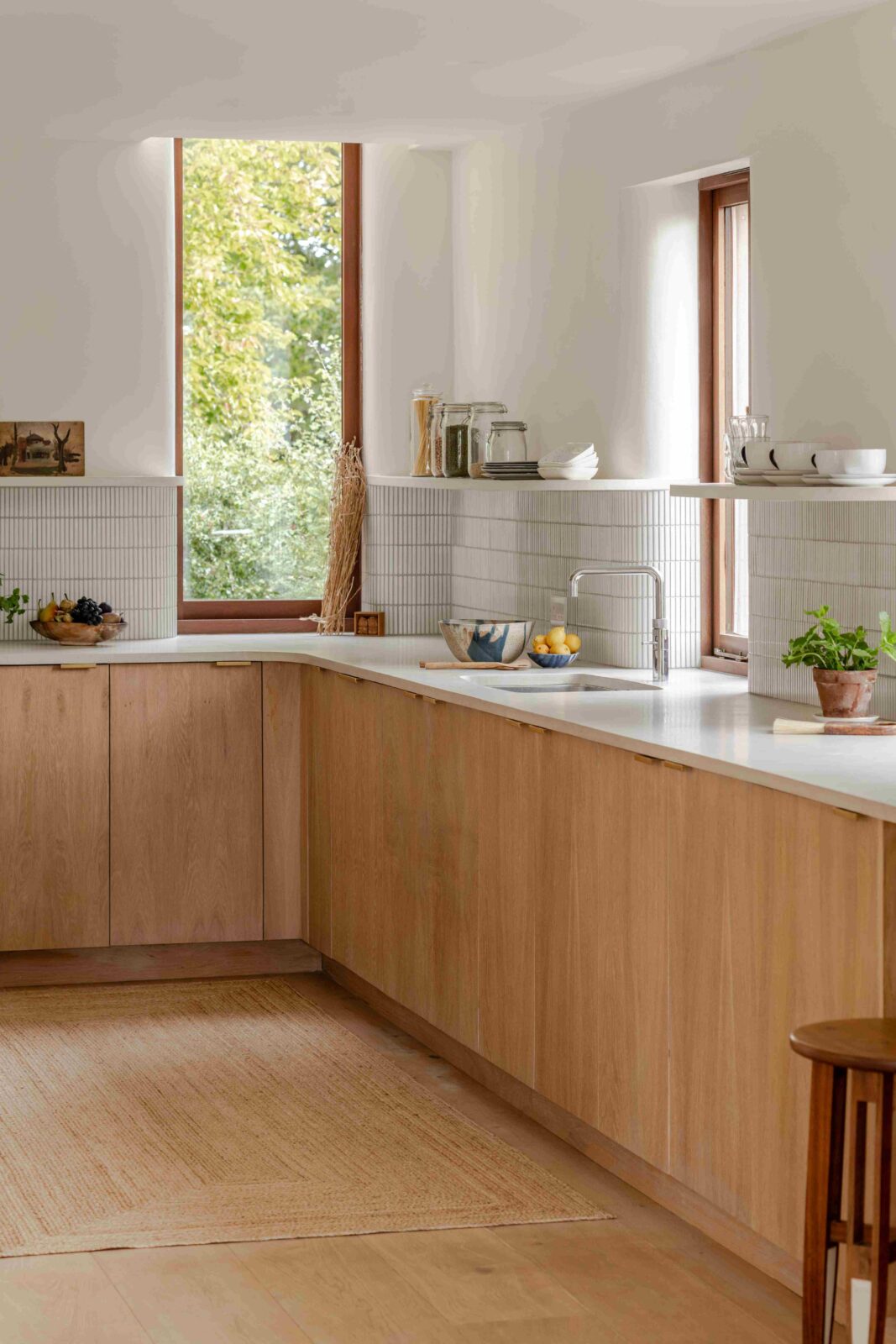
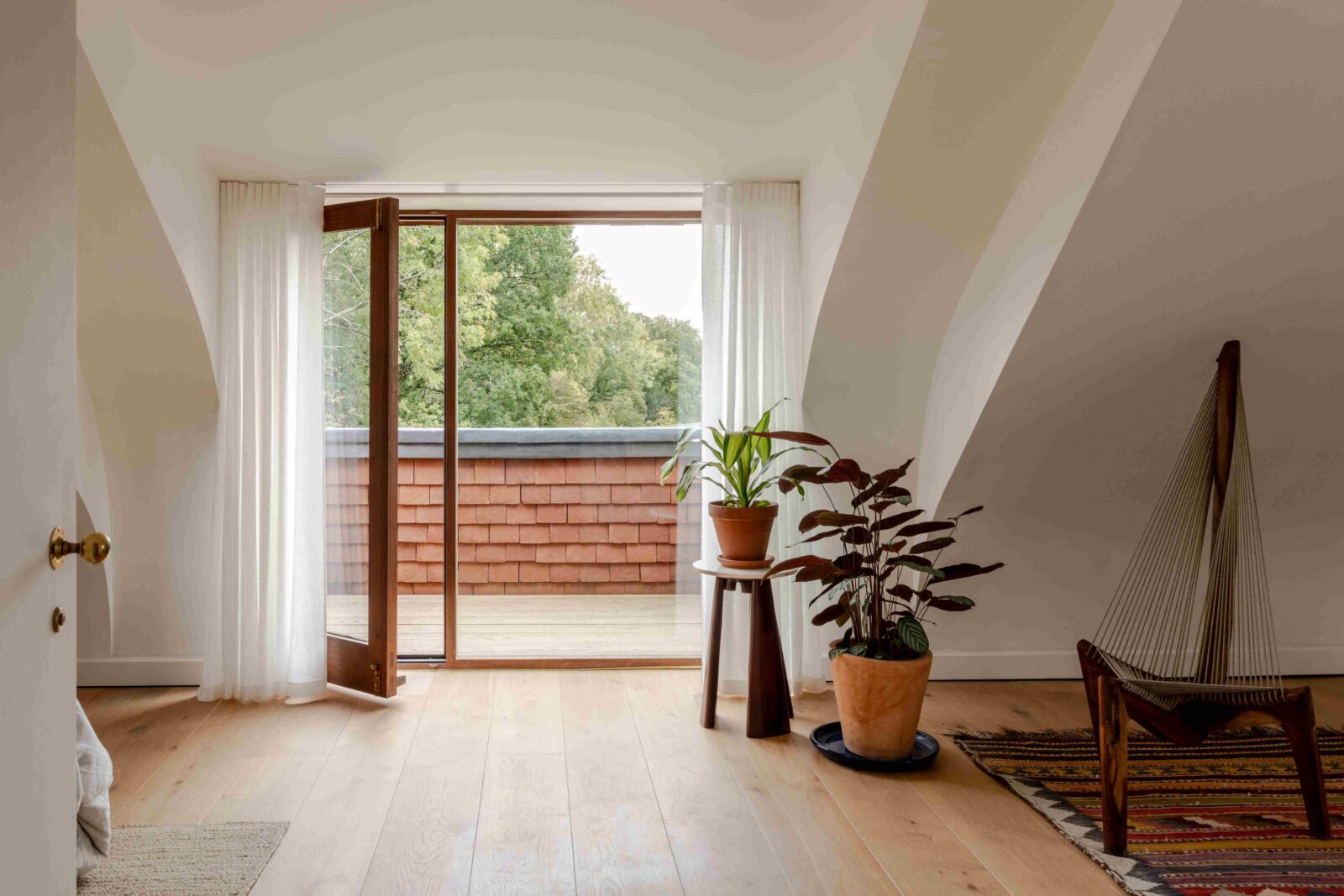
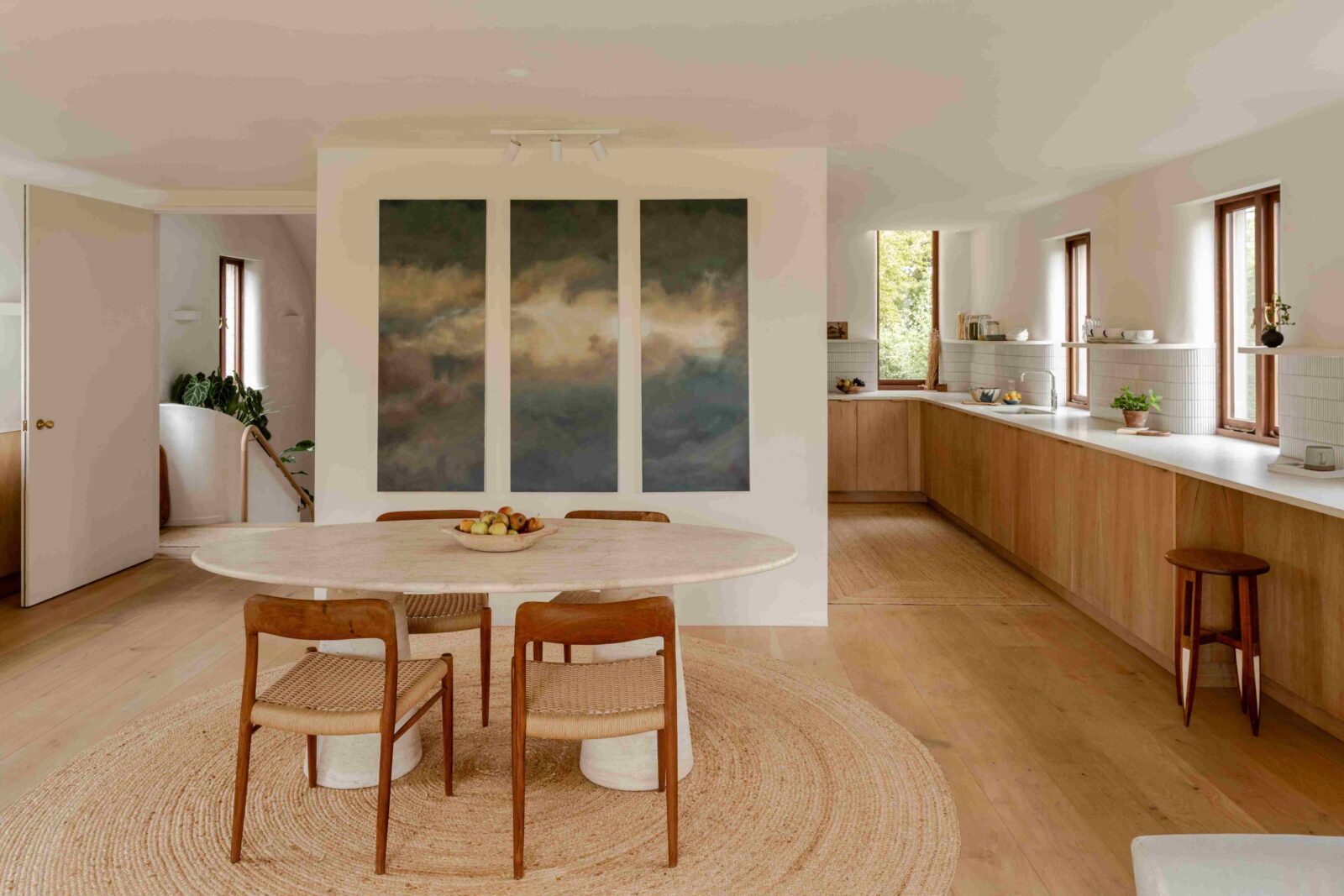
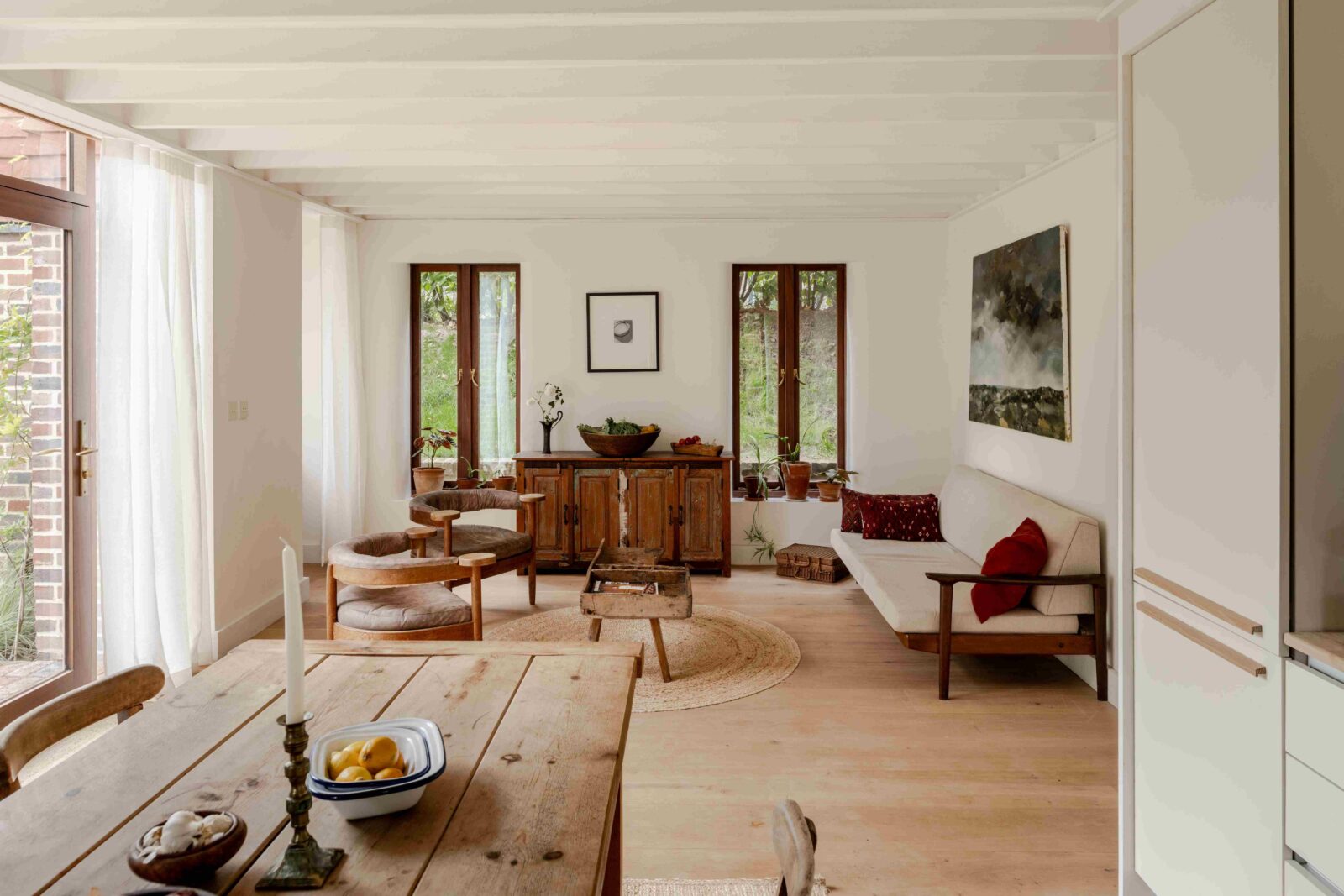
Inside, Clay Rise is defined by light, flow, and tactility. Echoing the sweep of the roof, curves are repeated throughout the interiors, lending an intentional softness. A curved CNC-cut staircase finished in lime plaster greets visitors, drawing them up to the main living space. Lime-plastered walls continue throughout, grounded by exposed timber and stone floors. Thoughtfully placed windows with deep sapele timber reveal framed views of the landscape and the sky. Curves are echoed in joinery, handmade plastered wall lights, and the sweeping rooflines, which are experienced from the main living area and primary bedroom suite.
The interiors feel curated, with bespoke and found furniture and fixtures guided by Jessica’s expertise in antiques and auctions. Their cultivated sense of style adds richness to the interiors, creating a holistic and cohesive home environment.
A green approach to architecture
Passive environmental strategies informed both the form and detailing of the building. Clay Rise is orientated to optimise solar gain and shading, with a deep south-facing window allowing low winter sun to penetrate while limiting summer overheating. Cross ventilation is encouraged through operable east-west openings, and a central stair atrium acts as a thermal chimney, drawing warm air upward to maintain a comfortable temperature all year-round.
An air source heat pump provides efficient heating and hot water, complemented by high levels of insulation and double-glazed windows. Material reuse further reduced waste: secondhand kitchen and utility fittings were integrated into the design, and off-cuts from the timber frame were repurposed on site as custom joinery.
When love is part of the design process
Clay Rise is designed to accommodate multigenerational or evolving family needs. Key services like underfloor heating, lighting circuits and wiring were designed to accommodate these future changes. The main bedroom can be split into two to create an additional bedroom, and living areas can function independently for family members, carers or lodgers. The ground floor space could also serve as a home office or a spacious main bedroom with ample storage.
“Clay Rise is a versatile family home that has allowed us to explore ideas that we’ve been collecting for many years. We sought to produce a home that is entirely of its place, through a deep understanding of its context and local craft traditions.”
Andre Ford, Founding Director of Templeton Ford
At once modest and expressive, Clay Rise has been designed to belong to its place. Templeton Ford has created a contemporary expression of local vernacular: a crafted building made to last and adapt gracefully to future needs.