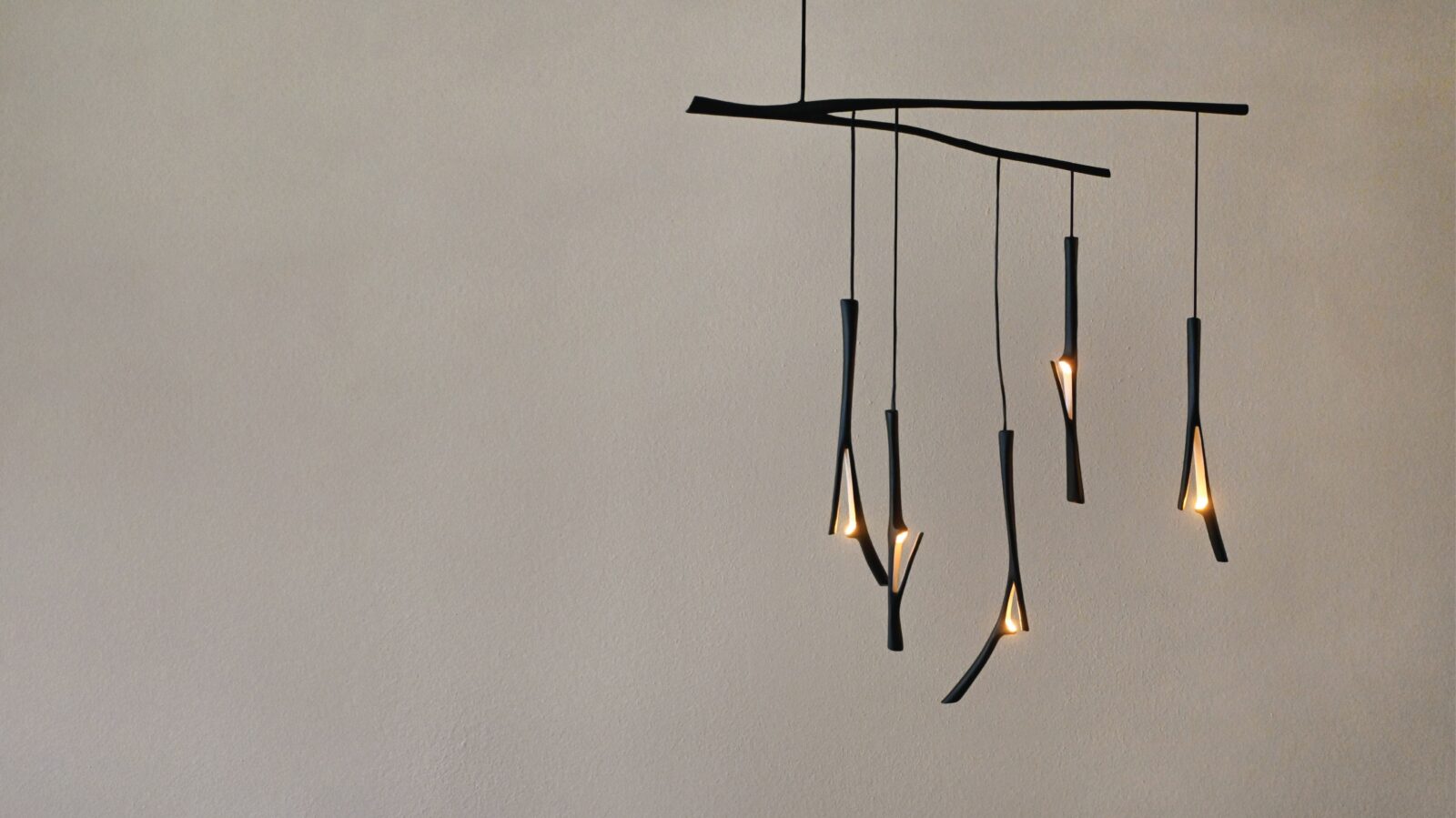
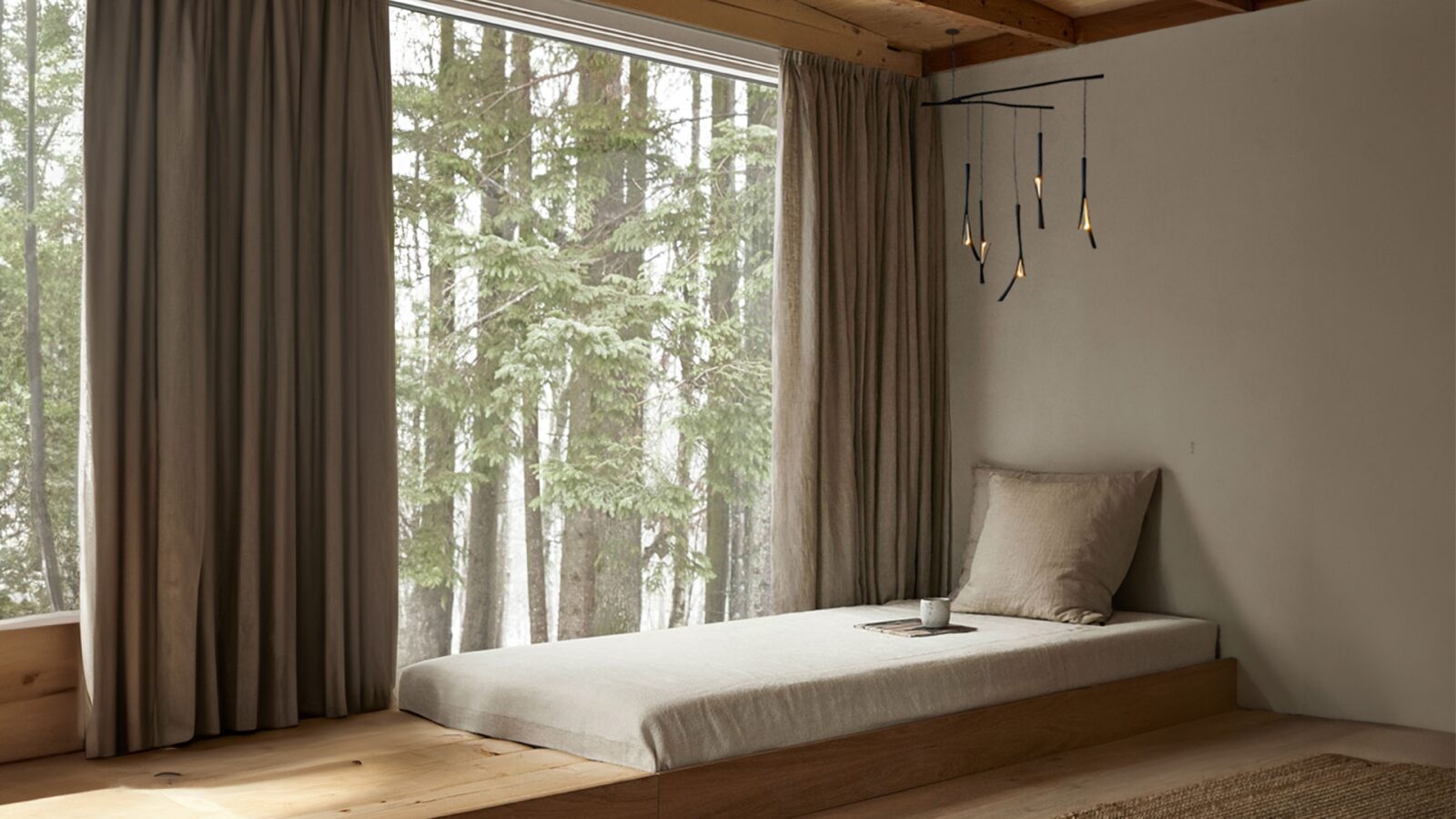
Winner of the Emerging Lighting Product Design of the Year 2025 at the LIT Lighting Design Awards, CinderGlow is a pendant light shaped by rupture, resilience, and the quiet power of light to heal. Designed by Yuxin Luo while studying at ArtCenter College of Design, the project emerged in response to the Eaton Fire that devastated parts of California, transforming loss into a tactile, luminous gesture of renewal.
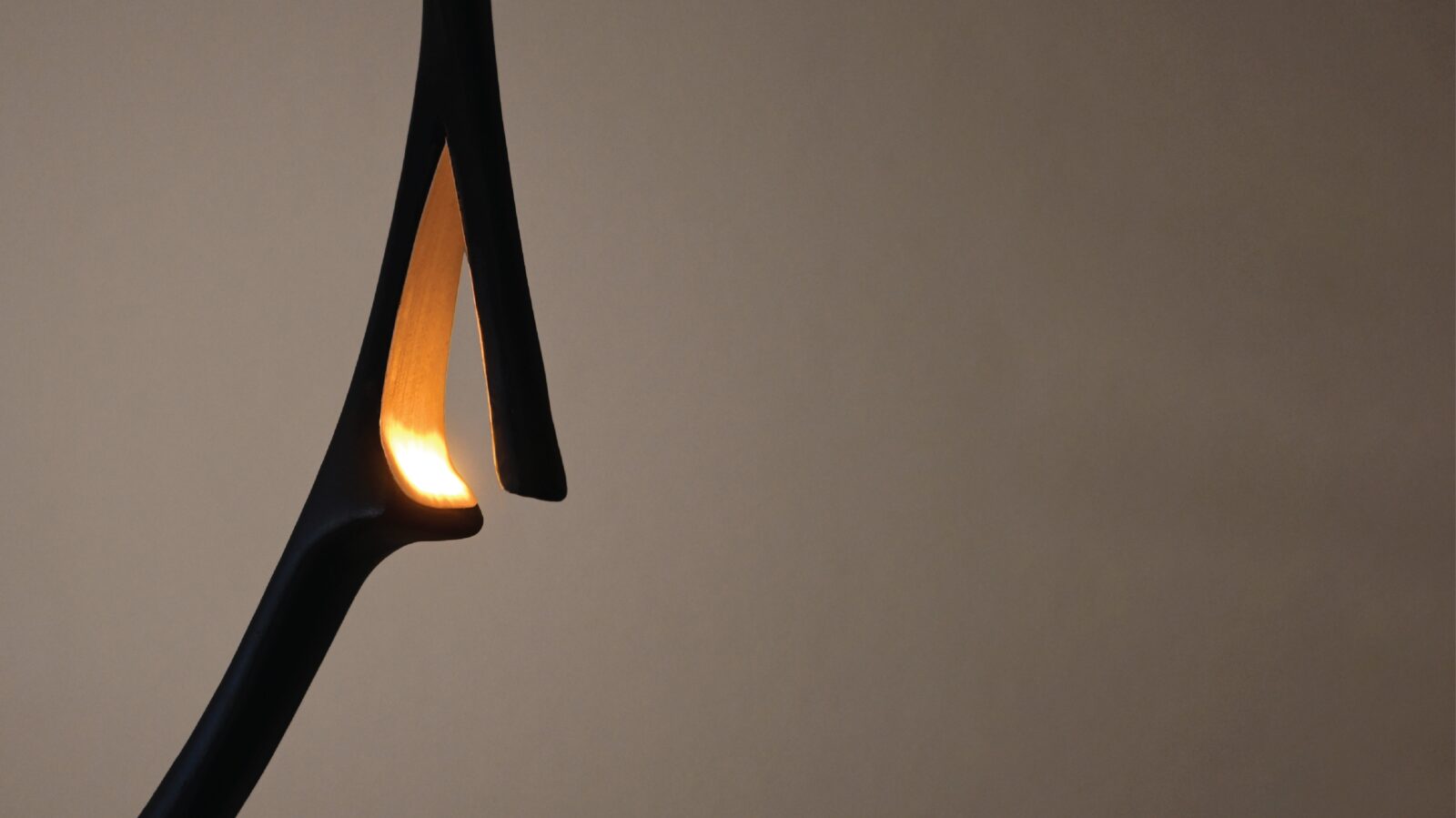
Inspired by a broken branch found in Altadena, CinderGlow places light directly within a fracture, allowing warmth to radiate from damage rather than conceal it. The piece balances wood-like texture with organic movement, using modular construction and additive manufacturing to support local production, easy disassembly, and a low-impact lifecycle. Conceived as both a poetic object and a sustainable system, CinderGlow reflects a young designer’s intuitive approach to material, memory, and meaning.
In this interview, Yuxin Luo reflects on the experiences that shaped CinderGlow, the challenge of translating emotion into form, and how receiving the Emerging Lighting Product Design of the Year 2025 title has helped affirm her voice in contemporary lighting design.
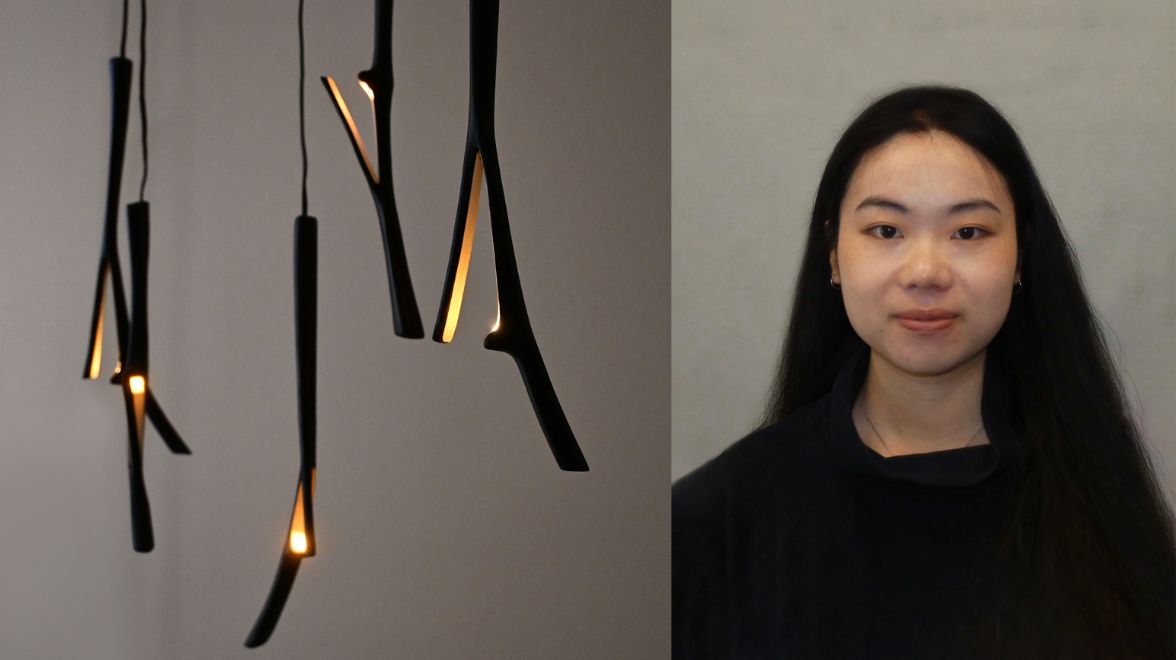
1. Could you tell us a bit about your background and how you found your way into lighting and product design?
I studied Environmental Design for my undergraduate degree and pursued Graphic Design at the graduate level. My path to lighting was quite unexpected: my packaging design professor saw the forms I was developing and kept suggesting I try furniture and lighting design. I decided to give it a try since I had been interested in this area before, and that’s how I began.
2. CinderGlow is built around the idea of “growing from where it breaks”, can you tell us more about this vision?
The seed for this concept was planted earlier, at Notre-Dame in Paris. The contradiction between the weight of history and the freshness of a newly renovated space gave me a feeling of loss. But as I left, a corner of glowing candles drew people together. In that silent, shared light—warm, wordless and I felt connected. That was my first real-life understanding of light as a symbol of hope. After returning, I visited Altadena, a community deeply scarred by the Eaton Fire. I saw many hearths standing alone, with traces of different lives against a backdrop of charred trees; the scene felt profoundly grey and silent. Standing there, I have a strong feeling to re-light this place, to use light to bring warmth and hope back to the land.
3. You’ve mentioned finding a broken branch after the Eaton Fire. Can you walk us through that moment and how you were able to recreate that specific branch and light effect into the form and structure of the lamp?
I was struck by the resilience of the burnt branches—how a fragile exterior could hide a still-solid core. When I found one with a clean split, I intuitively inserted a battery-operated spotlight. It happened to wedge itself in stably, and light grew from the fracture. That moment was the start of the entire project. For the form, I must credit that original branch. I tried designing branch-like shapes from imagination, but they just didn’t feel right. Then I returned to that original branch, restoring its form precisely. The rest of the design language flowed naturally from there.
4. You describe CinderGlow as modular, allowing local production and easy disassembly. How is that modularity actually achieved in the design: what are the main components, and how do they come apart?
The modularity is achieved through a three-part system. The main body is the 3D-printed shade. Inside, a self-contained lighting module housing the Little Dot SMD LED Accent Lights and Paperwood for the interior split section. This assembly connects to the vertical hanging rod via a mechanical, glue-free joint— typically by inserting a metal sleeve internally for strength. This approach allows each light to be easily separated for repair, recycling, or local manufacturing.
5. Future versions are planned in recycled wood filament from fire-damaged trees. How do you imagine working with that material in practice, and what changes do you figure it will bring to your making and assembly process?
Working with recycled wood filament from fire-damaged trees would present a different texture—likely rougher, making it harder to achieve a perfectly smooth surface. The internal grain revealed after polishing would also be unpredictable. These are challenges, but also opportunities. I envision the making process involving less human intervention. For instance, I might reduce extensive polishing to preserve its inherent, less-refined texture. The interior of the split might not feel like conventional wood, but that’s the interesting part. It becomes a collaboration between the traces forged by nature and human expectations of aesthetics, which could give each piece a unique texture.
6. Could you walk us through your sustainability approach, from material choices to production?
Sustainability was a consideration from the start. I initially tried to handcraft pieces from branches collected in Altadena, but my skills then couldn’t realise the vision, so I compromised by using 3D printing for the prototype. In the design, I avoided irreversible adhesives. For example, the vertical parts are connected by inserting a metal tube inside, ensuring strength. As mentioned, using recycled wood filament is the ultimate goal for material choice. Furthermore, the modular design and the vision for local production aim to reduce transportation emissions and extend the product’s lifecycle.
7. What were the biggest challenges you faced while developing CinderGlow and how did you work through them?
The two main challenges were achieving the desired light quality and concealing the light source and wiring to maintain the natural resemblance. For light quality, the challenge was achieving a glow that was soft, bright, yet not harsh. I experimented with different types and scales of light sources, constantly adjusting the LEDs’ placement, depth and angle. I also added paperwood over the split section, which helped further soften and diffuse the light. Hiding the components posed a distinct challenge. The key was to identify and scale a natural element that could integrate them discreetly. This led to the “branch knot”—a form that naturally conceals the light source. For the wires, the solution spanned from tucking a single wire into the trunk of a branch to shaping the entire vertical hanger.
8. Congratulations on winning at the LIT Lighting Design Awards! What does this recognition mean to you personally, and how do you think it might shape your path as a young designer?
This was a complete surprise and a tremendous encouragement for my first lighting piece. As a newcomer to product design, I followed my instinct on what felt right but didn’t truly know the industry’s criteria. Therefore, the most precious aspect of this recognition is that it tells me that I am on the right path. It has solidified my direction and intuition and also makes me think further about the next steps: how to build on this and further develop it using different potential elements.
9. Looking ahead, what kinds of projects are you interested in exploring next, and what advice would you give to other design students who hope to develop award-winning, meaningful work of their own?
I’m drawn to exploring materials and craft on a larger scale, focusing on the dialogue between human-made forms and natural patterns, and to learning more and incorporating deeper thinking into materials, the translation from inspiration to form, and so on. As for advice, I would say to take the time to observe and dig into what you genuinely feel. Find your own interpretation and voice. Then, follow it to find the technical solution until it matches the vision in your mind. Throughout the process, embrace humility and mistakes.