




Header: TREMEGE Frederic
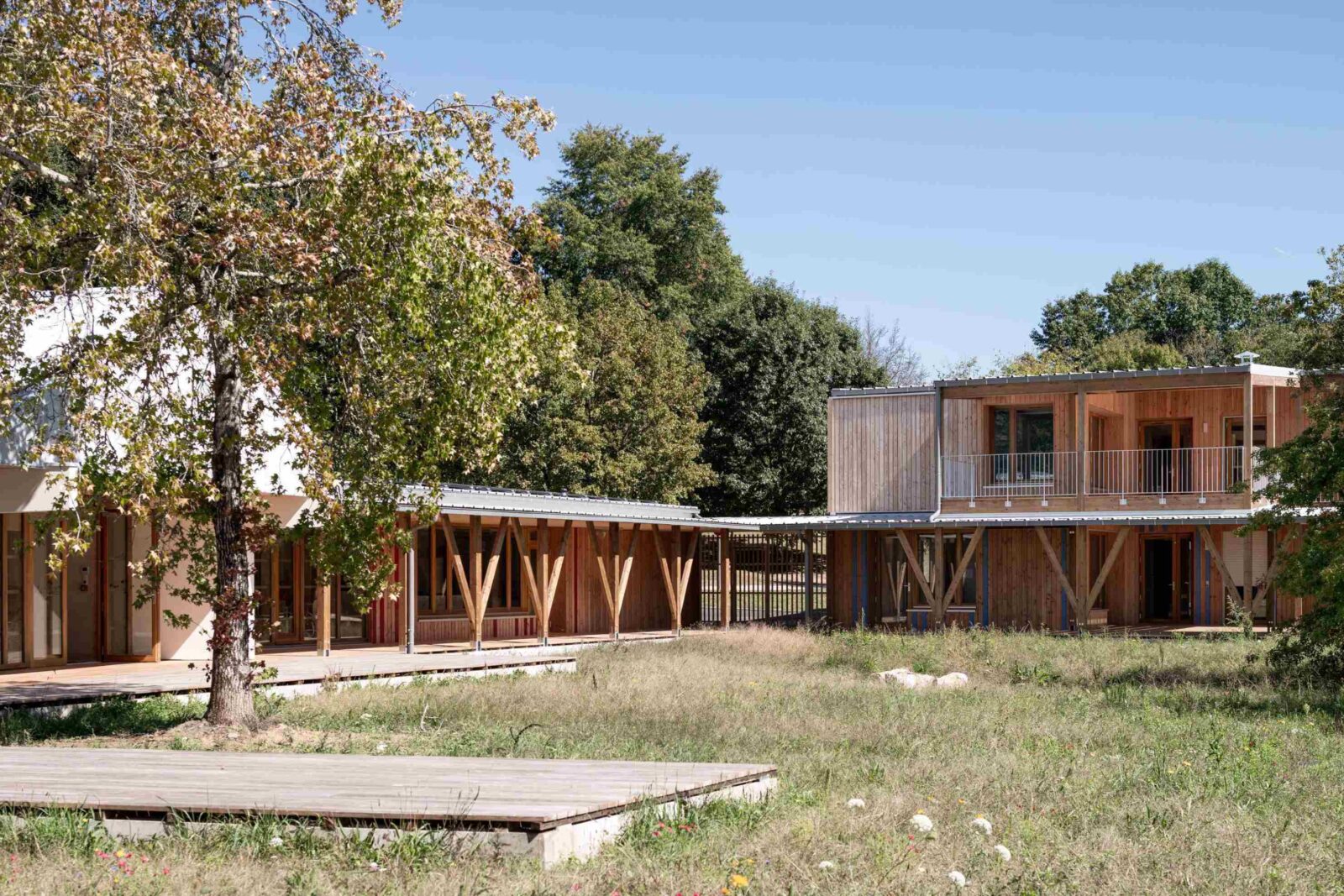
In an idyllic environment surrounded by trees, this former three-hectare campsite was inaugurated in October 2025 as a leisure centre for 200 children from Limoges and visitors from school field trips. This facility includes accommodations, making it highly versatile and allowing it to be used as often as possible by different groups throughout the week and during school holidays.
By preserving trees and incorporating four buildings previously on the site into the design, the environmental approach was continued with new buildings constructed from local wood and using straw bale insulation. The interior finishing touches favour the use of natural, healthy, and reused materials. Furthermore, the New Aquitaine Sustainable Building approach certified the building at the SILVER level (this is a temporary level, as the third commission has not yet been carried out).
The project
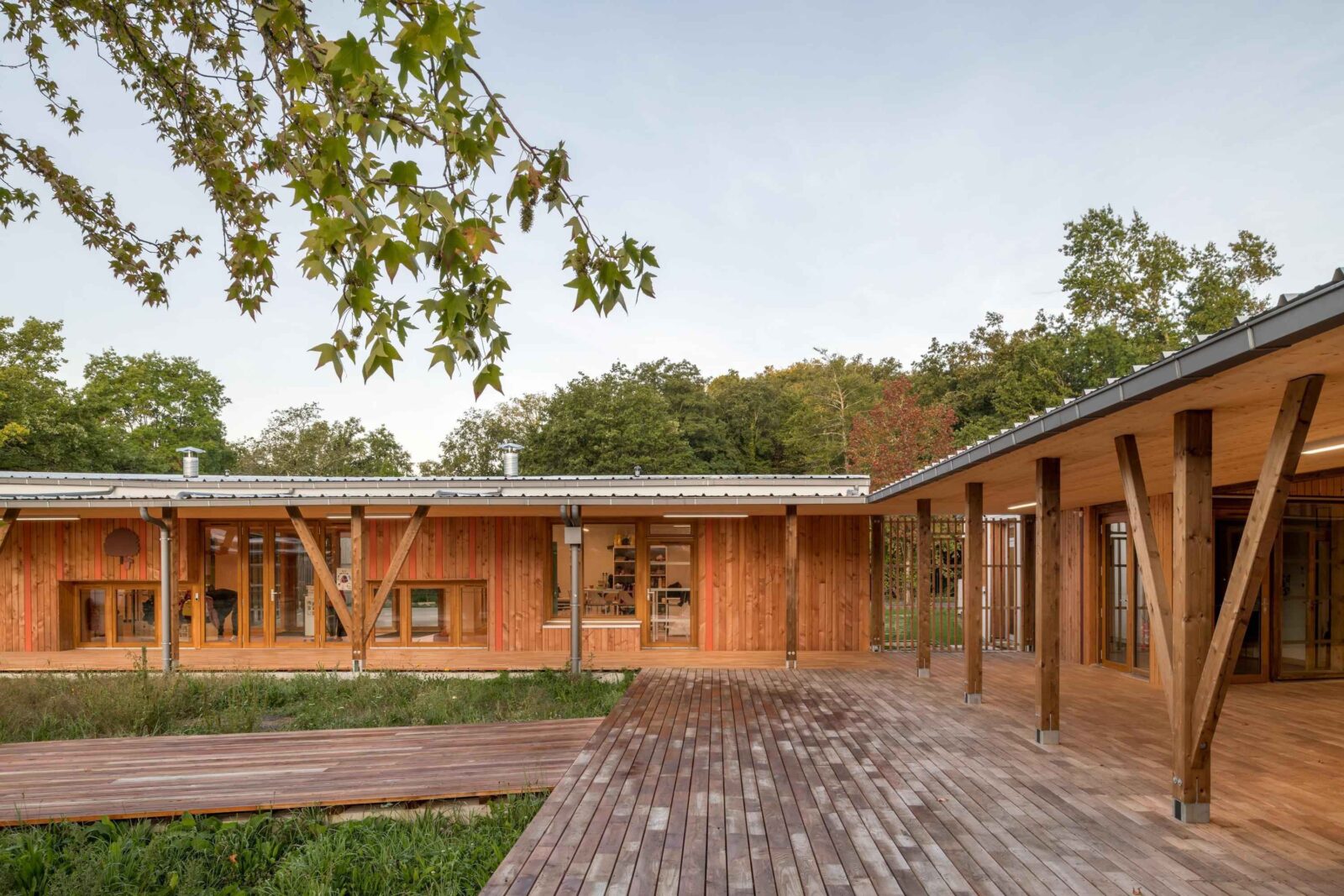
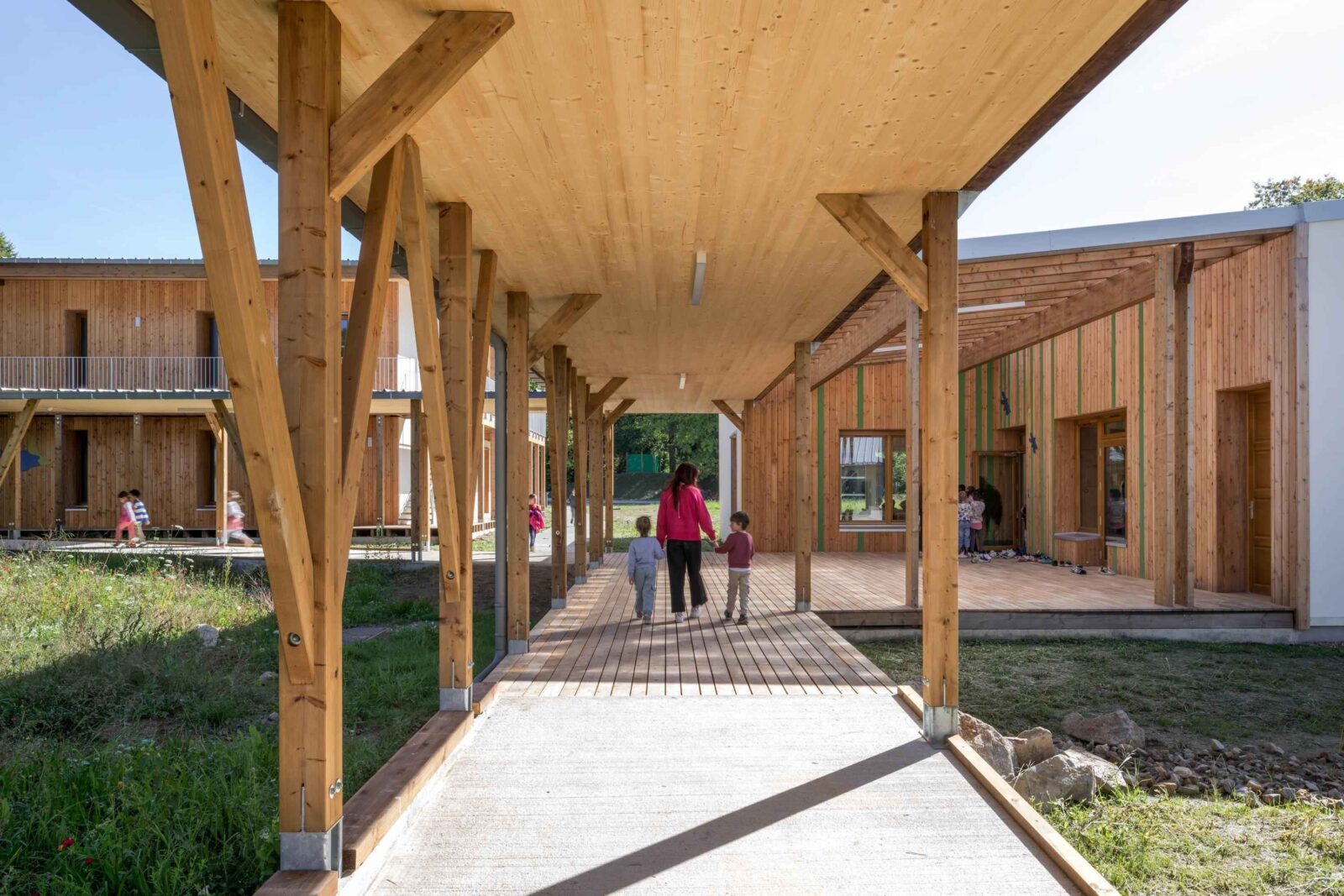
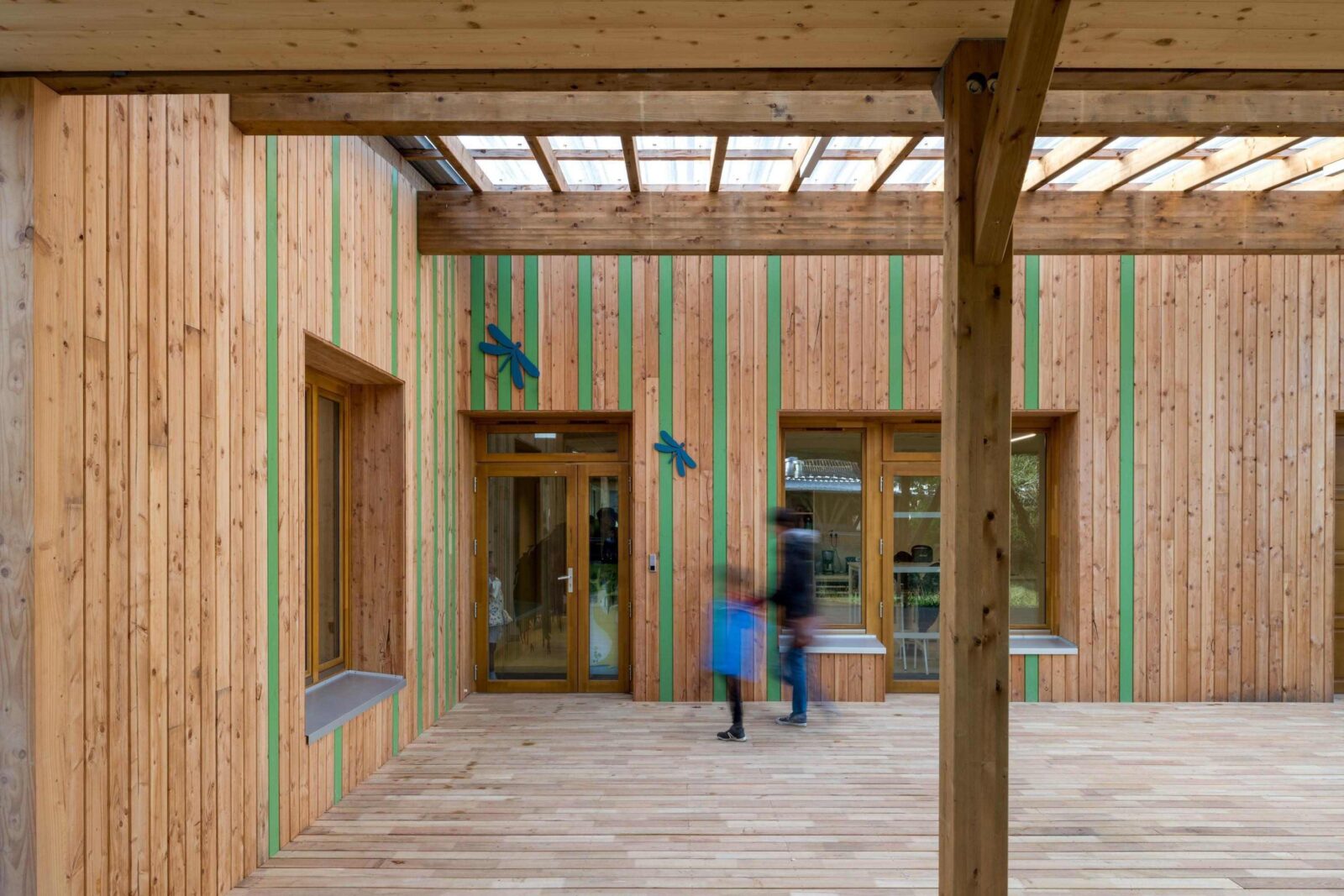
Children enter the leisure centre through a porch and onto a lawn lined with a wooden gallery that connects the various areas around the meadow, including reception, administration, a centre for children aged 6 to 11, accommodations, catering, and a kitchen. The natural wood cladding of each block is complemented by touches of colour that help identify the different houses, much like landmarks.
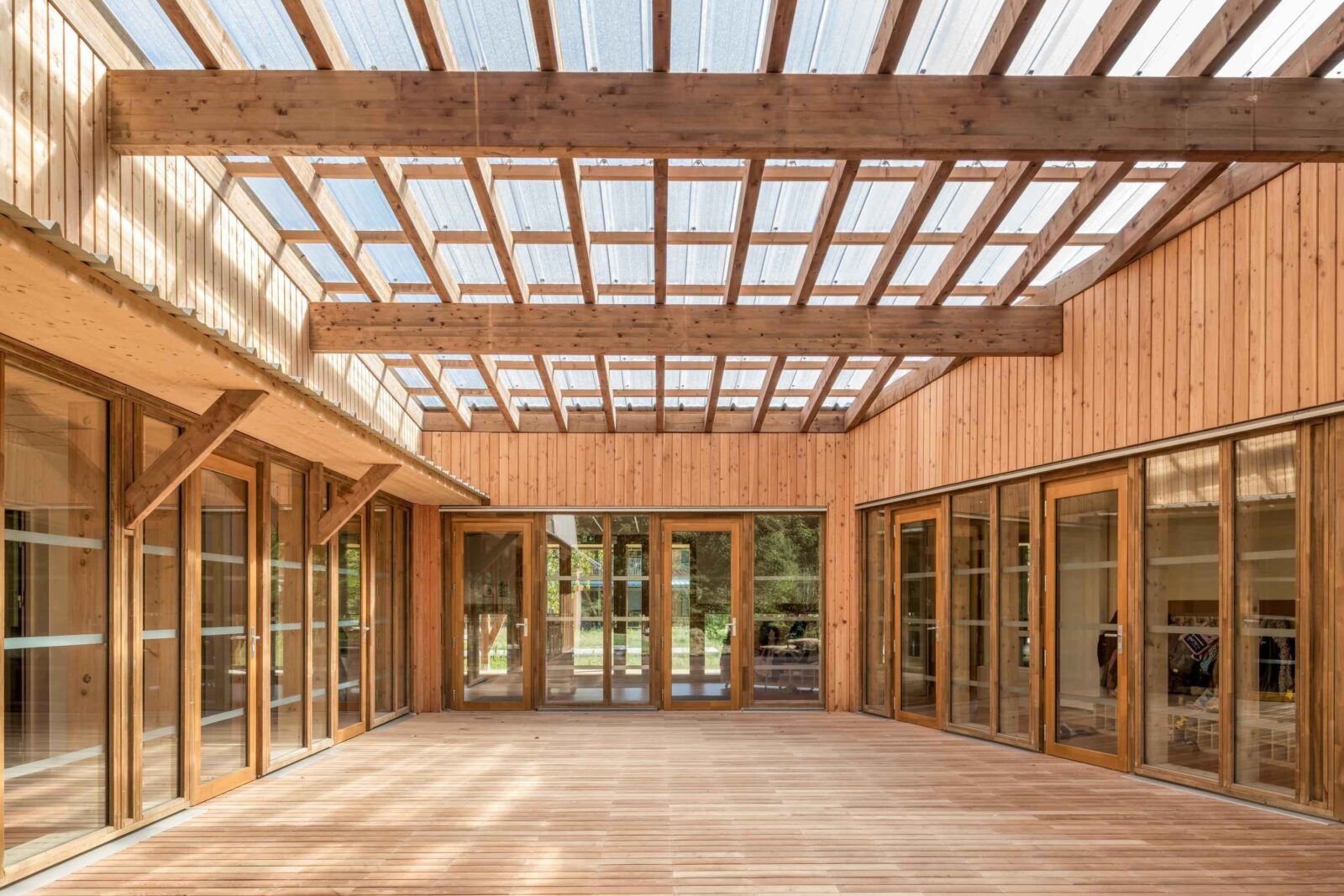
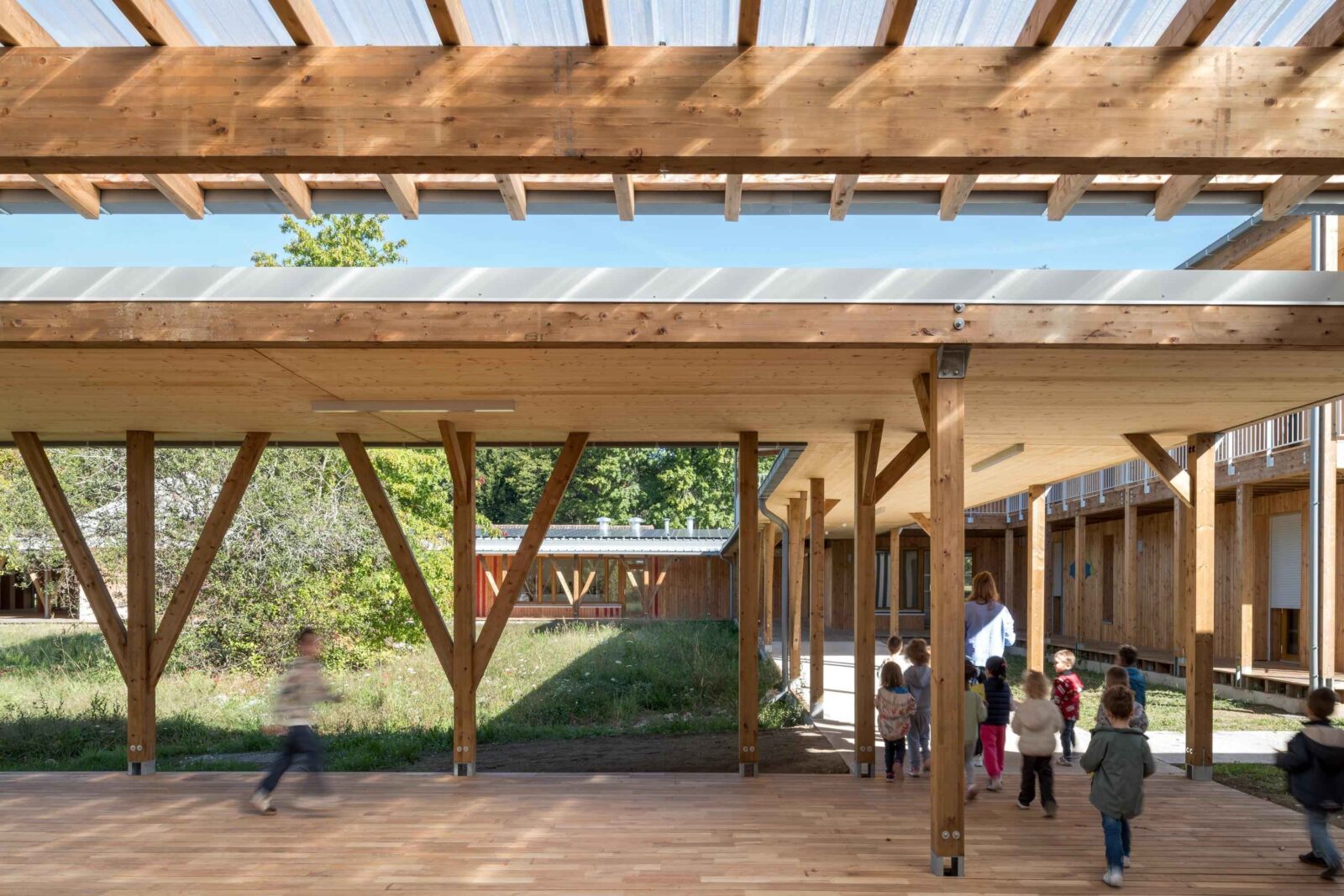
Covered playgrounds provide sheltered outdoor areas for playing in all seasons, opening onto the rich woodland. Several playing structures were built following excavation on site, allowing children to climb, slide, roll and partake in orienteering activities. There is also a small outdoor theatre, hills with slides, tunnels, footbridges, sports fields for matches and even archery tournaments in this vast wooded area. Furthermore, part of the campsite is used for an outdoor experience, with the exploration of biodiversity ranging from woodland to more natural meadows.
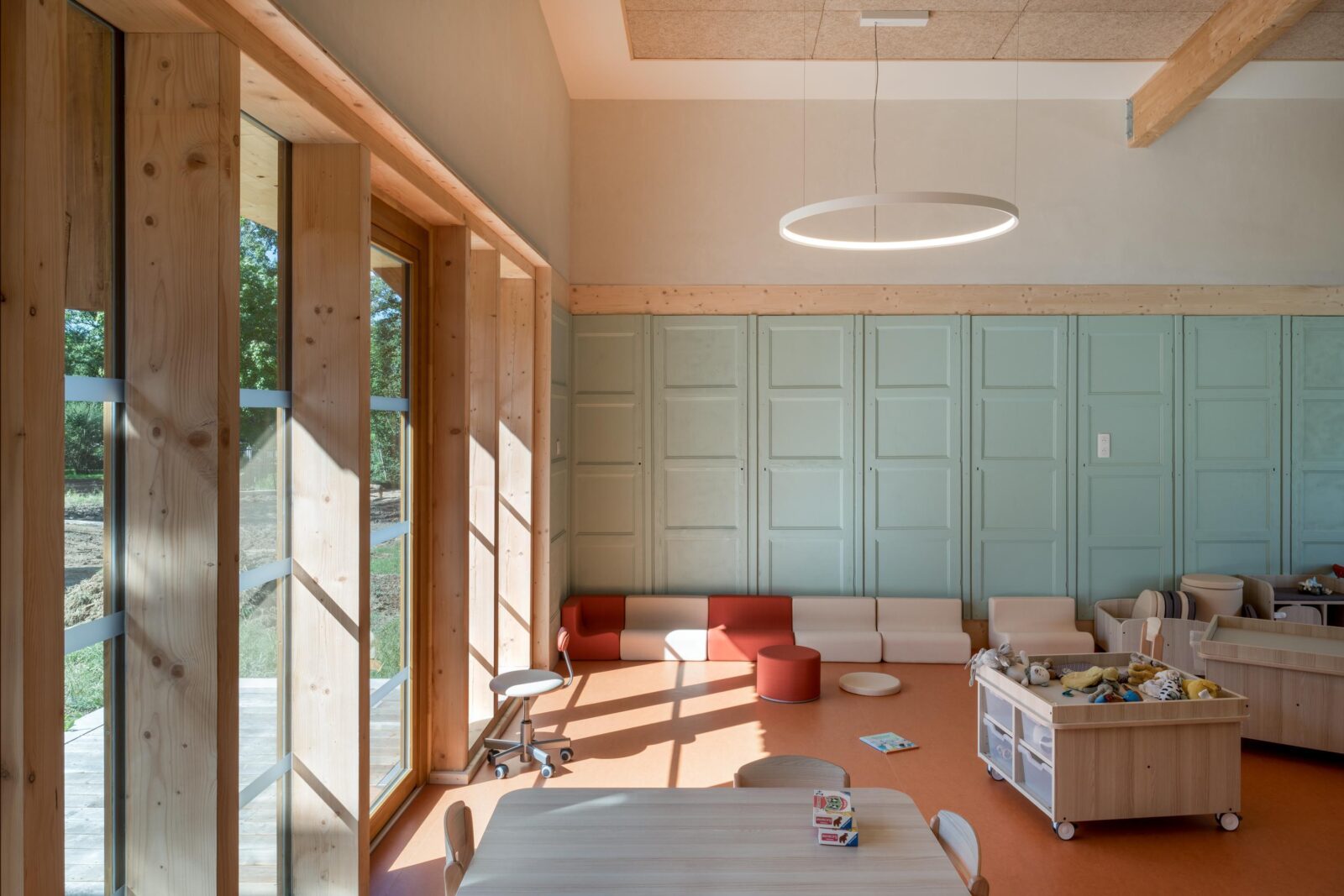
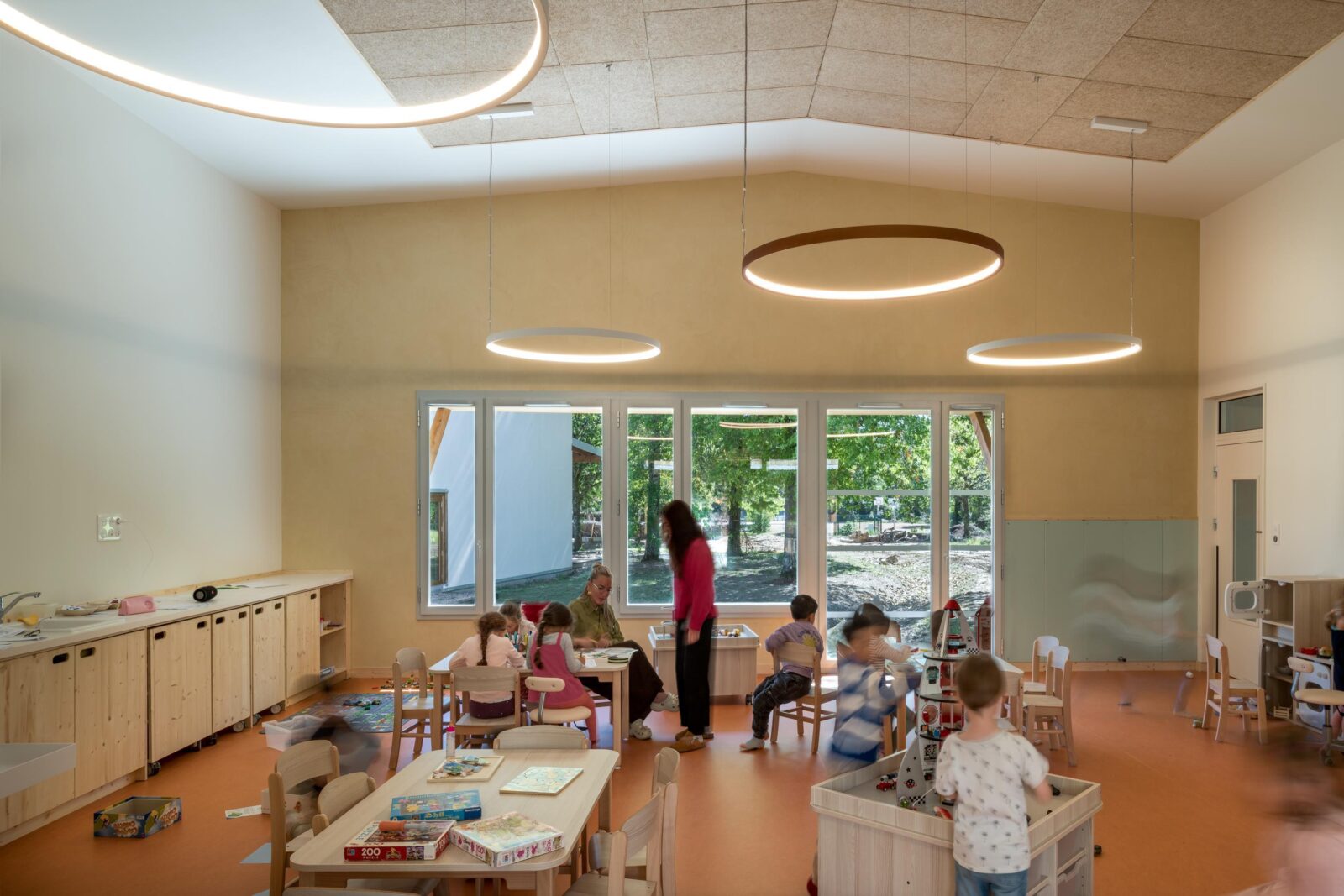
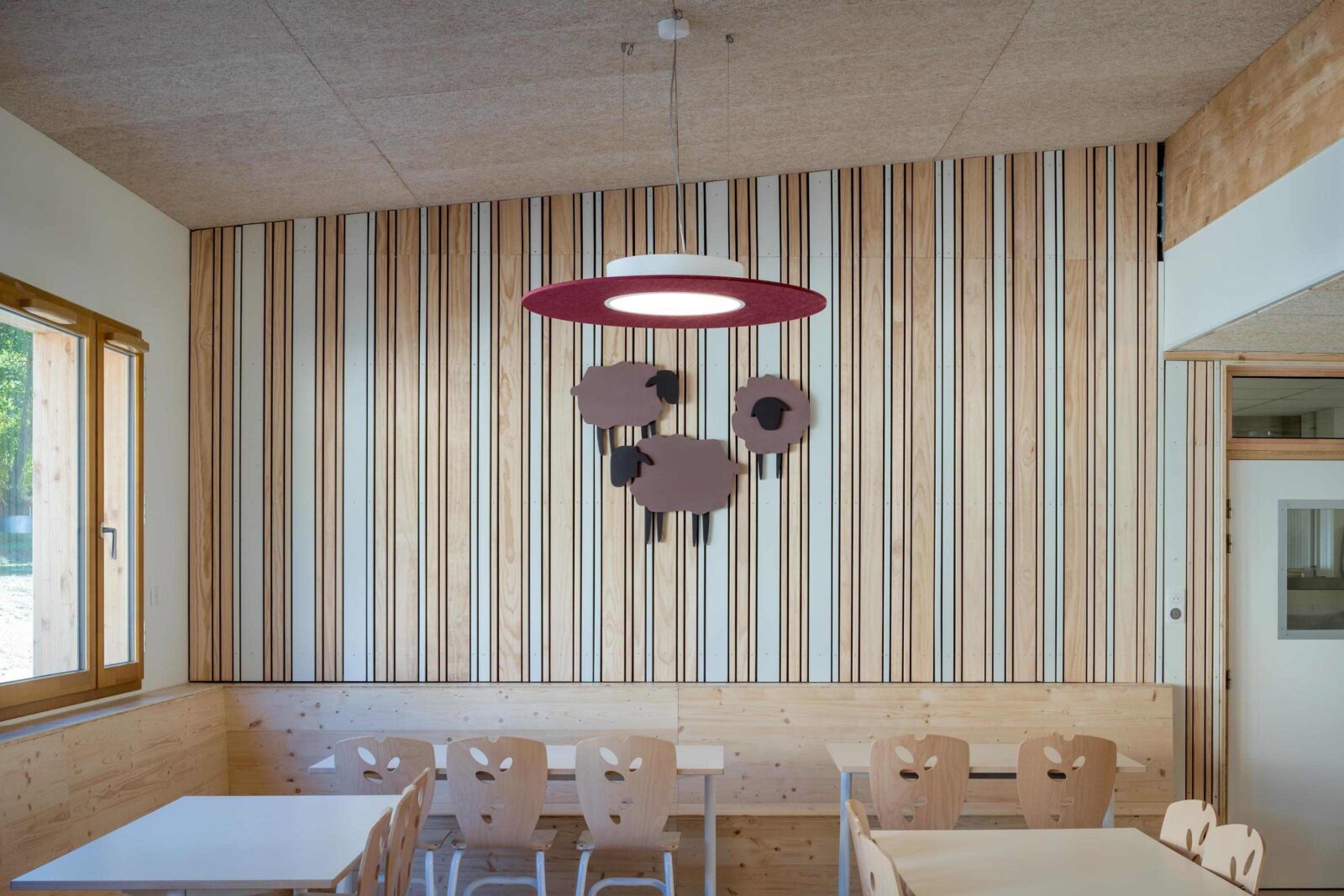
Each building has its own identity while featuring similar materials: wood cladding on covered areas for durability and plaster on exposed facades. The activity rooms are deliberately set apart from the standard classrooms, with large sloping ceilings and reused elements such as doors used as interior cladding. The architecture is educational and attempts to provide a rich learning ground for children, offering spatial and acoustic comfort made from eco-friendly materials sourced from nature, such as wood, hemp, straw and earth.
A community job
The project was developed jointly with teaching staff, users and the children’s municipal council, and all participants were present from the start of the project to its inauguration alongside the mayor and representatives of various institutions. Socially, it is an ambitious project that welcomes children from all backgrounds and includes people with disabilities.
Four houses from the former campsite have been renovated. One has been converted into workshops, another into a dining room for 3- to 5-year-olds. The third is still used for its original purpose as showers/kitchen for the campsite section of the park. The fourth, the former campsite reception, is used as a starting point for bike rides and as a gardening shed. Considering energy consumption, the agency prioritized energy efficiency in its strategy and construction choices, incorporating bioclimatic design and carefully considering insulation.
Focusing on sustainability
The city of Limoges wanted an exemplary building to accommodate young children and chose an ambitious approach: the BDNA approach (New Aquitaine Sustainable Building). While the designers from Atelier Quatre and r2k architects aimed for gold, they achieved the silver level, having reduced carbon impact and used healthy and natural materials sourced from sustainable sources.
The building is based on a timber structure, with spruce used for the main frame. The timber frame walls are filled with bales of straw and completed on the exterior with wood fibre insulation, forming the FOB timber frame façade system. Straw was introduced in the project as insulation, with the design team entrusting the work to the company LELO, which obtained ATEX certification at the very beginning of the project. The use of bales of straw for the roof was considered, but as ATEX certification did not cover this case, timber roof boxes insulated with cellulose wadding were used instead.
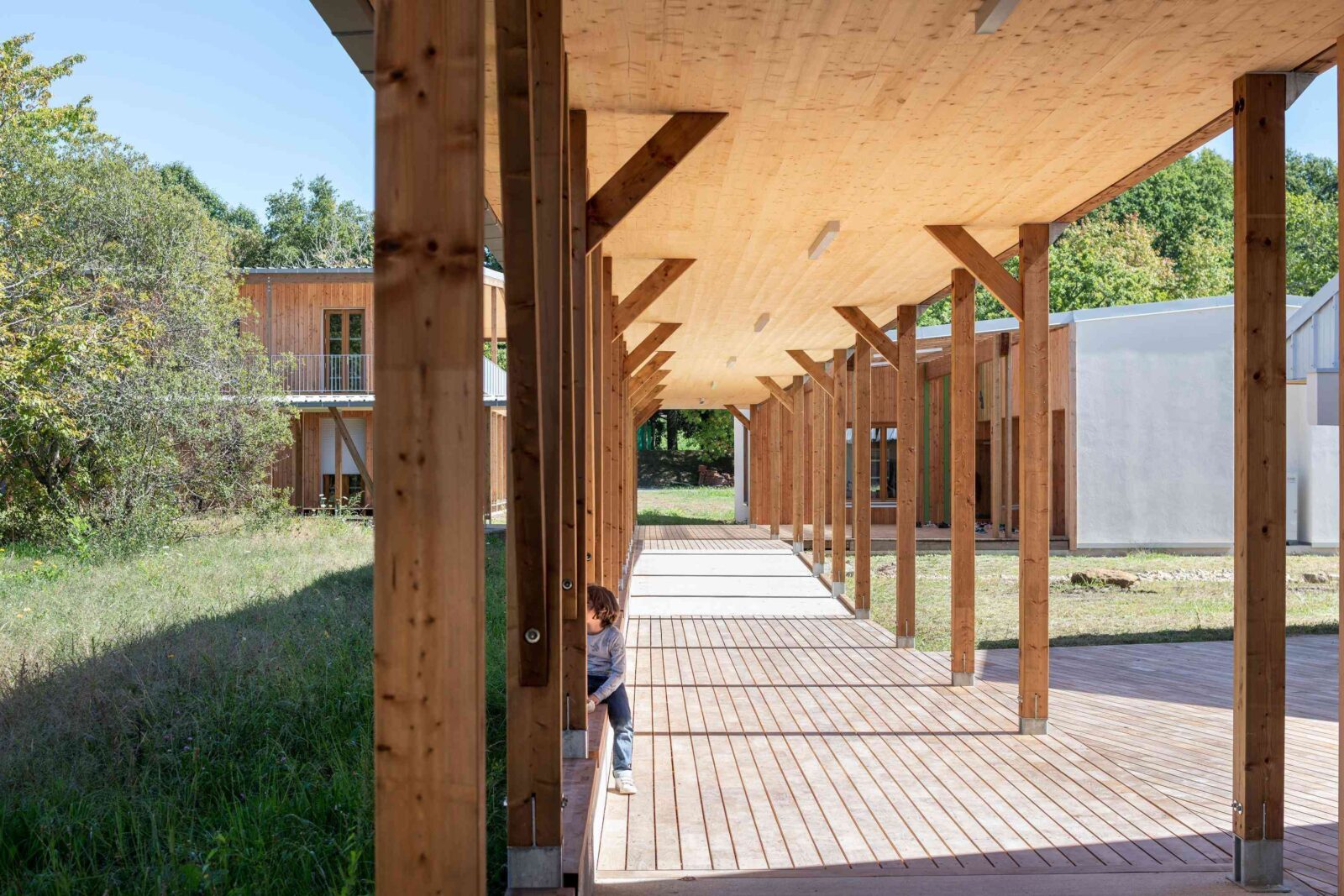
CLT roofing was used for the covered walkway, while external cladding is in Douglas fir. The external terraces are built in black locust (Robinia), and, on the inside of the building, reused wood was incorporated for the internal cladding.
The sanitary facilities at the former campsites were also renovated, having been insulated with hemp line covered in earth plaster, which was also used on the interior masonry. The design team describes the water systems as “omnipresent” after a rainwater drainage system was installed in the central courtyard and a retention basin was created for the vegetable garden. In the end, cooperation between the various project stakeholders enabled performance levels that are nearly 40% higher than the RE2020 requirements.
Source: v2com newswire
