Header: Audi Nuvolari
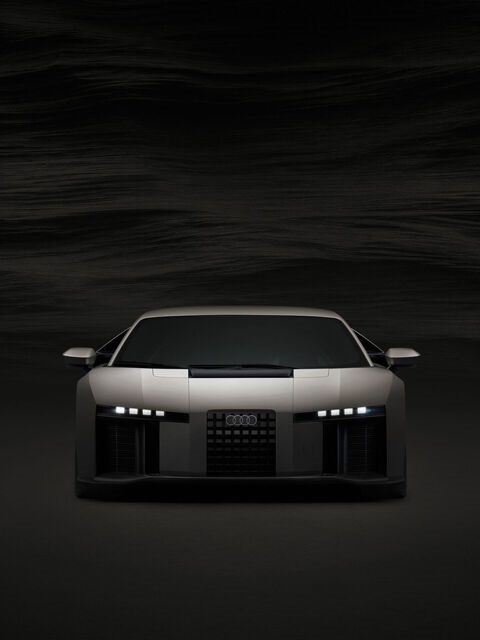
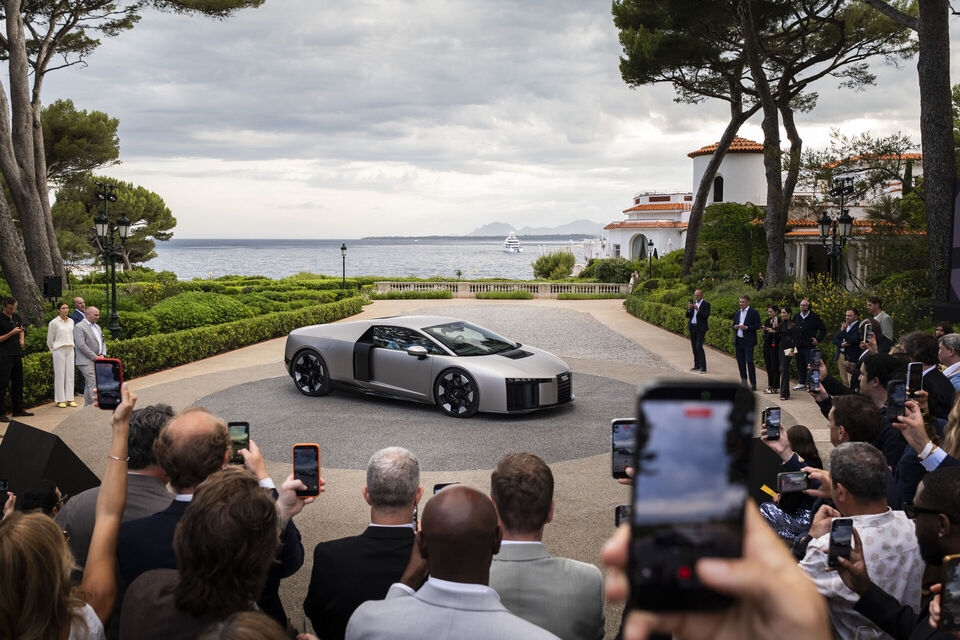
Audi presented its first supercar, the Nuvolari1, with a high-performance hybrid powertrain. Inspired by Formula 1 vehicles, the Nuvolari1 is the fastest production vehicle Audi has ever made, which can develop over 350 km/h.
New philosophy of design
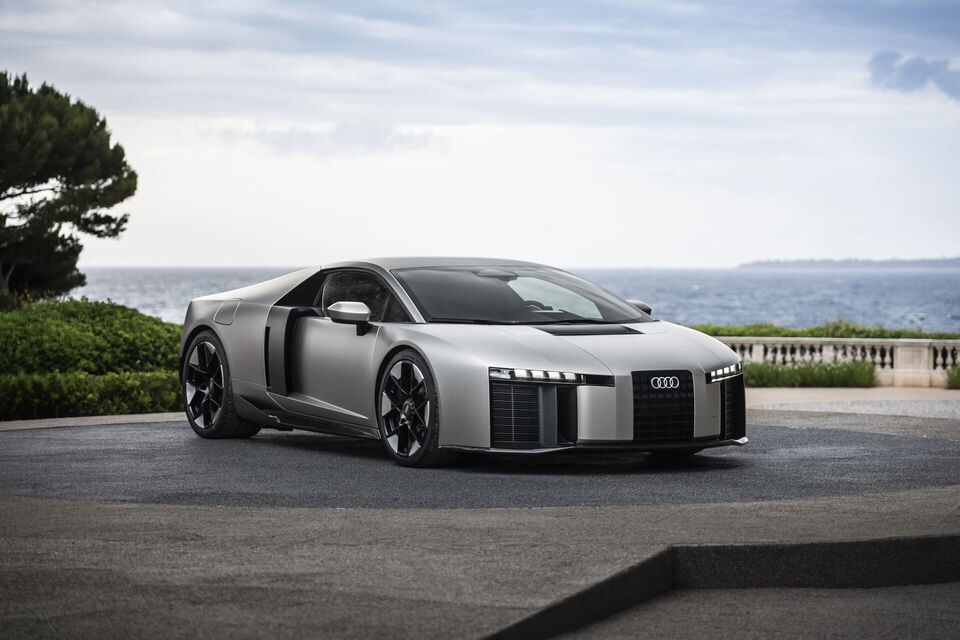
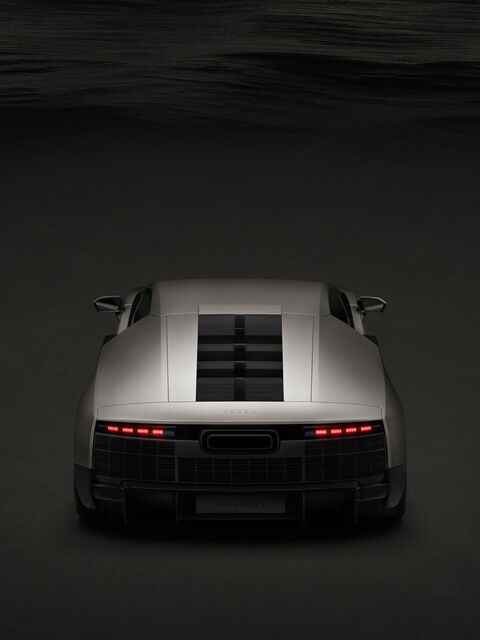
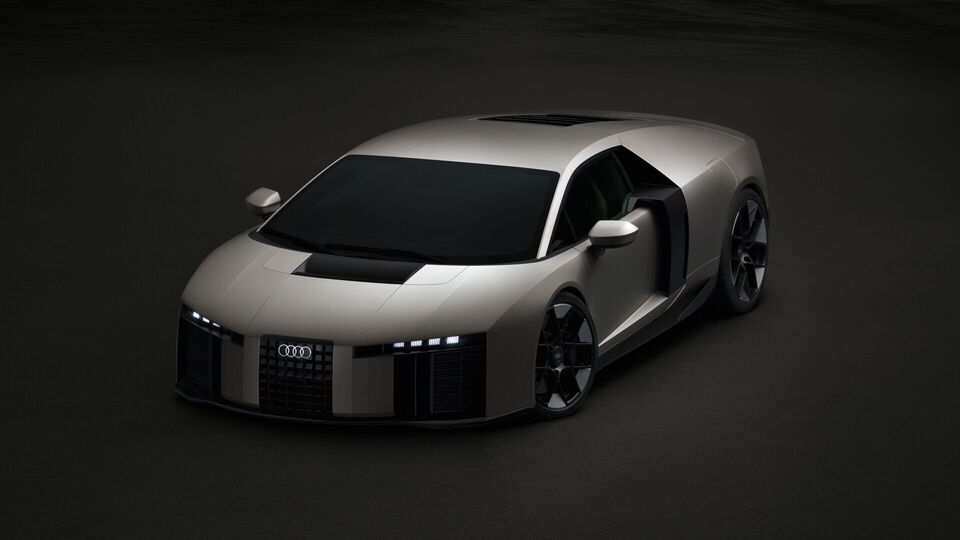
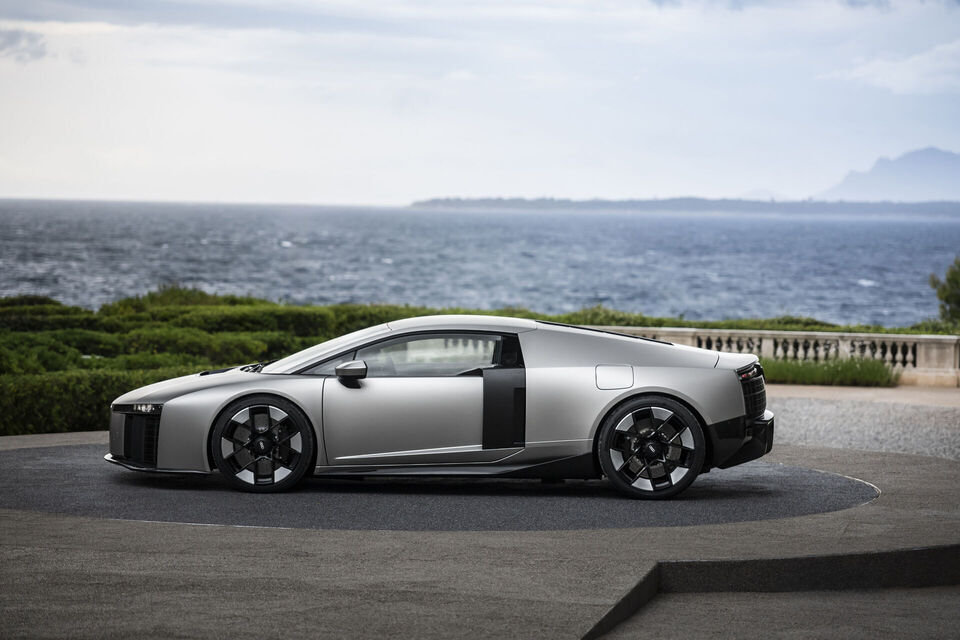
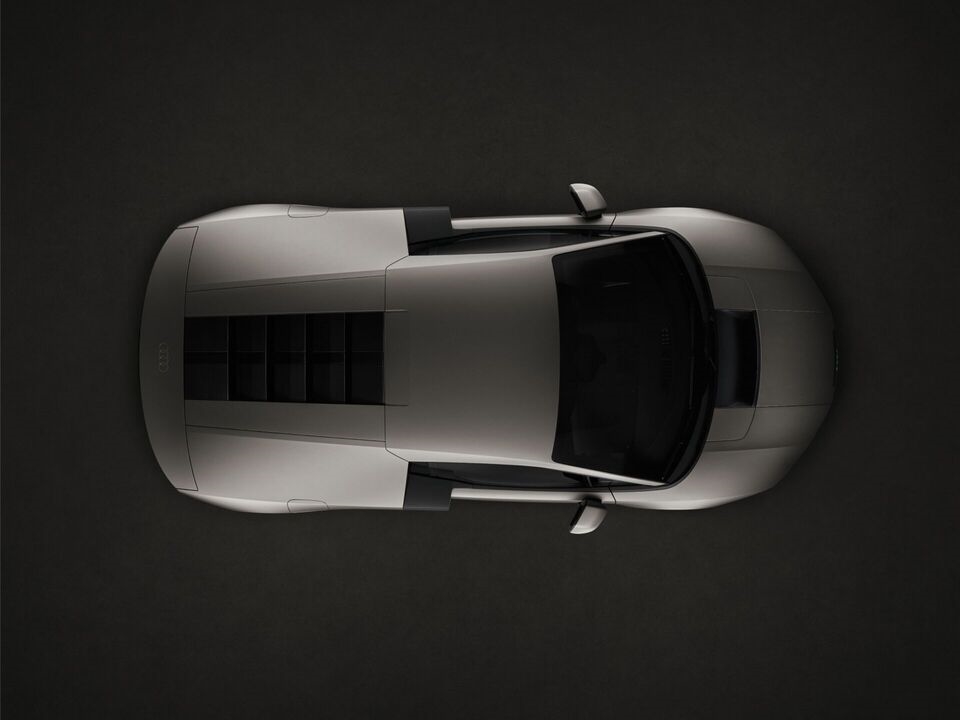
Nuvolari1 is named after Tazio Nuvolari, one of the best-known figures in motorsport history. The car’s monolithic character is shaped by precise lines and taut surfaces. The mid-engine layout defines the proportions, while the exterior features the company’s new signature shade, Titanium, in combination with carbon elements.
High-performance powertrain
A hybrid high-performance powertrain powers the auto with a maximum system output of 736 kW (1,001 PS). The total internal volume of the engine’s cylinders is 4.0 litres, while the V8 biturbo engine delivers 588 kW (800 hp). This is combined with three axial flux electric motors, delivering extreme power density and instantaneous torque, each producing 110 kW. The Nuvolari1 comes with a lithium-ion battery that has a gross capacity of 7.3 kWh. The combustion engine delivers a range previously seen only in motorsport vehicles, with a maximum torque of 730 Nm and reaches 10,000 rpm.
Three electric motors
Two oil-cooled axial-flux electric motors at the front axle provide variable torque distribution and deliver up to 2,150 Nm of torque. The drive concept is completed with a third electric motor located between the V8 mid-engine and the transmission. The acceleration is outstanding, as the car reaches from 0 to 100 km/h in 2.6 seconds and from 0 to 200 km/h in 6.8 seconds
The quattro drive
The quattro drive is one of Audi’s innovations, encompassing traction, control and driving dynamics in all conditions. The Quattro predictive ride gathers a series of sensor data relating to acceleration, steering angle, grip level and yaw rate that measures the steering response in corners. These info allow the car to respond to different driving scenarios. The drive unit distributes torque in both lateral and longitudinal directions while brakes stabilise the automobile and minimise slip. Another way to influence the system is through rotary controls on the steering wheel and four driving modes that provide variations of powertrain, vehicle dynamics, and efficiency:
- E‑Hybrid mode for fully electric driving in urban and short-distance locations.
- Dynamic+ mode provides an emotional driving experience.
- Balanced mode combines comfort, efficiency, and performance.
- Dynamic mode improves system response, agility and precision.
An additional Track Mode enables targeted adjustment of traction control to driving style and available grip, ranging from Wet to Dry and from Race to Traction Control Off (TC Off).
Precise geometries and outstanding performance
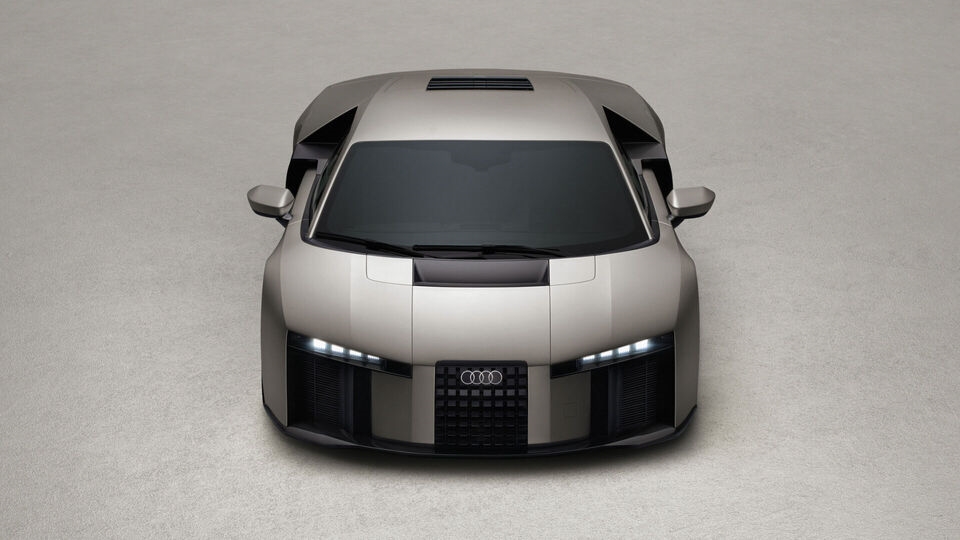
Nuvolari1 is the first car by Audi to combine proven Audi Space Frame Technology with a carbon exterior that mixes low weight with high structural strength, resulting in controlled handling and performance. Almost all exterior elements are made from CFRP (carbon fibre reinforced polymer). The prepreg autoclave technology that shapes the pre-impregnated carbon-fibres under high pressure and temperature ensures lightweight, but functional elements, which allow complex geometries. The vertical frame element guides airflow through the secluded S‑duct, while heat-resistant materials are placed in areas exposed to heat. Audi Nuvolari1 is also the first car to feature a forged centre-lock wheel.
Active aerodynamics
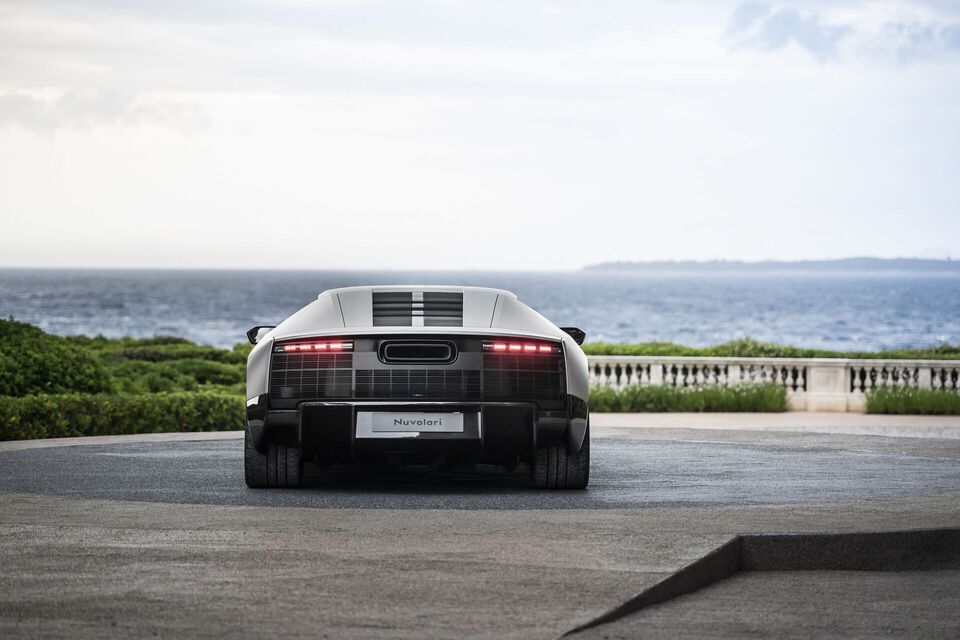
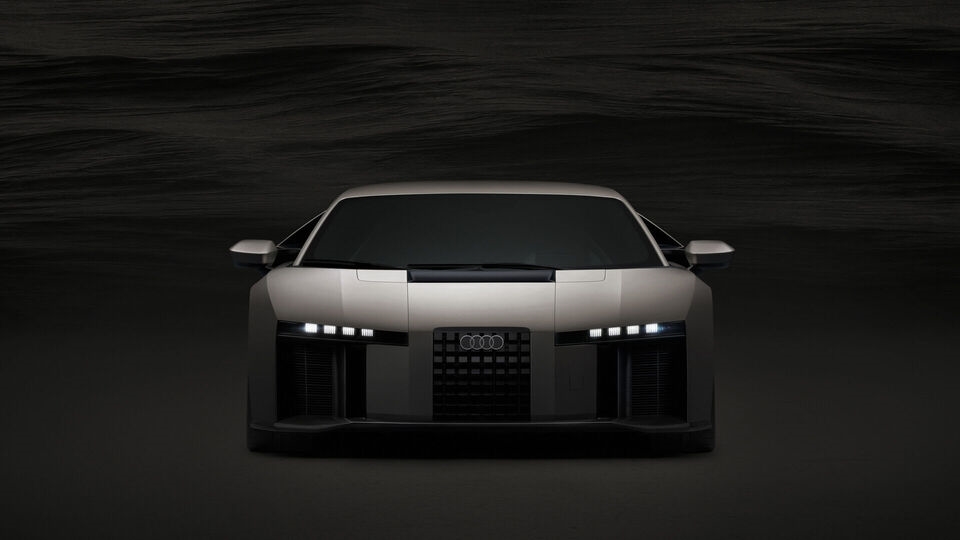
Every element ensures an aerodynamic performance that is fine-tuned with the help of Formula 1 drivers. Front air intakes serve a dual function: hybrid components heat management and cooling the brakes and combustion engine. S-duct reduces lift at high speeds and cools the powertrain. Deployable adaptive rear wing controls downforce and drag across three configurations – Closed, Low Downforce (LD) and High Downforce (HD). In Dynamic, Dynamic+, and Track modes, the rear wing shifts automatically to LD position on straights to optimise stability and speed. A steering-wheel button manually controls the Drag Reduction System (DRS) to further lower the wing, reducing drag and boosting top speed.
Energy management
The motorsport-inspired energy management controls the interaction between energy recovery and power delivery, adapted to grip, conditions and driver intent. The front axle handles a substantial share of braking through regenerative deceleration, while the rear axle recovers energy during coasting, partial-load operation, and traction control.
The vehicle can achieve purely electric deceleration of up to 0.3 g, covering a significant proportion of braking events encountered in both everyday and spirited driving. This regenerative braking capability not only contributes to vehicle stability but also recovers kinetic energy to recharge the battery. The close integration of propulsion, torque management, and energy recuperation is particularly evident during Launch Control mode, which deploys stored electrical energy to deliver maximum acceleration.
High-performance braking system
Formula One-inspired brake-by-wire system enables variable distribution between recuperation and hydraulic braking. Precise pedal feel is achieved by detaching the brake pedal from the actual braking force. Audi Ceramic Pro braking system is designed for high deceleration and control. High thermal stability and precise pedal feedback are ensured with front and rear brake configurations featuring ten-piston fixed callipers with 420 × 40 mm brake discs, at the front and four-piston callipers paired with 410 × 32 mm discs in the back.
Specialised brake disc cooling system improves airflow and increases heat dissipation by up to 12%. Reduced longitudinal vibrations improve stability and steering while shortening braking distances at high speeds. With an energy absorption capacity of up to 2.8 megawatts, the braking system is capable of handling extreme deceleration loads.
Interior and UI/UX
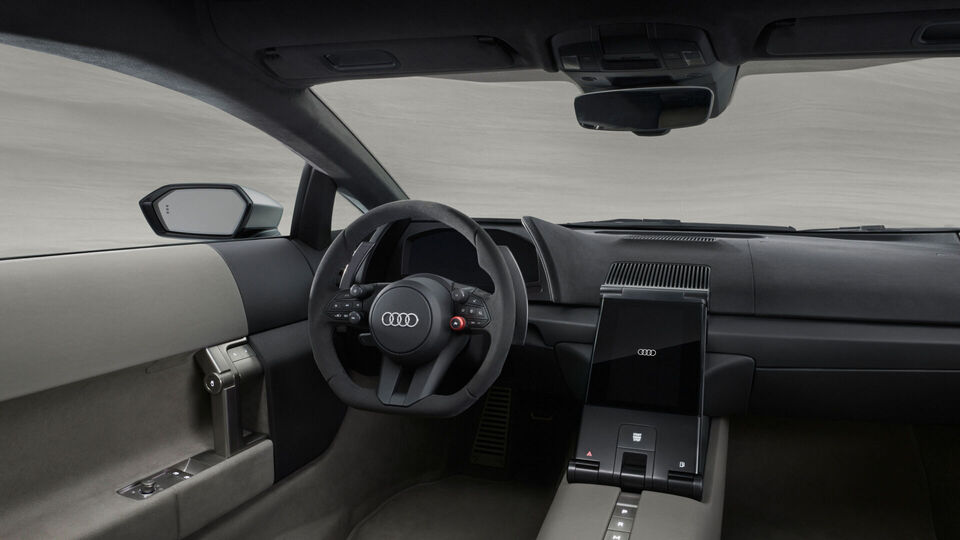
All controls and key elements of the HMI (human-machine interface) are located in the driver’s field of view, while secondary content is placed in the back. Colour accents in the HMI and the overall interior reference the 1930s motorsport era and particularly the iconic Auto Union Type C race car.
The cabin is divided into the front section with dark finishes for better concentration, while the rear features a lighter Shadow Dune tone. Crafted from anodised aluminium, the frame of the central display, controls and vents showcase the exquisite craftsmanship. Lightweight seats are made of carbon fibre, which provides high rigidity, support and reduces weight, while the ergonomic design ensures comfort.
Limited to 499 units, the first Nuvolaris1 will be delivered to its owners in the first half of 2027.