



Header: Ricardo Oliveira Alves
On the top floor of El Corte Inglés in Lisbon is El Mar, the new restaurant by chef Kiko Martins. There, the interior design becomes a story, inviting us to navigate between the Portuguese coast and the shores of Rio de Janeiro, with the lighting design having been conceived to support the narrative. El Mar, therefore, serves as a visual and emotional tribute to the chef’s roots, which reflect a blend of Portuguese and Brazilian influences.
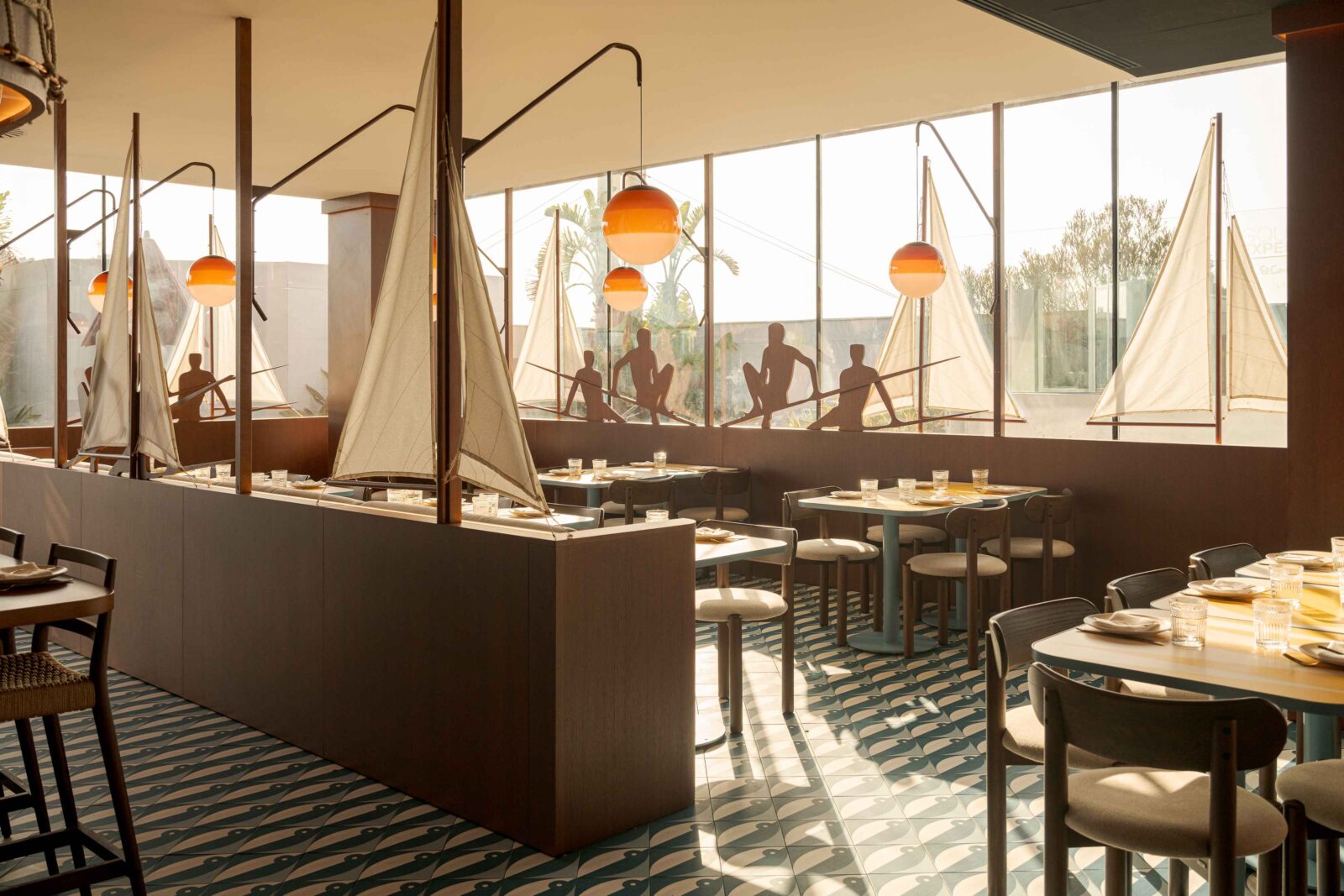
The Atlantic Ocean as seen through El Mar’s interior design
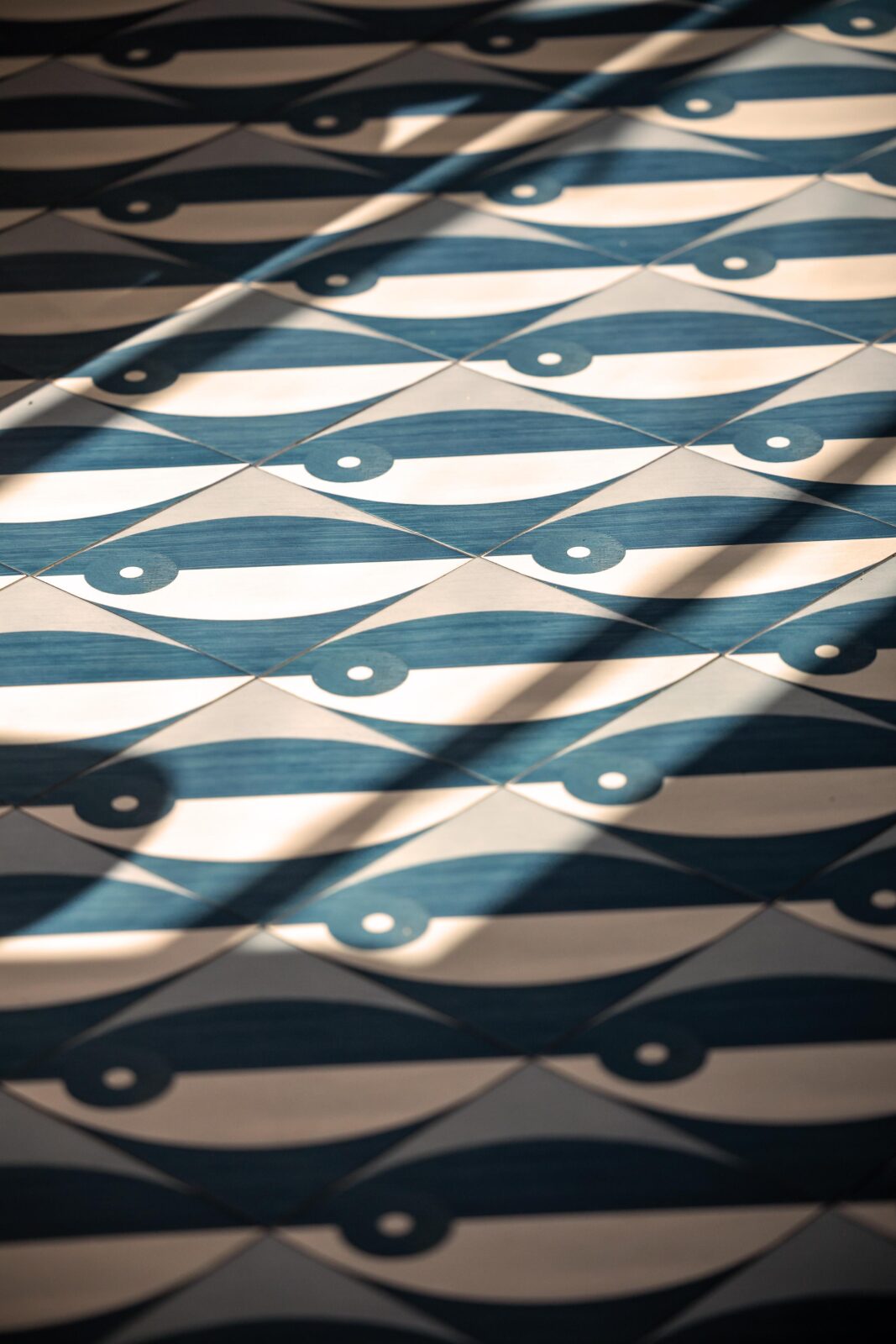
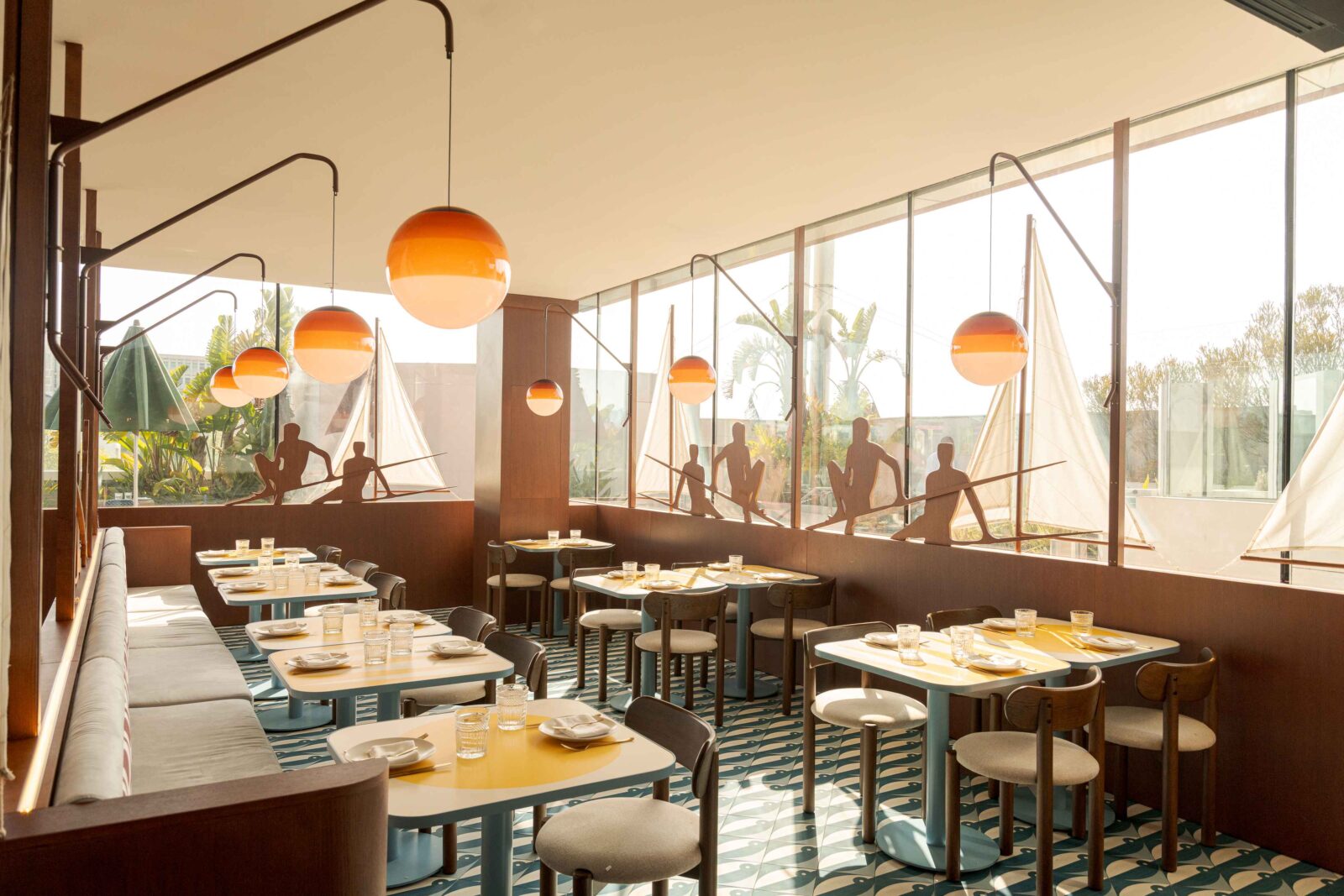
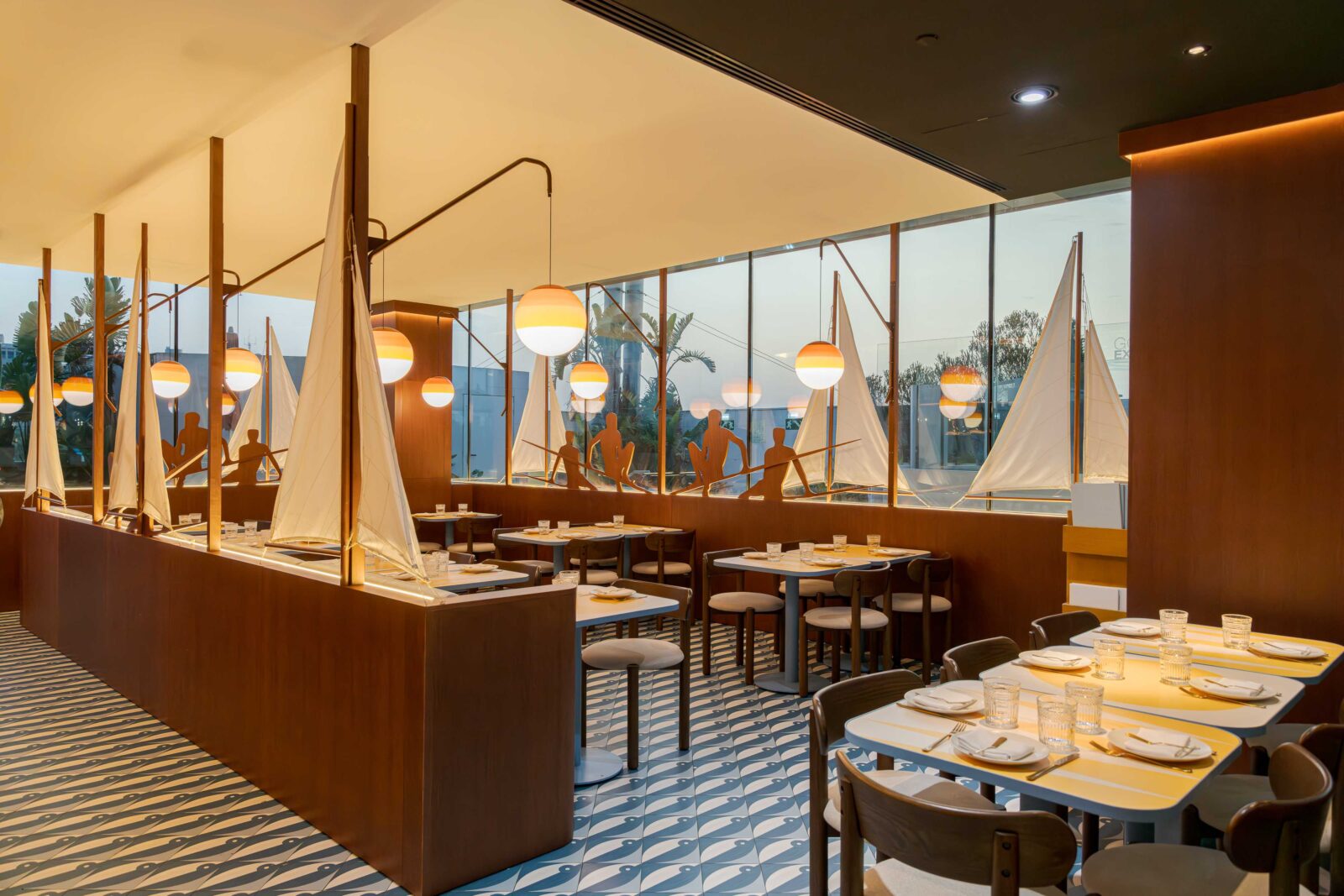
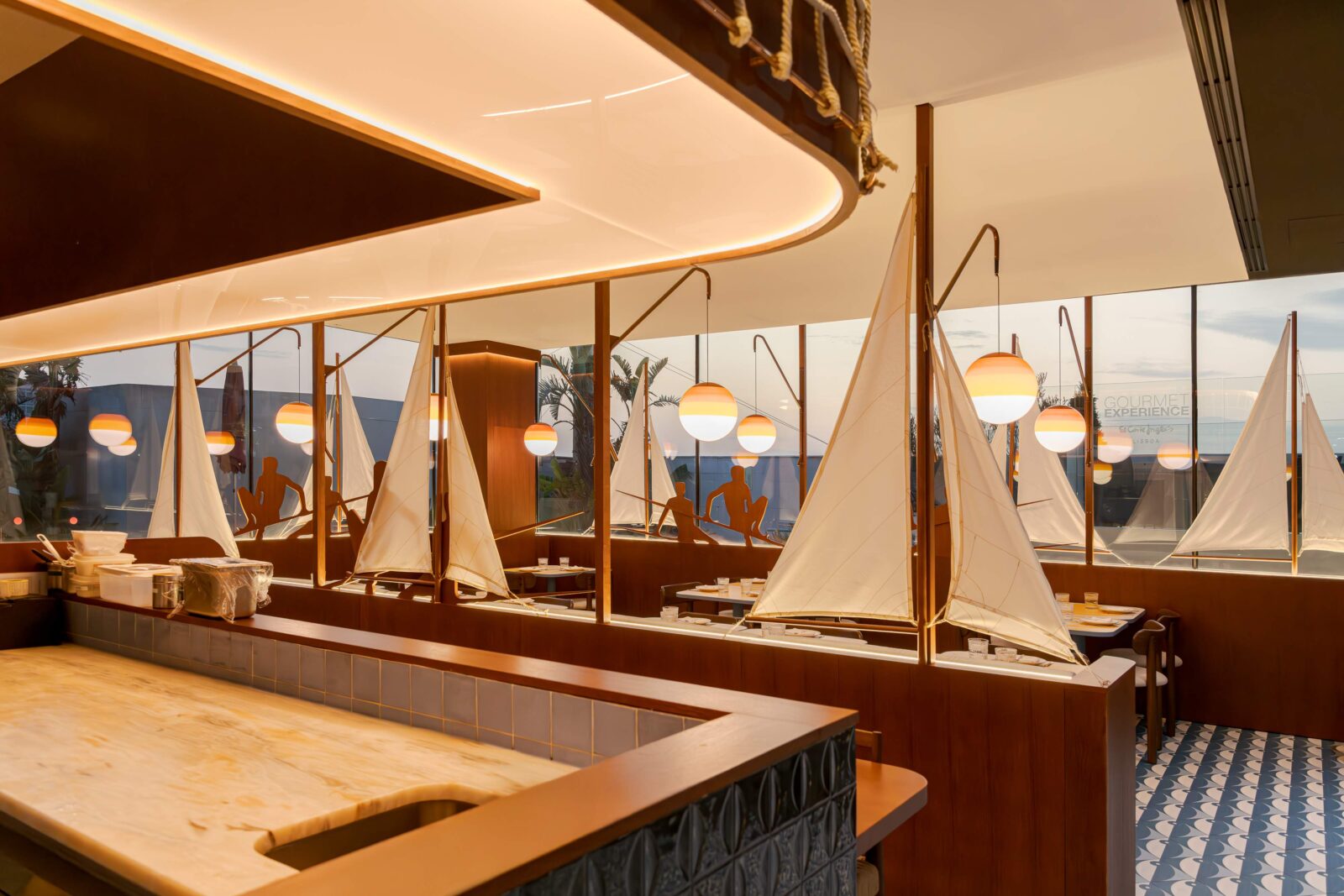
El Mar’s interior, designed by Alejandro Cateto and Cateto Cateto, moves between Brazil and Portugal, having been filled with maritime references and bits and pieces of the two Lusophone countries’ cultures. Cushion fabrics, for instance, pick up the curved lines of Rio’s beachfront, while the tiles, in their familiar whites and blues, bring in a very Portuguese feel. Across the walls, silhouettes of sailors and sails guide guests into the seafaring theme, cementing the sea as the protagonist and introducing a common element in the Portuguese and Brazilian cultures.
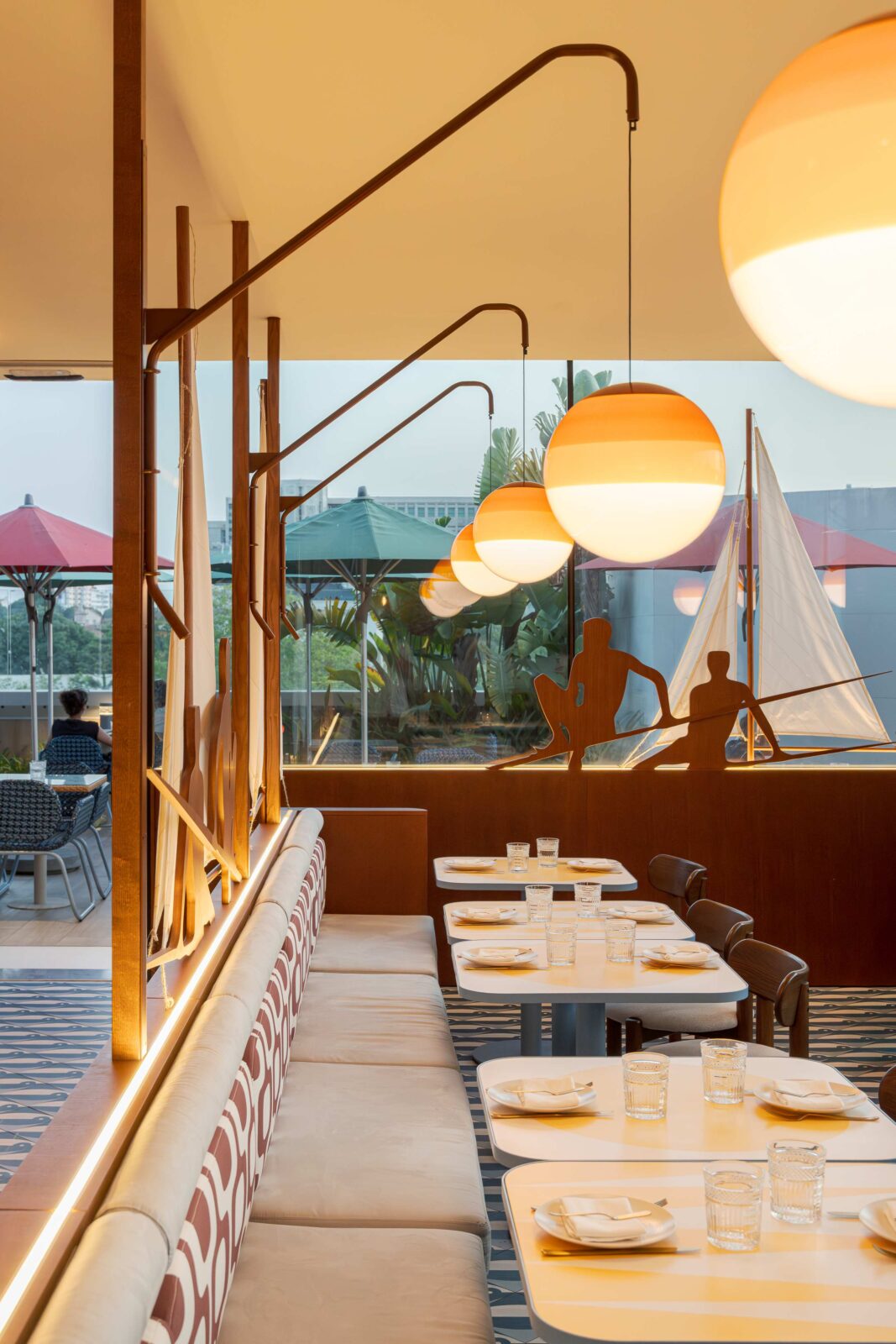
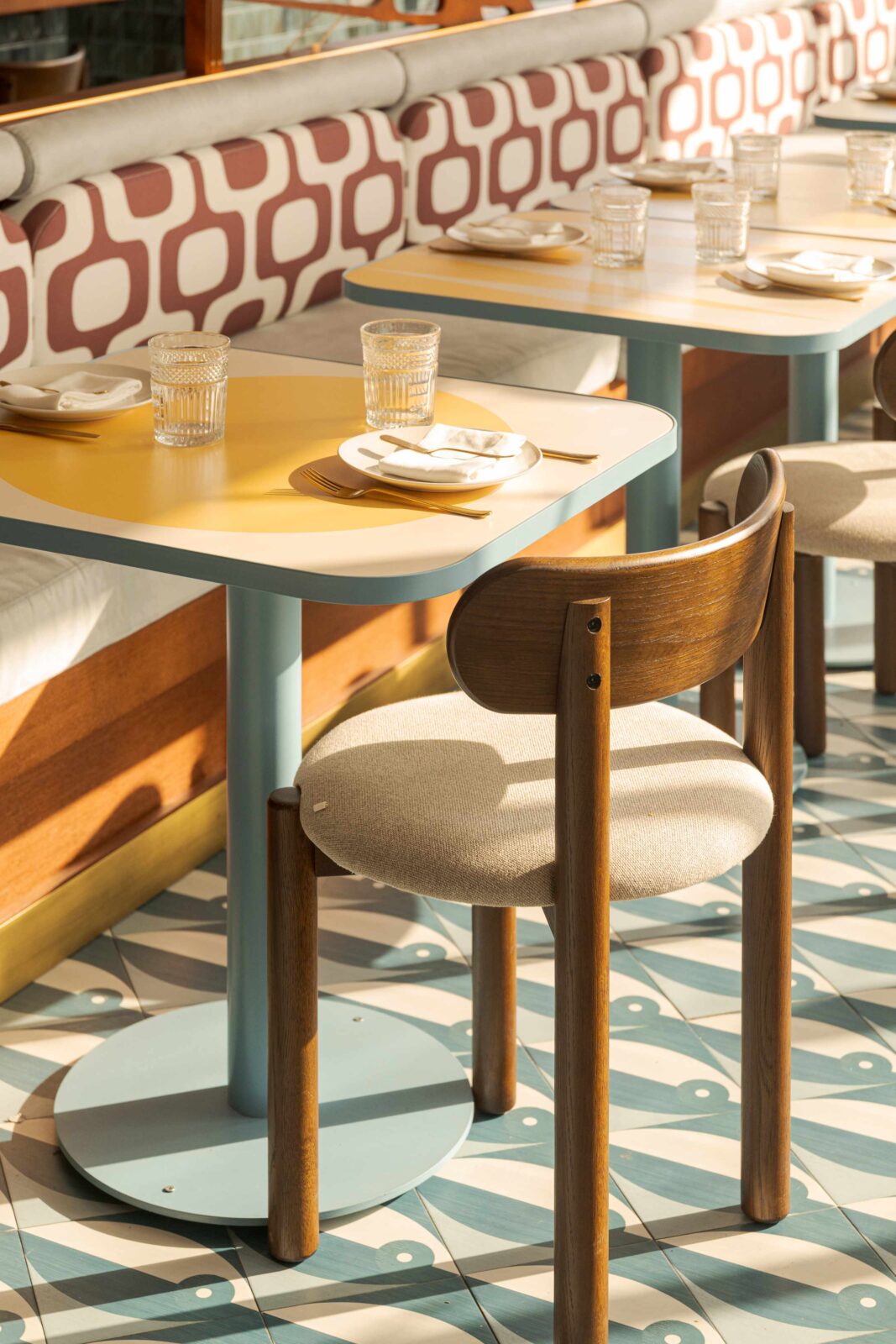
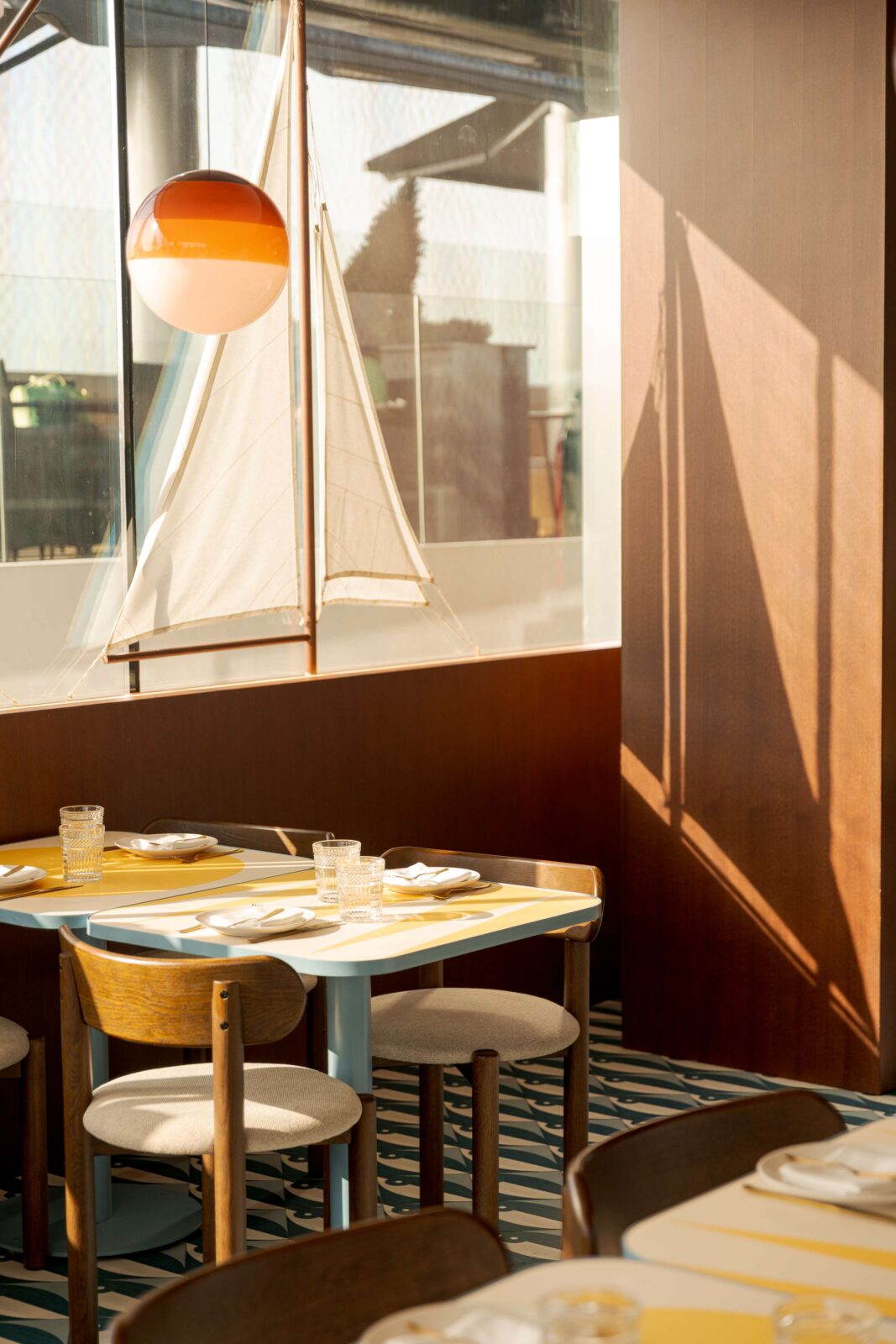
Wood wraps the space almost entirely, creating a sort of ship’s cabin. The restaurant is, then, the inside of a vessel making a crossing between two continents, with the aesthetics and the food both bringing that passage to life. Guests get the sense of being on board, with the line of the sea imagined just beyond view.
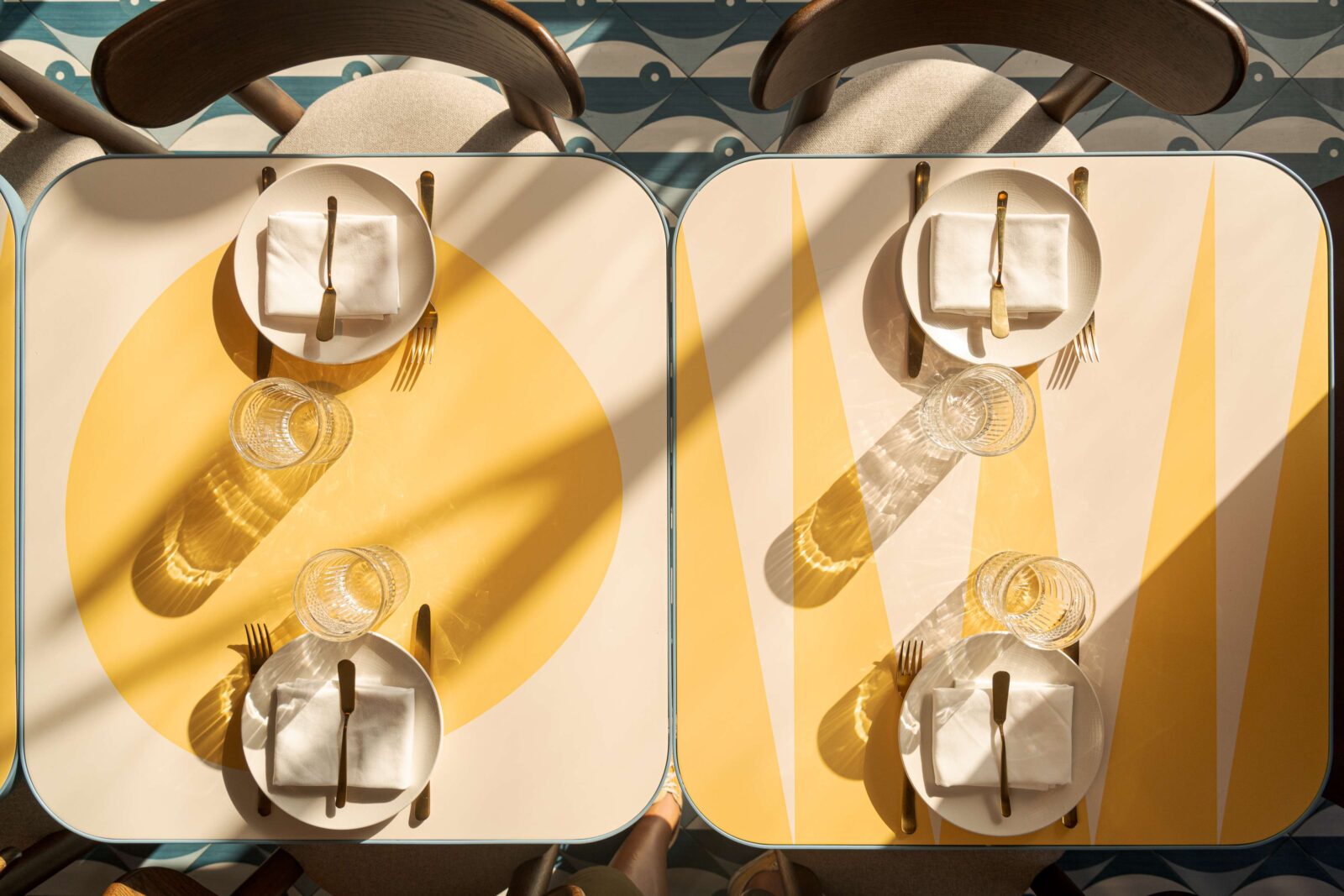
That atmosphere is only possible through materials and colours. The timber gives the interior warmth, while the palette moves between marine blues and the yellow-gold cast of late sunlight, closer to sunset than midday. The lighting is just as important to create that feeling, with Marset’s Dipping Light hanging overhead, just like fishing rods or the sinking sun.
The sunset tones of the lighting design
At El Mar, the lighting design revolves around the reworked version of Marset’s Dipping Light. This suspension was made especially for the restaurant, having been shaped after fishing rods, as we’ve seen, in an attempt to tie light to the sea and the idea of looking out towards the horizon.
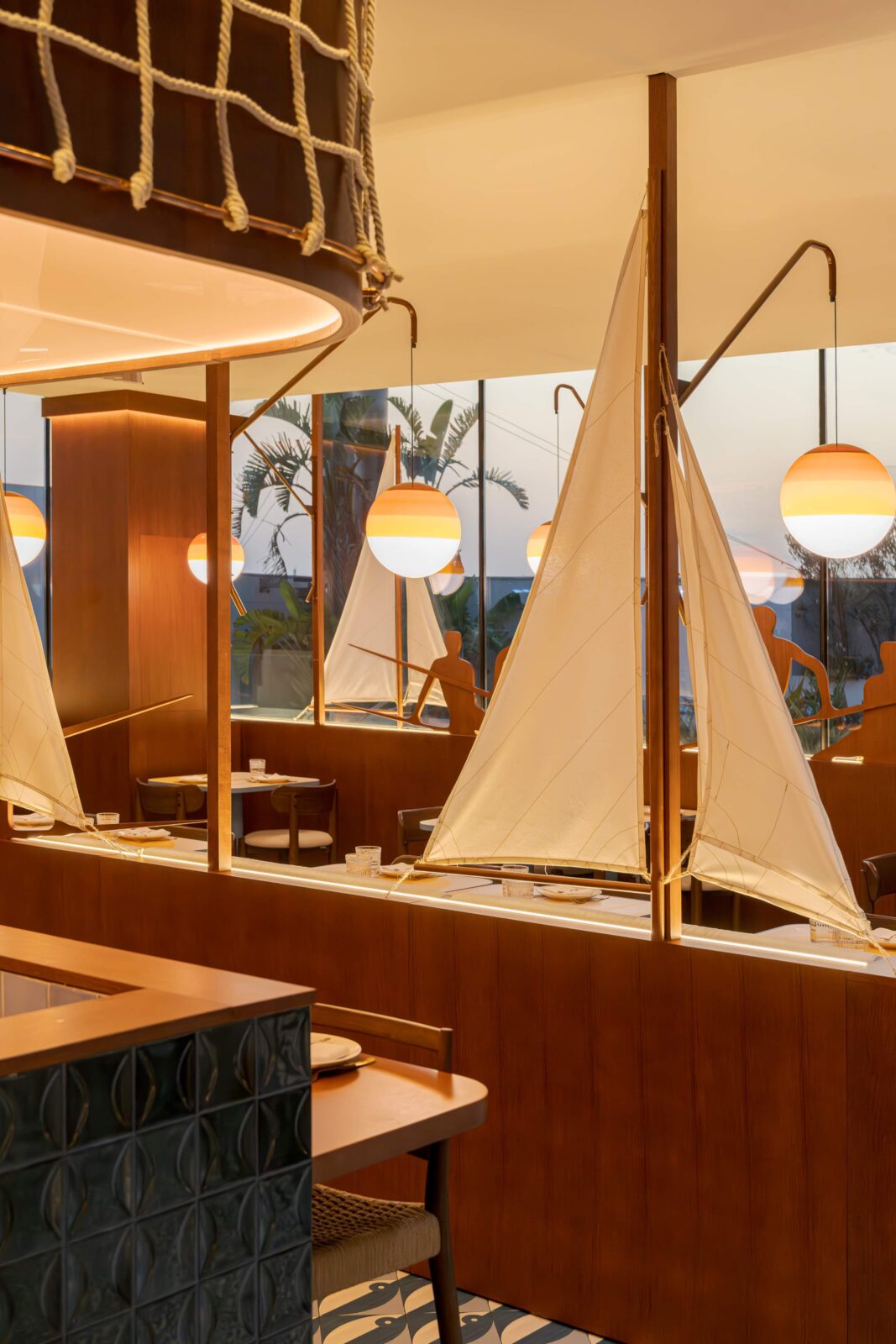
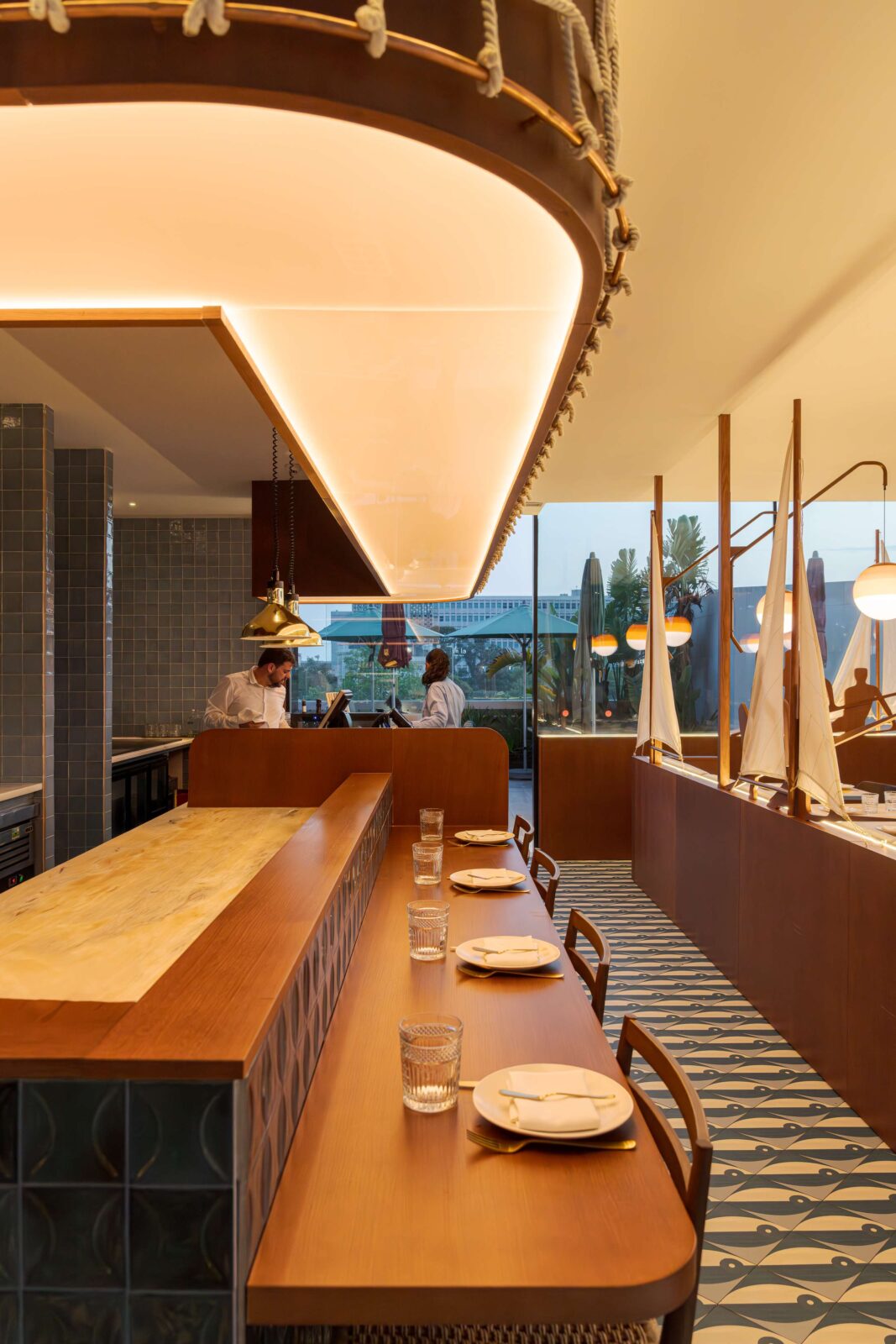
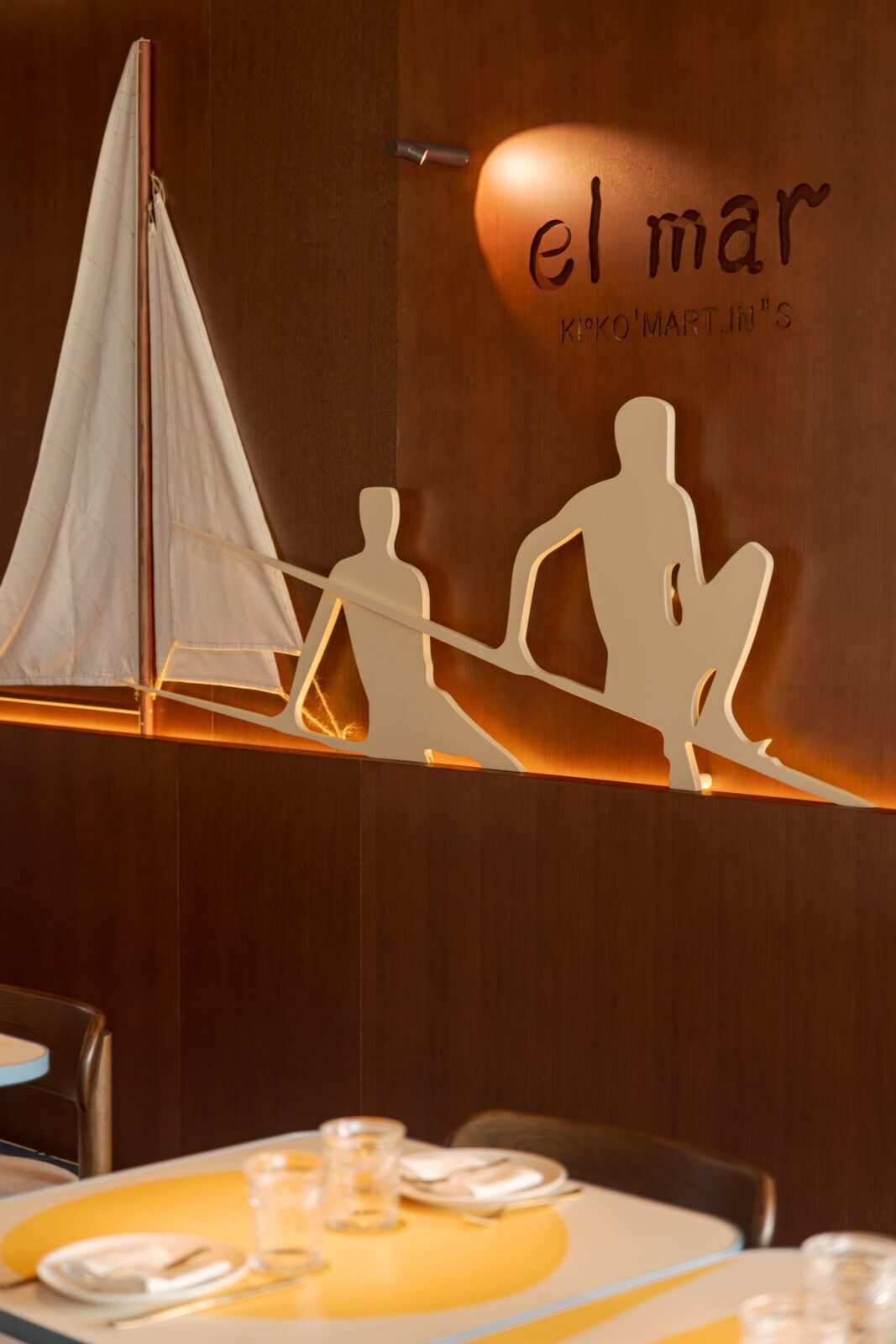
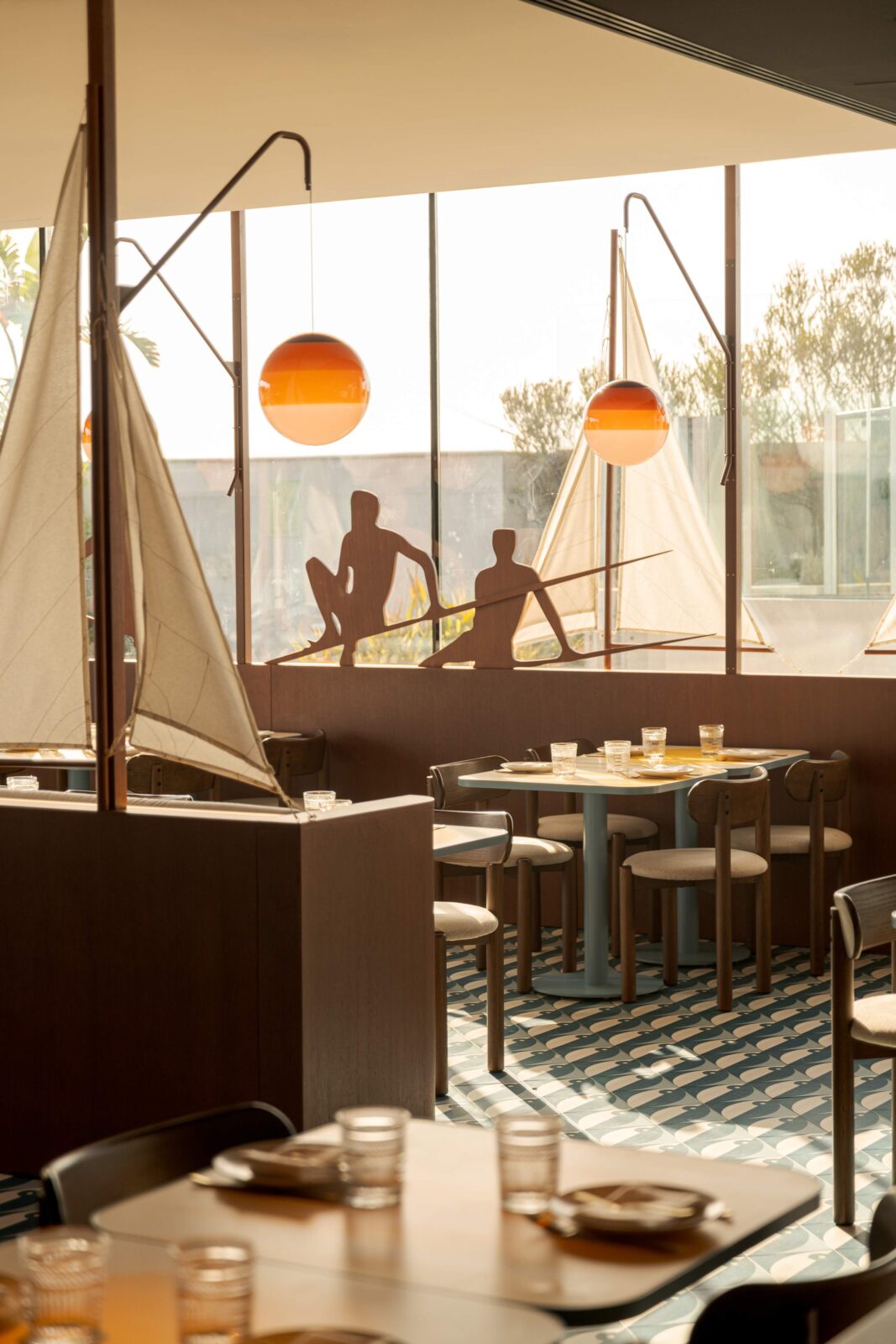
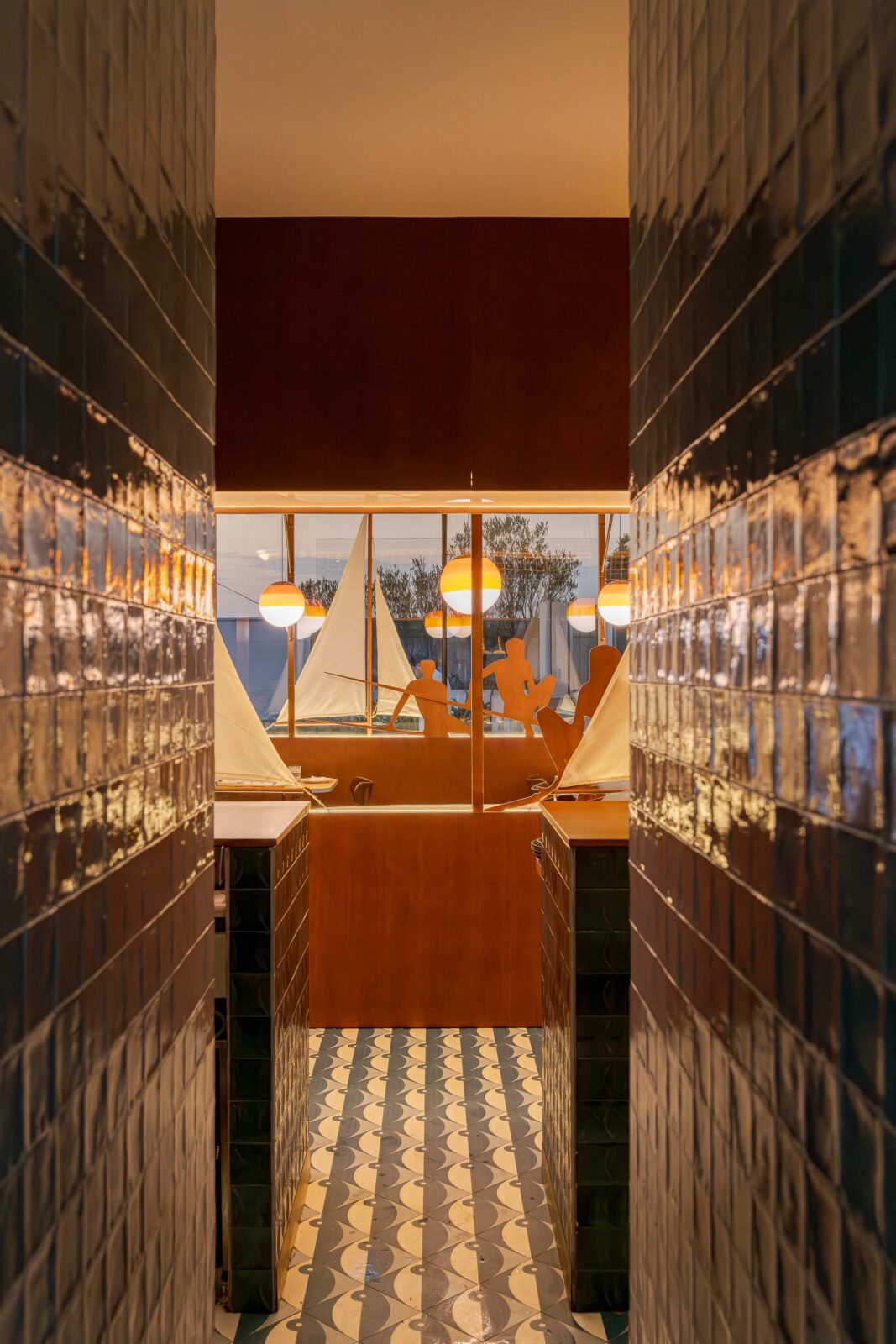
The choice of Dipping Light was also made for its colour. Its orange and gold gradient gives the room a myriad of sunset tones, one of the central conditions in the project. That quality has a particular role on the rooftop, where the artificial lighting meets the real evening red light over Lisbon. At dusk, the effect becomes more pronounced. The lamps hang like small suns, and their light gets reflected on the large windows, getting mixed with the sky’s warm colouring and covering the restaurant in a warm film.
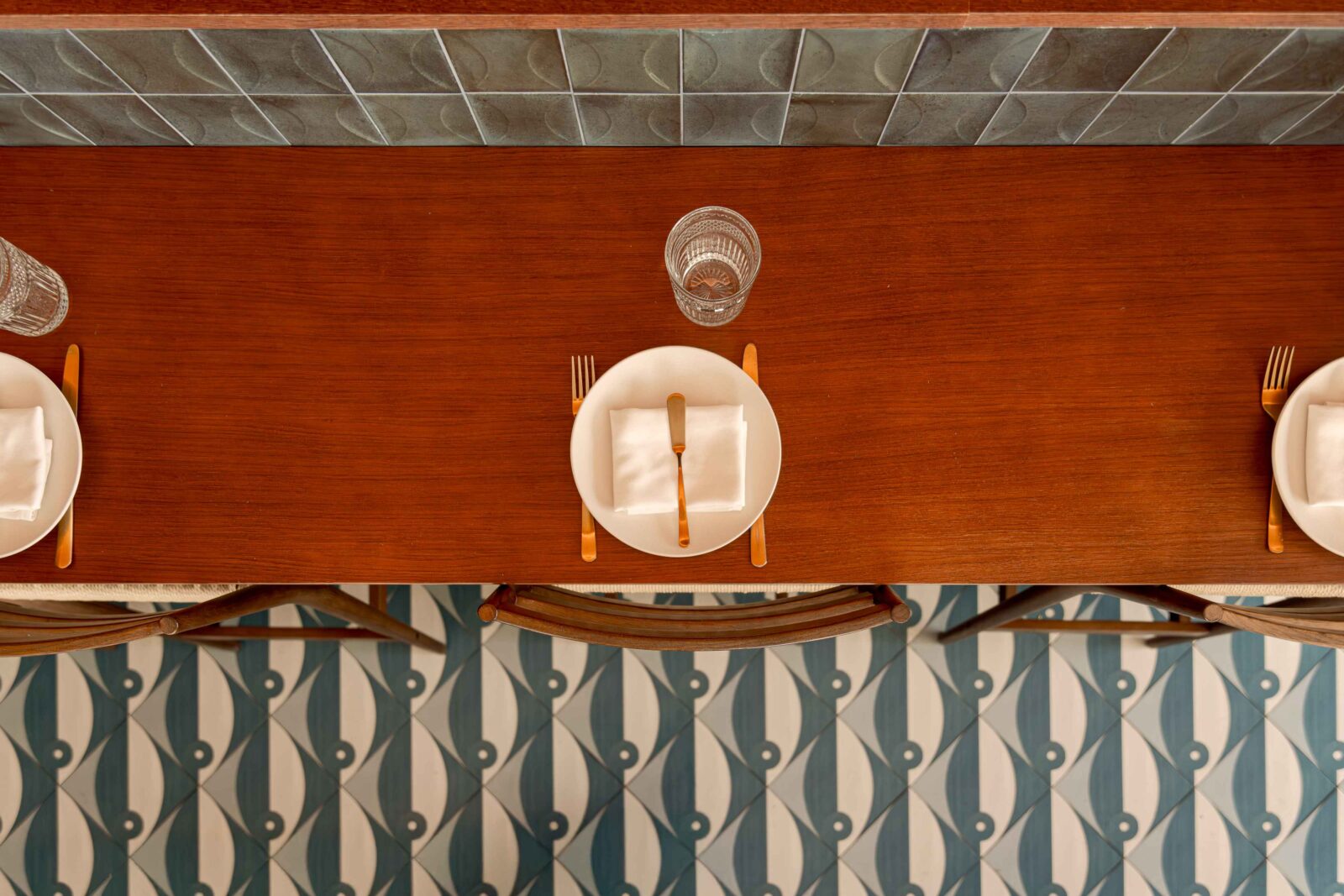
In the kitchen, the ceramic tiles and their blue colours, alongside their coarse surface and reflective quality, bring out the light in the room. Furthering the seafaring idea, light breaks across them in a way reminiscent of the last light on water. Finally, the restaurant sign is lit with Vibia’s Bamboo lighting, used here as a contemporary version of a nautical lantern.
El Mar, therefore, sings the tale of a chef whose cooking travels across the Atlantic. The references to Portugal and Brazil run through the interior, like a ship’s cabin decorated in both countries’ traditions, so the room becomes part of a journey already present in the food.


