Header: Leighton James
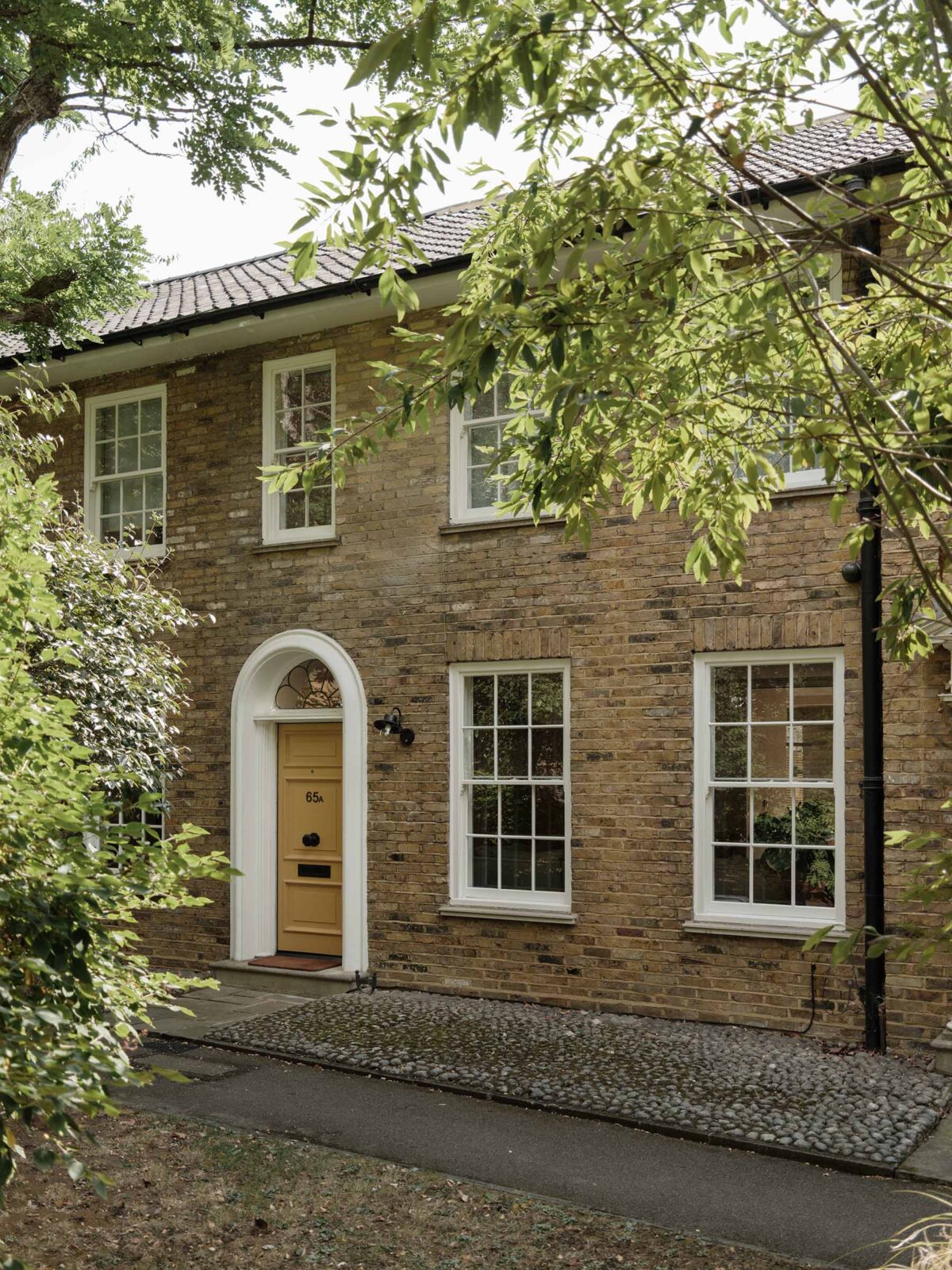
“Islington House” refers to the extension and refurbishment of a home in, you guessed it, Islington, which was developed by Architecture for London in collaboration with Hamish Vincent Design. The property is located within the Canonbury Conservation Area on the southern side of St Paul’s Road and forms part of a terrace of nine post-war rebuilt houses dating from the 1950s.
The search for a Georgian townhouse
When the client asked Hamish Vincent Design for help in finding a home in Islington, they were immediately drawn to the look of Georgian houses. A typical listed townhouse would, however, have imposed limits on the open-plan layout they wanted. The breakthrough came with this relatively new house with the façade of a Georgian townhouse, which offered a more workable base.
Ground floor: dreaming of an open layout
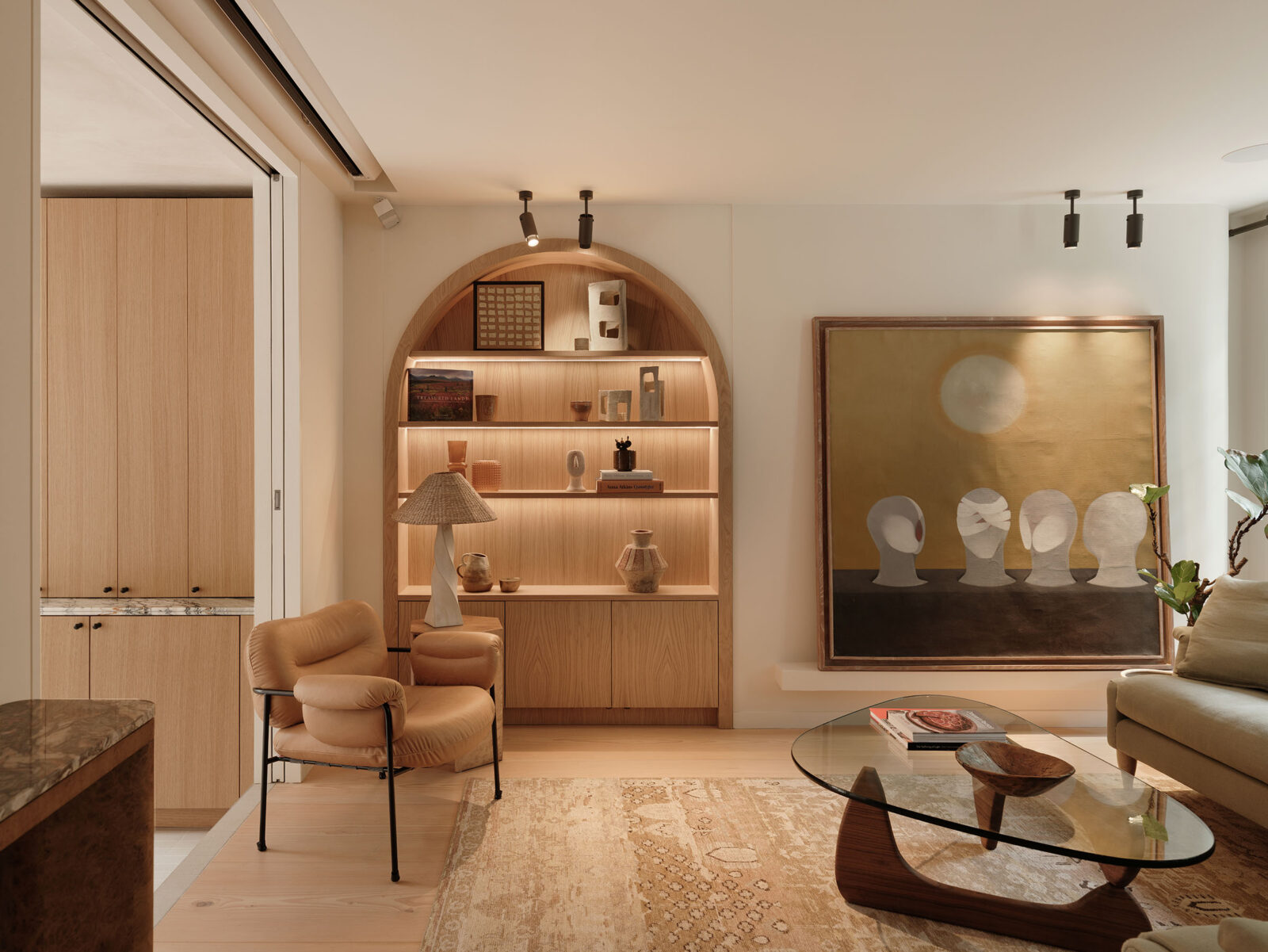
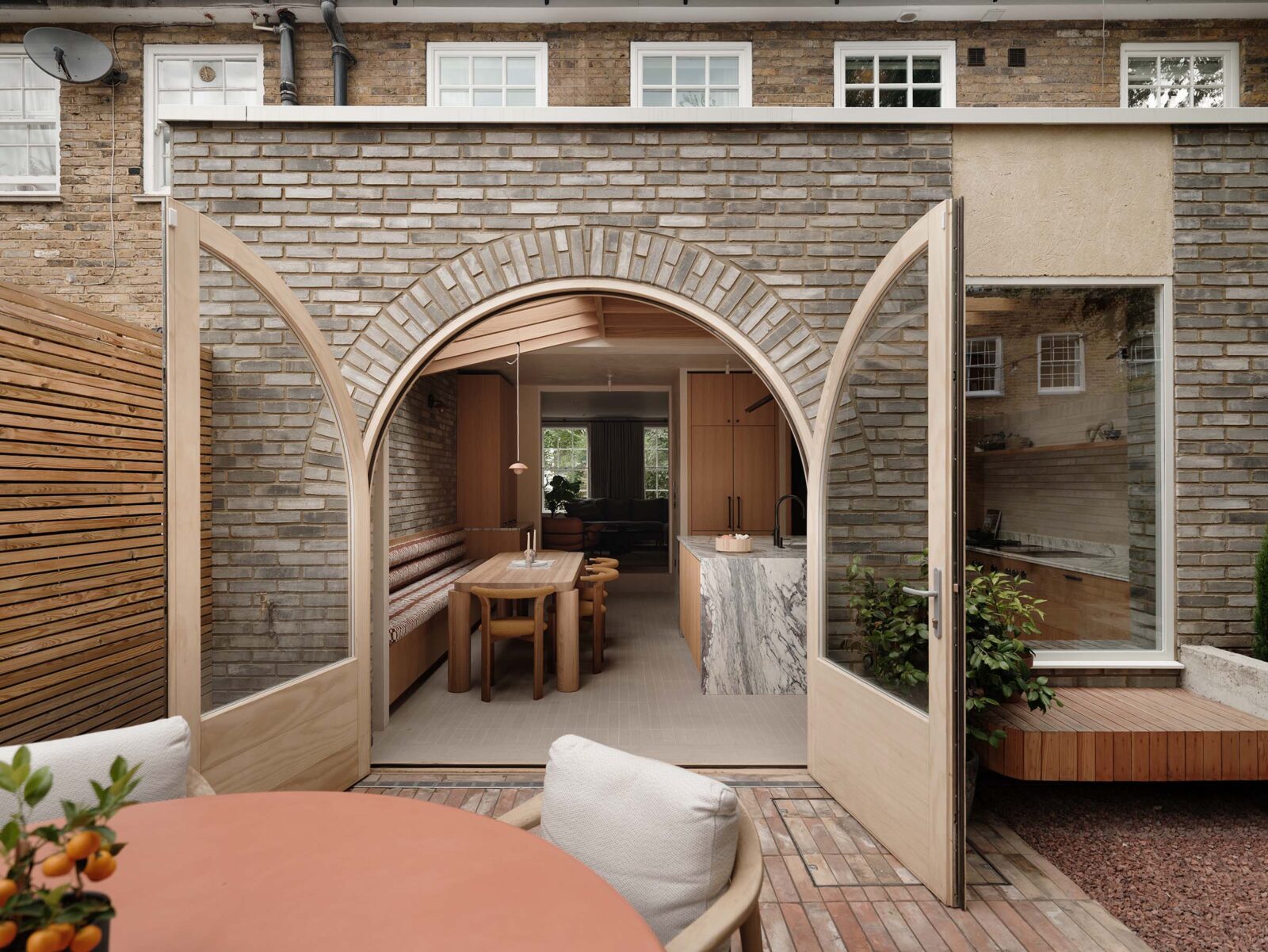
As we’ve seen, the clients wanted a large and flexible ground floor, arranged as an open-plan kitchen, dining and reception area, together with a new ground-floor WC. The client also wanted the house to use natural materials throughout, which perfectly aligned with the design approach shared by both Hamish Vincent Design and Architecture for London.
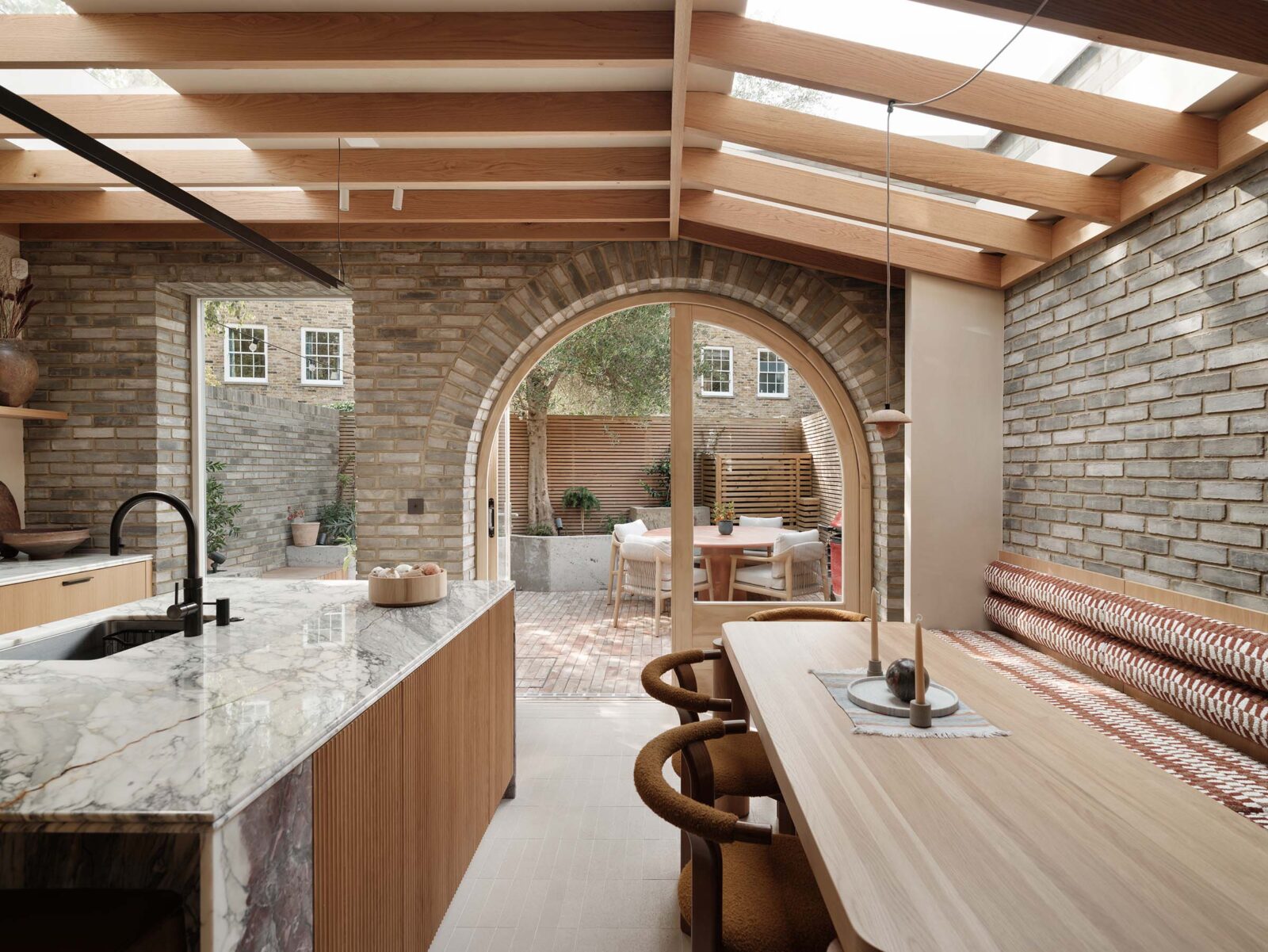
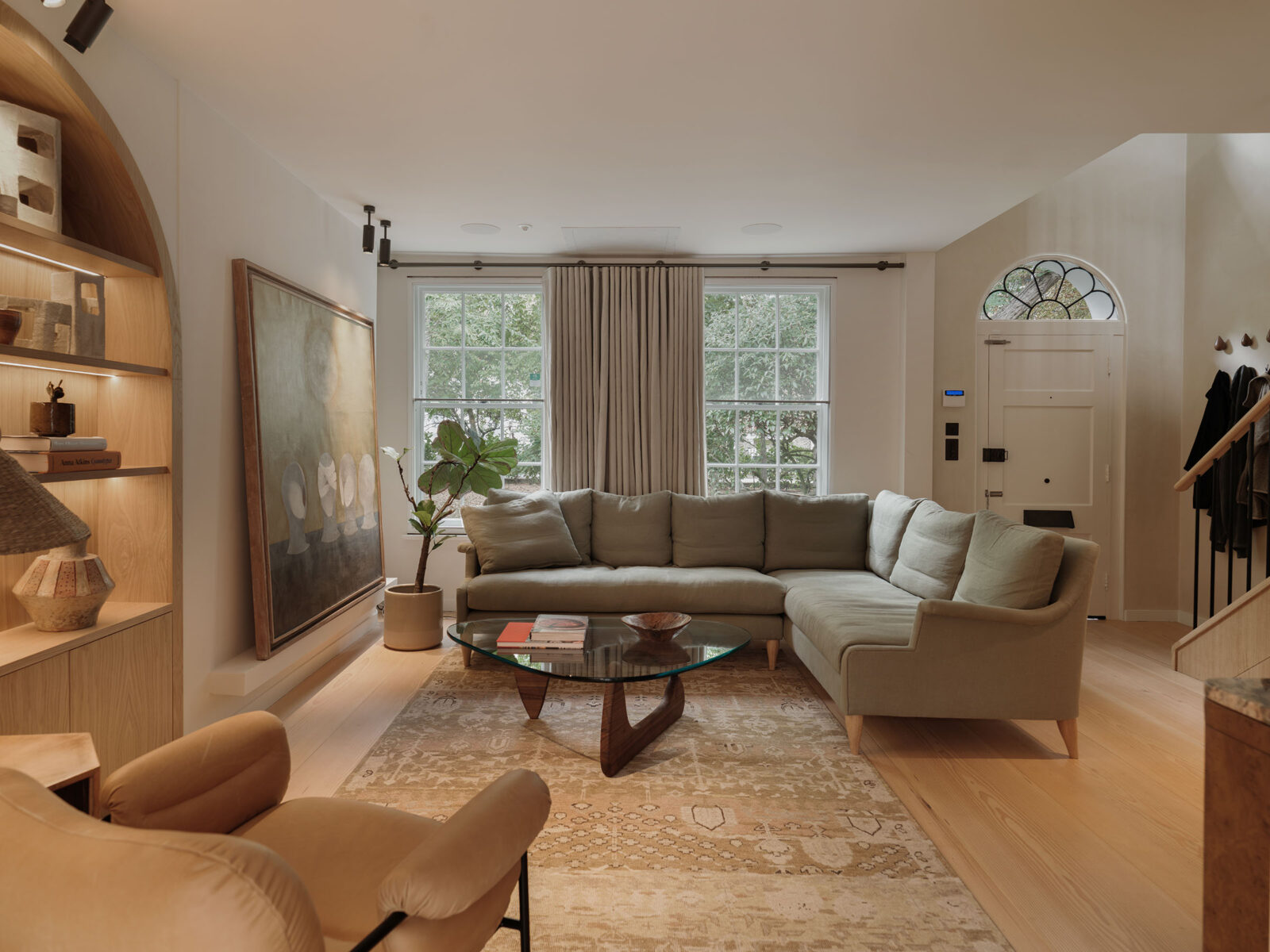
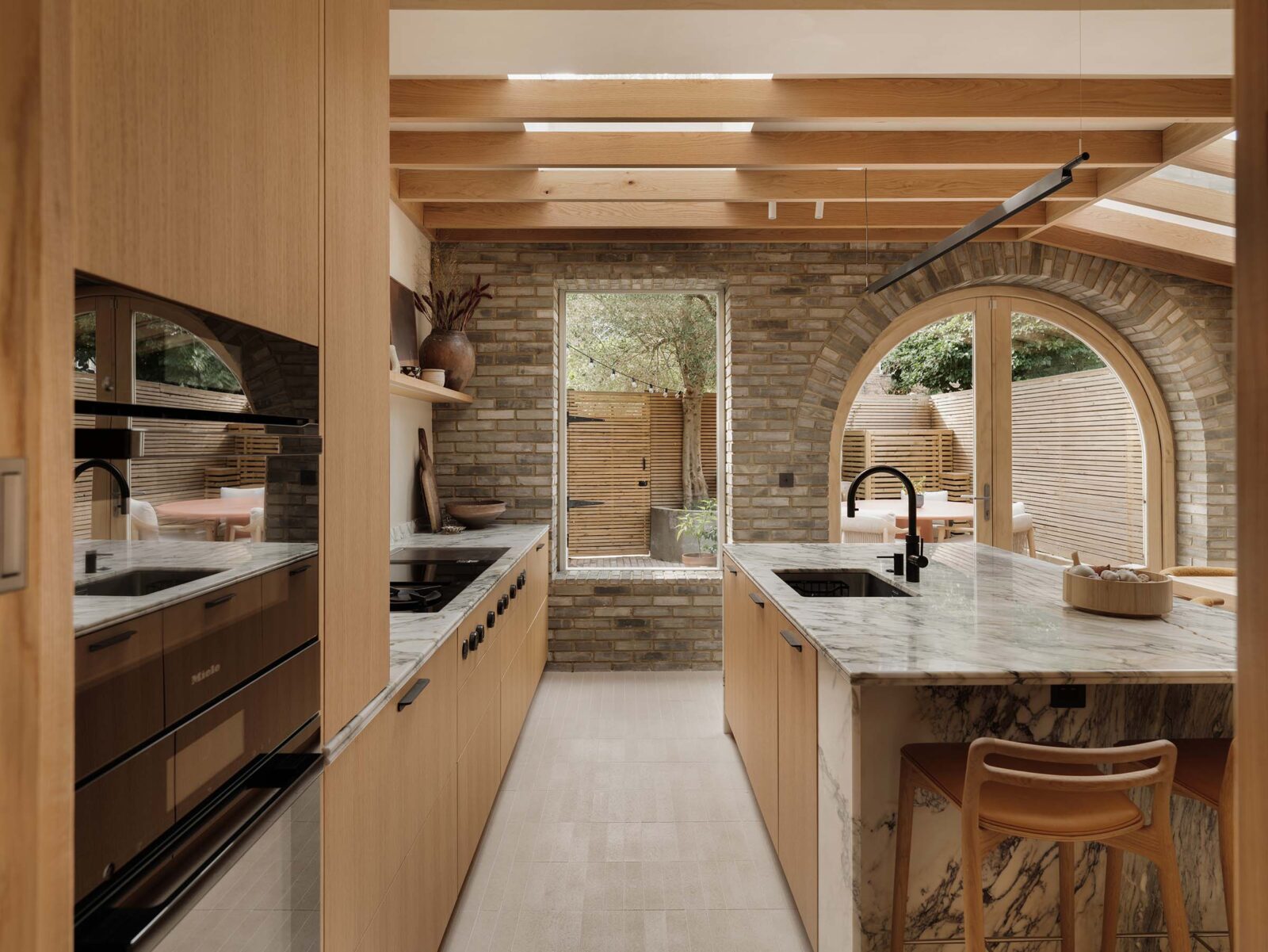
The extension and changes to the interior add an arched garden door and a cantilevered stair, both based on the Georgian revival style of the original house. The new layout also brings in more daylight, making the house easier to move through, and connects the rear rooms more directly to the garden.
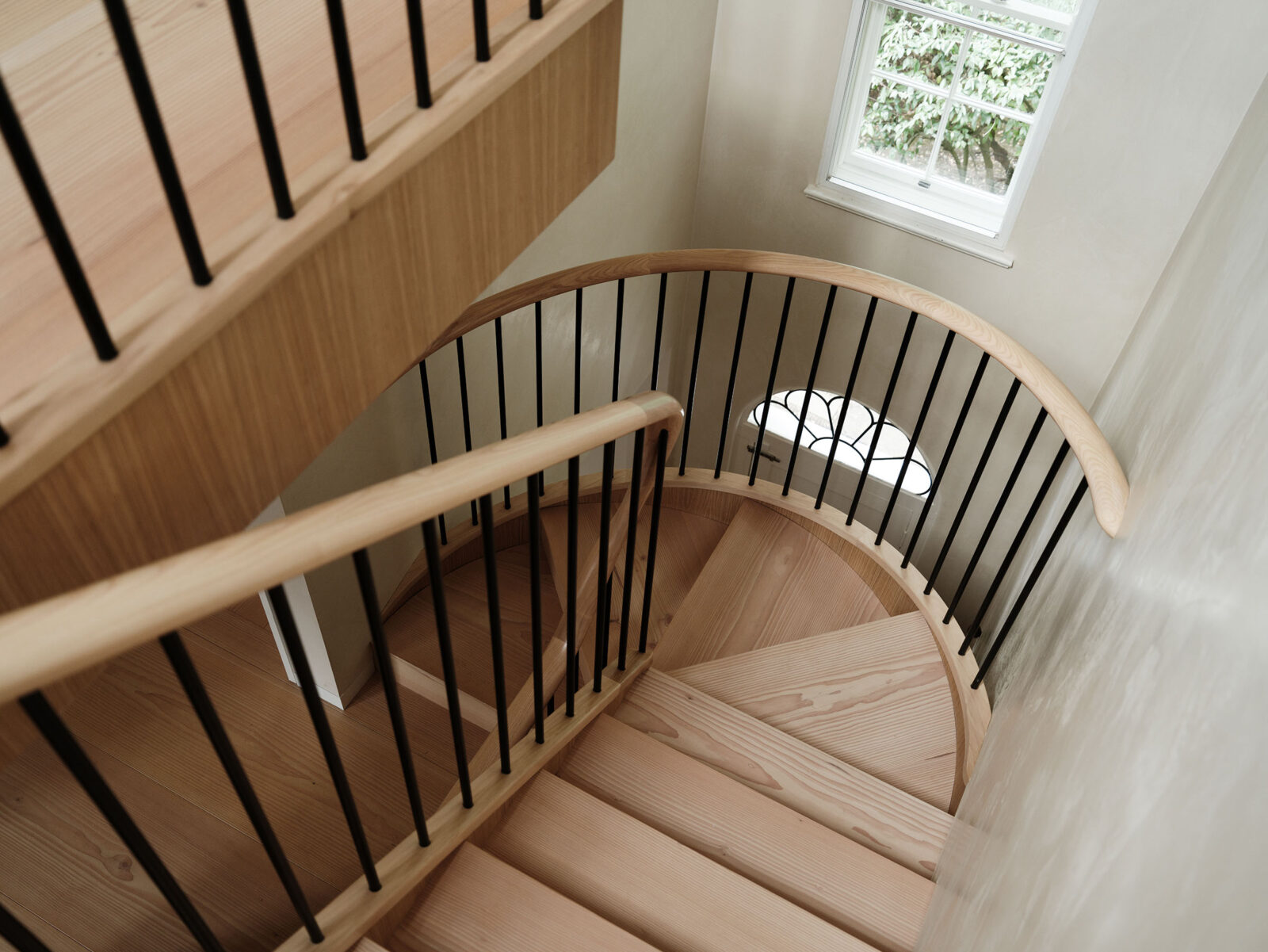
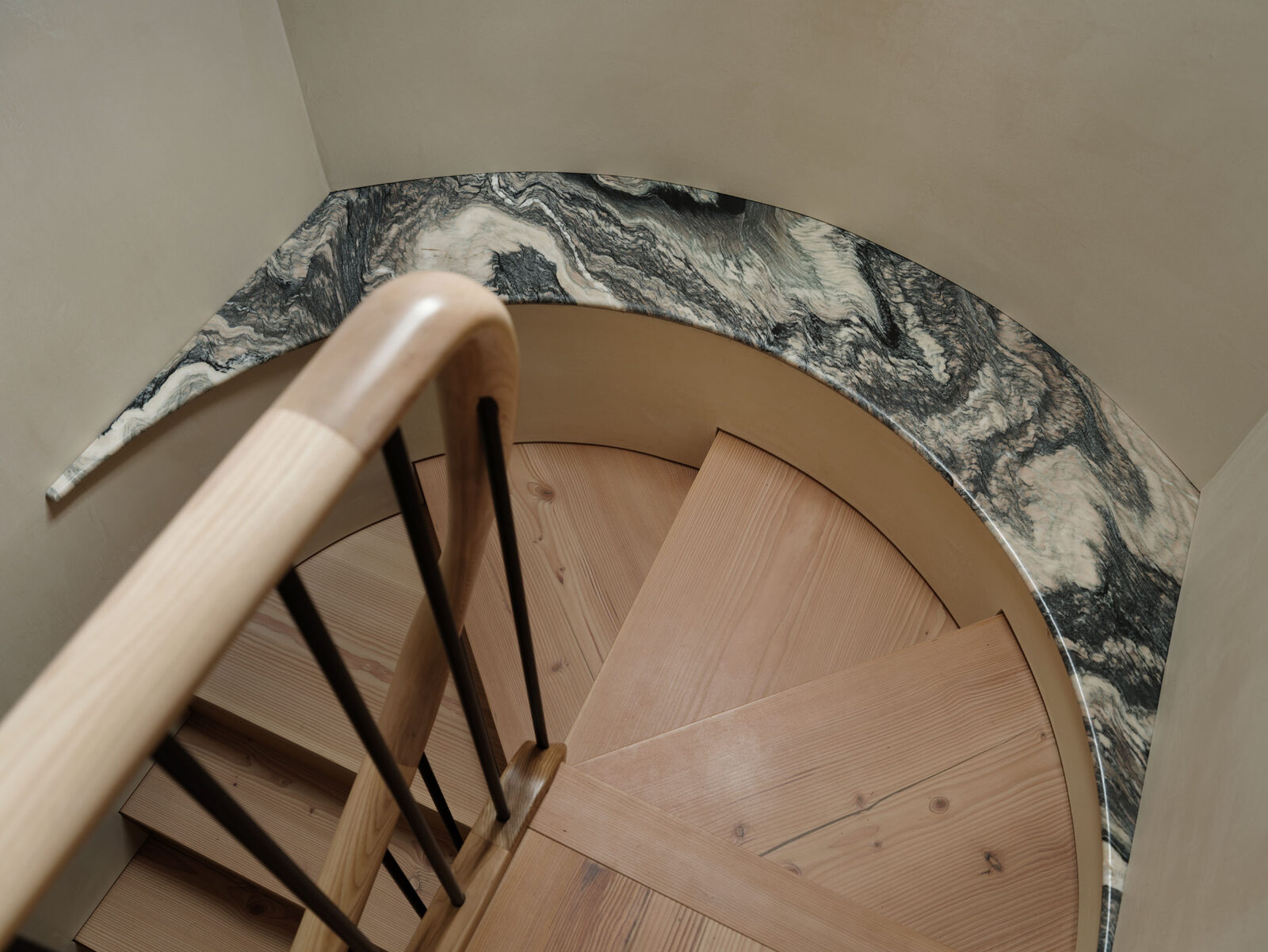
One of the most important details of the design is a new staircase, made with Douglas fir treads and stone, which changes how the house is arranged from top to bottom and across each floor. Its position creates a generous double-height entrance space and opens up a three-storey void linking the ground, first and second floors. The curved form of the stair was used in other parts of the house, such as in the outer wall of the principal ensuite on the first floor.
Up the stairs to the top floors
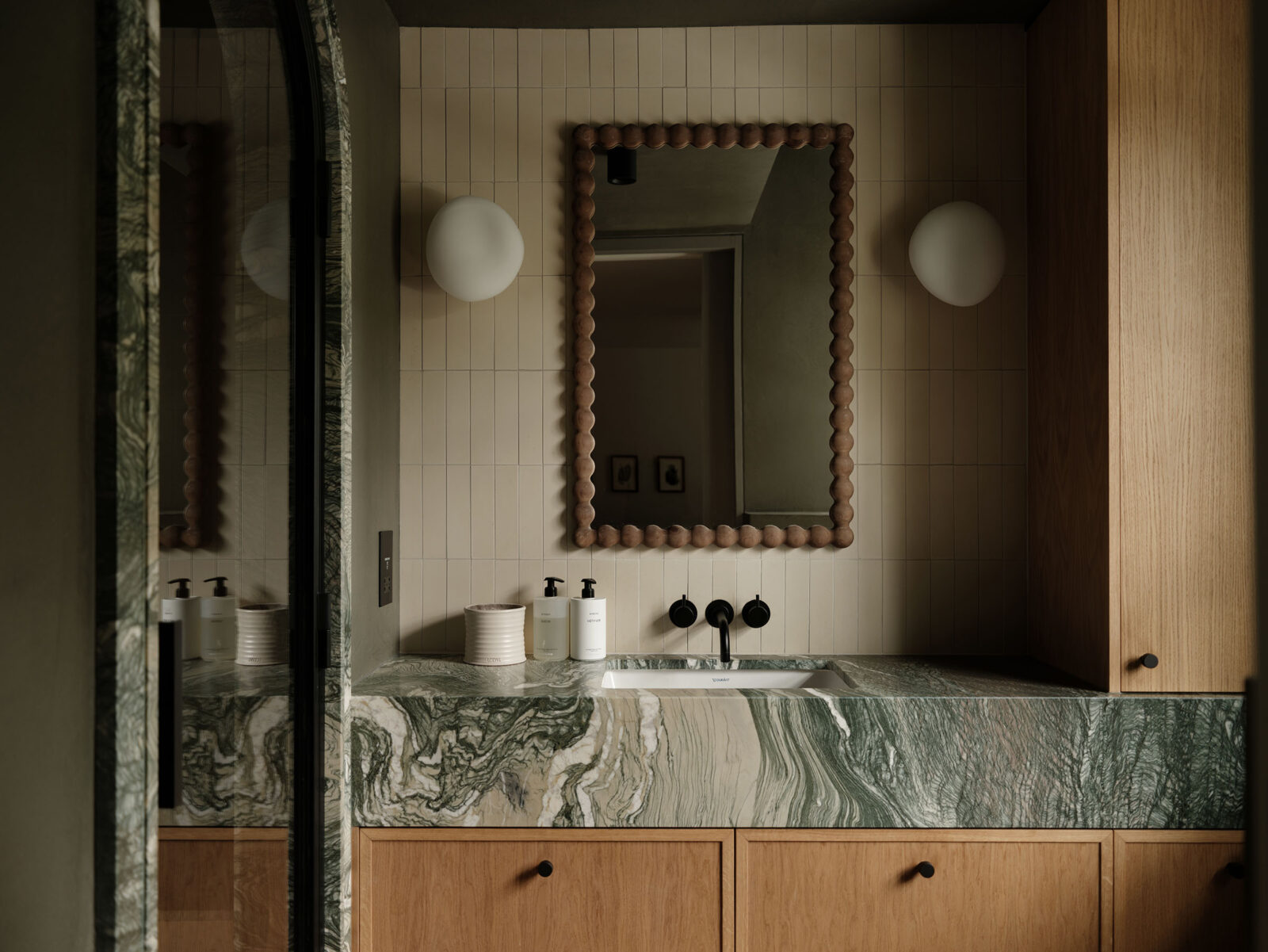
The first floor is where the main bedroom and its ensuite can be found, alongside the detail of the curve of the stairs having been used to shape the shower box. Opposite to this main space is a second room that can be used as both a bedroom and a study. On the floor above, the designers added a third bedroom and a wet room. These rooms were created by adjusting the internal floor levels throughout the house, starting from the ground floor, so that each storey could have enough ceiling height without having to touch the roofline.
More space was created in the loft, deemed the perfect place to add a study, as it feels secluded from the main living areas and enjoys tonnes of daylight due to the new Velux windows in the roof slope.
The materials: On the same page
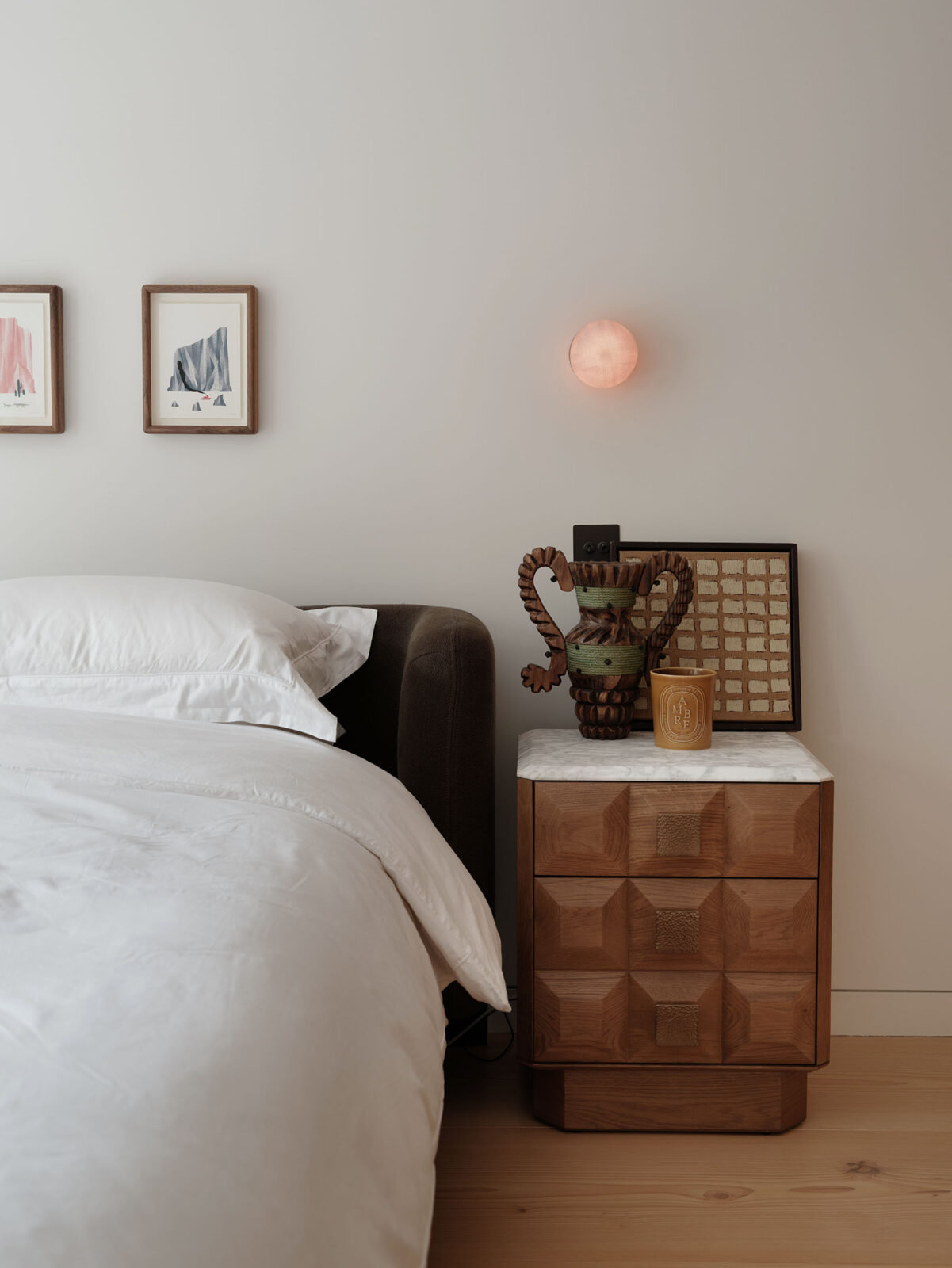
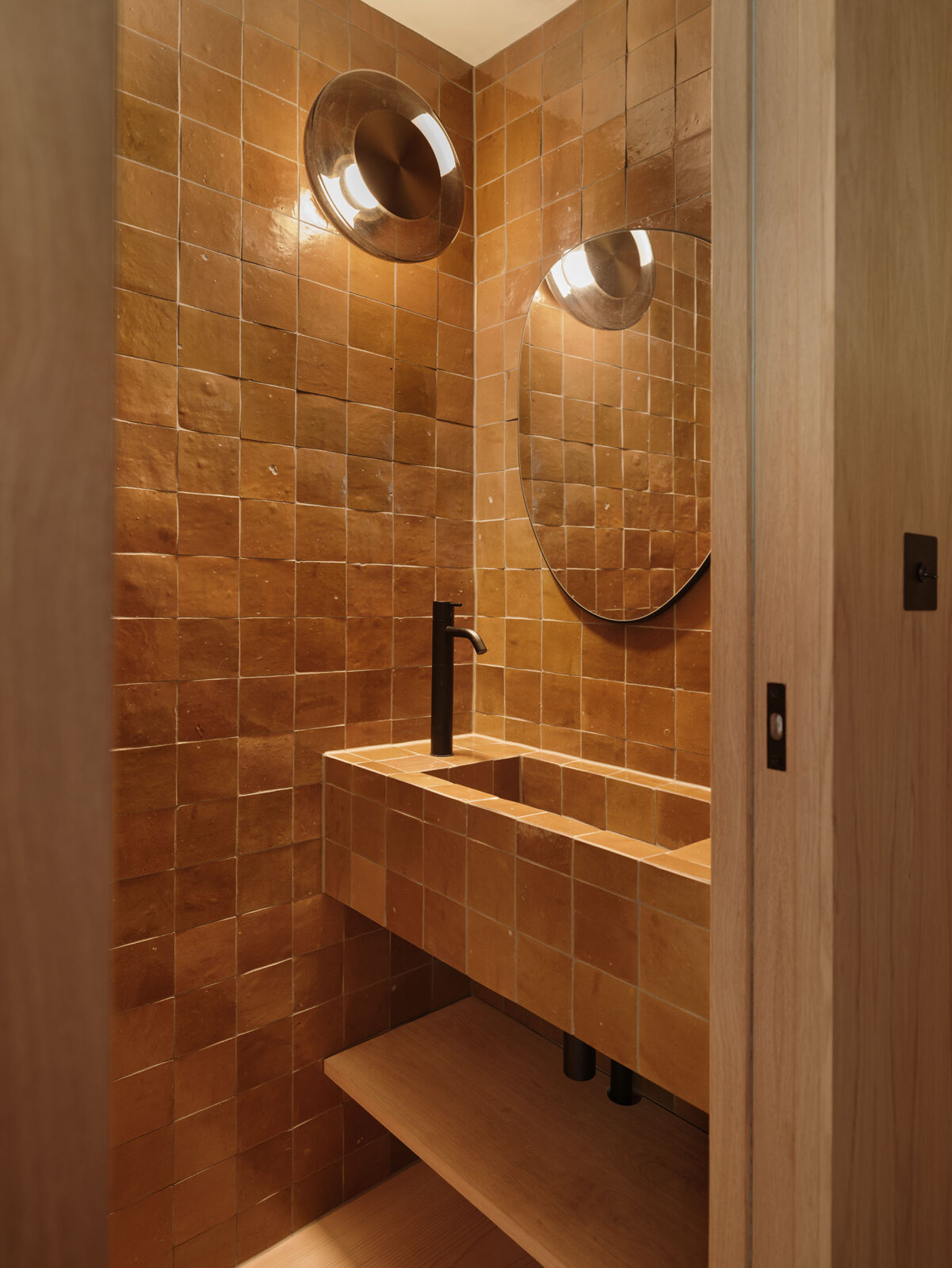
Both the designers and the client had a very concrete idea for the material palette, which happened to be the same: clayworks plaster, lime plaster, marble, timber, brick, solid oak, Douglas fir and natural stone were to be used all around the house. The plaster’s matte finish gives the walls a softer look, especially around the curves and arches, while timber and stone appear everywhere, from the stairs to the landings and bathrooms.
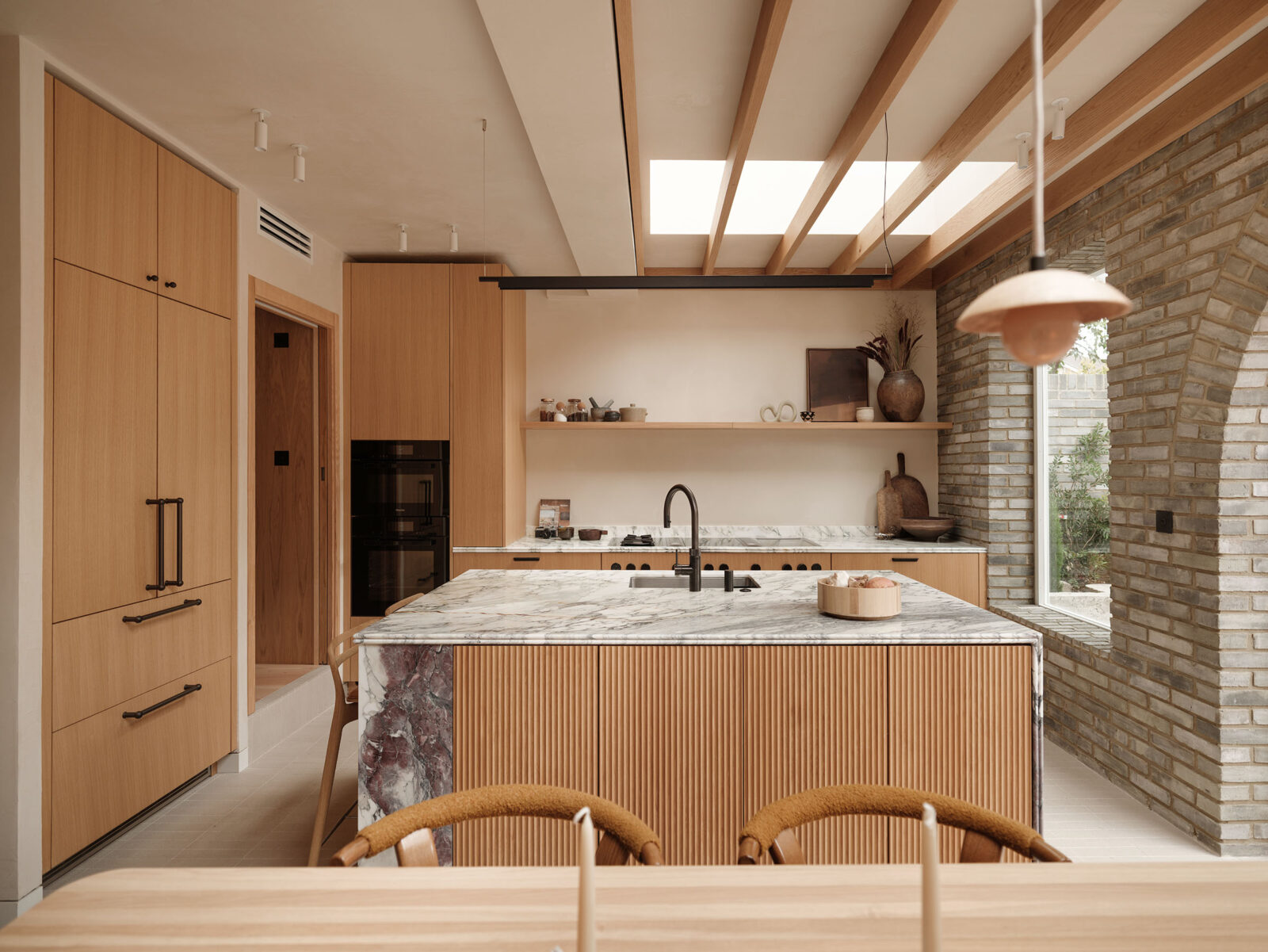
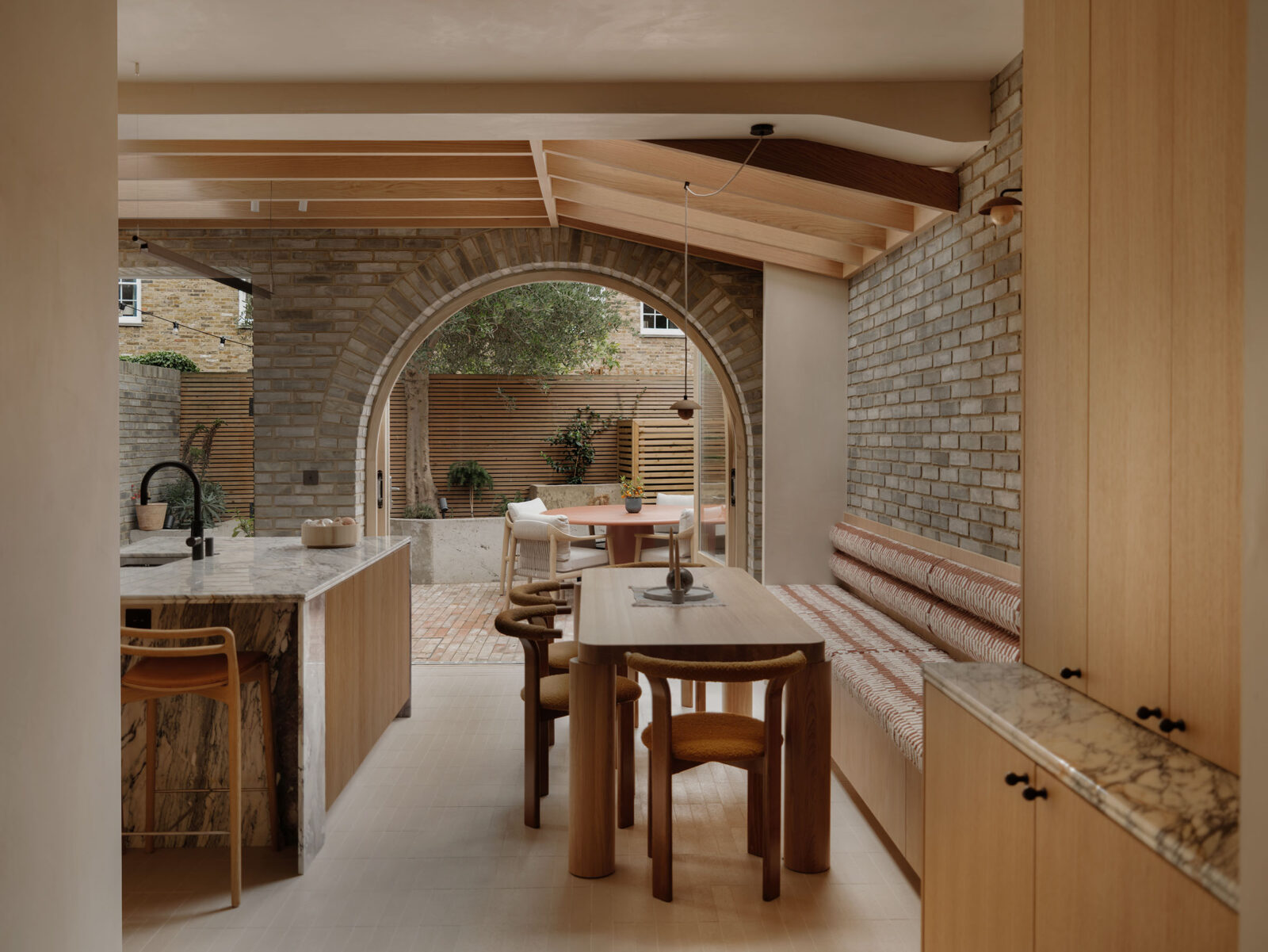
From the outside, the house looks just like any other in the street, which keeps it consistent with the conservation area’s guidelines. Once inside, however, it embraces its own character through the layout, materials and details, making it one of those houses that you need to step into to really know.