



Header: W Sardinia
Summer is almost here, which means it is time to start planning the perfect European trip. Flights and routes usually come first, but the hotel is often the most important choice, as it can define a whole experience. It sets the pace to discover a city, changes how easy you can get to the beach (and enjoy the night after a salty day) and can completely define a few days in the countryside. For this selection, we looked at LIV Hospitality Design Awards winners that stand out not just for where they are but for how they are designed.
From Paris and London to Mykonos, Sardinia and Lake Balaton, these hotels and resorts cover different kinds of summer fun. We selected our favourites with both location and design in mind, focusing on projects where the architecture or interiors can give you days’ worth of conversation topics.
Urban Destinations
“LA FANTAISIE HOTEL” Paris IX
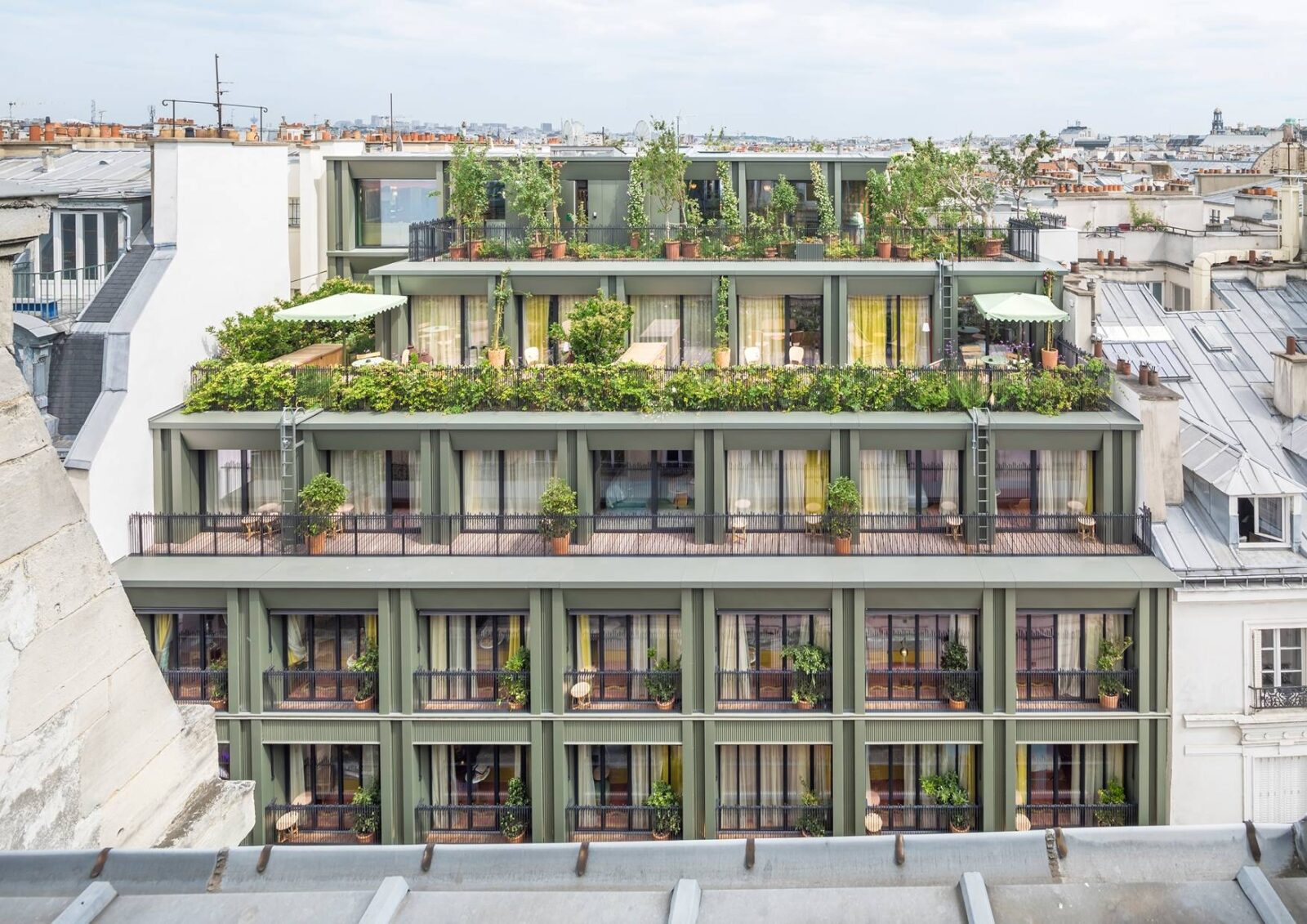
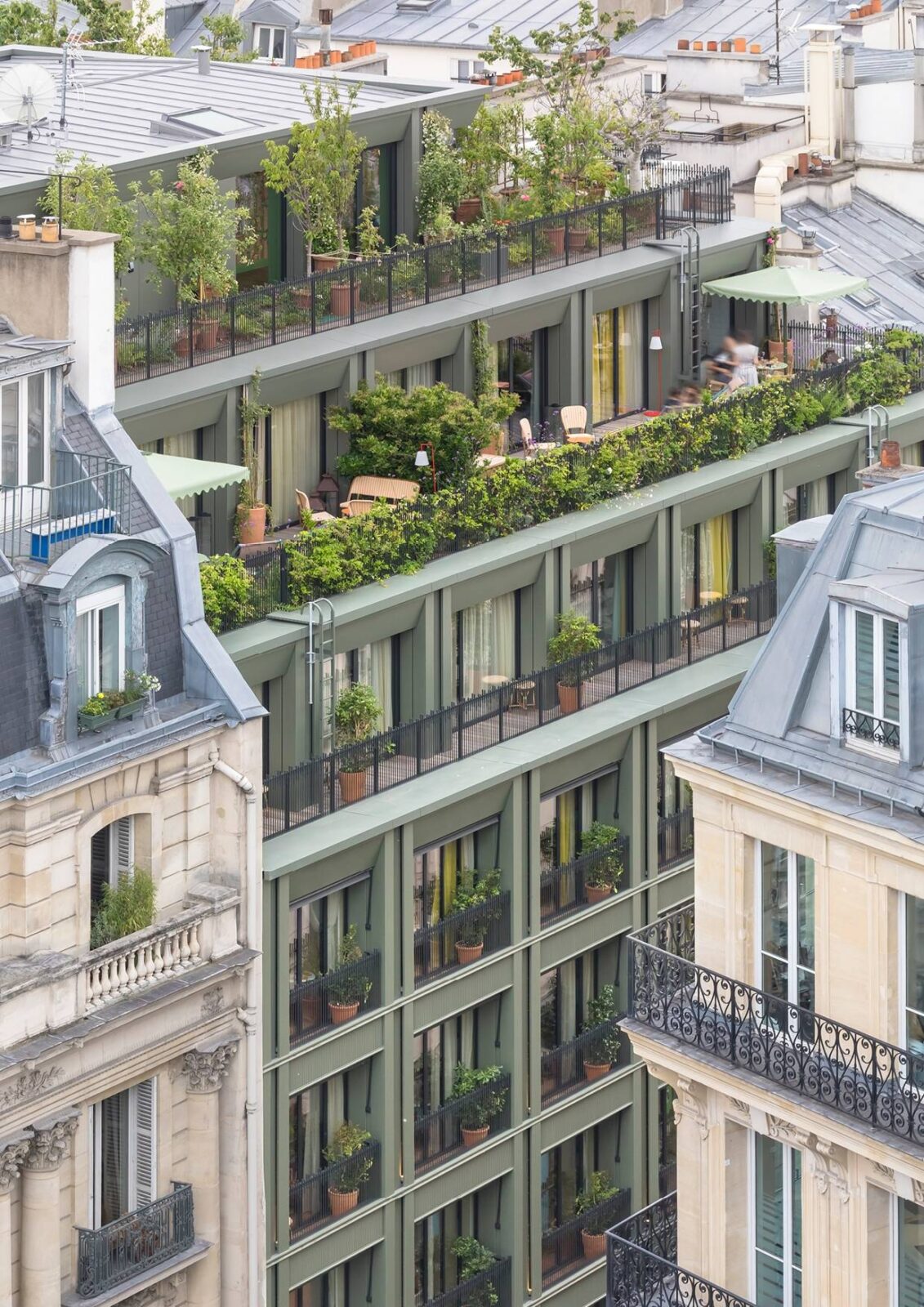
La Fantaisie Hotel is located in one of Paris’ most in-vogue arrondissements, the 9th. PPX Architectes reworked the typical Parisian building extensively, keeping the traditional façade after adding several upper floors as penthouse units. That change allowed the designers to make room for a landscaped area at the centre of the block, making this an intimate hotel with a relaxing garden within the chaos of Paris.
While its style was kept, the façade was nonetheless restored and aligned with its surroundings in an effort to give the hotel a stronger street presence. PPX Architectes describes it as a kind of filter between the hotel and the city. In practice, that can be seen in the geometric layout of the building and its large bay windows. These windows are especially useful on the narrow streets of Paris, as they bring in a tonne of daylight.
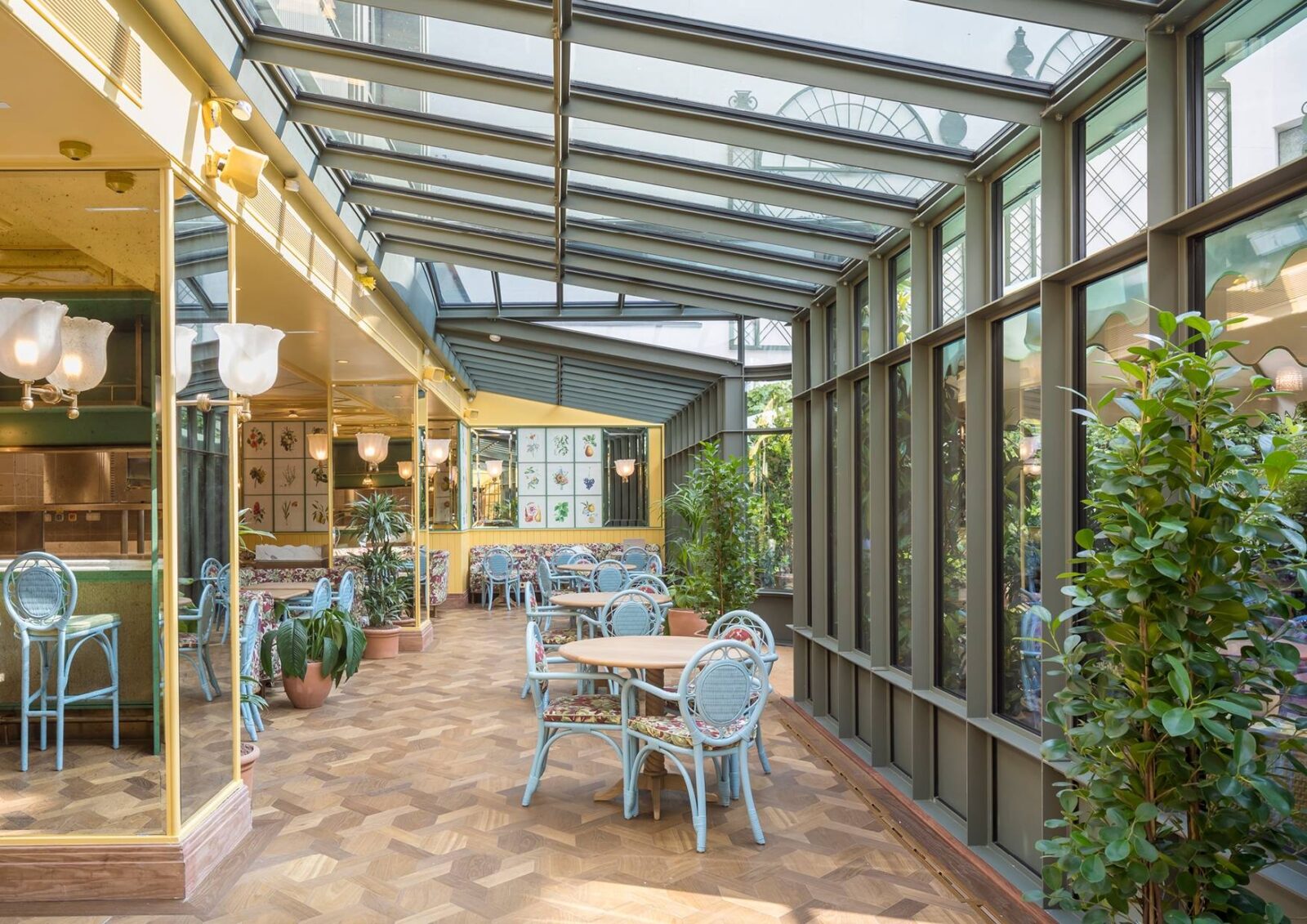
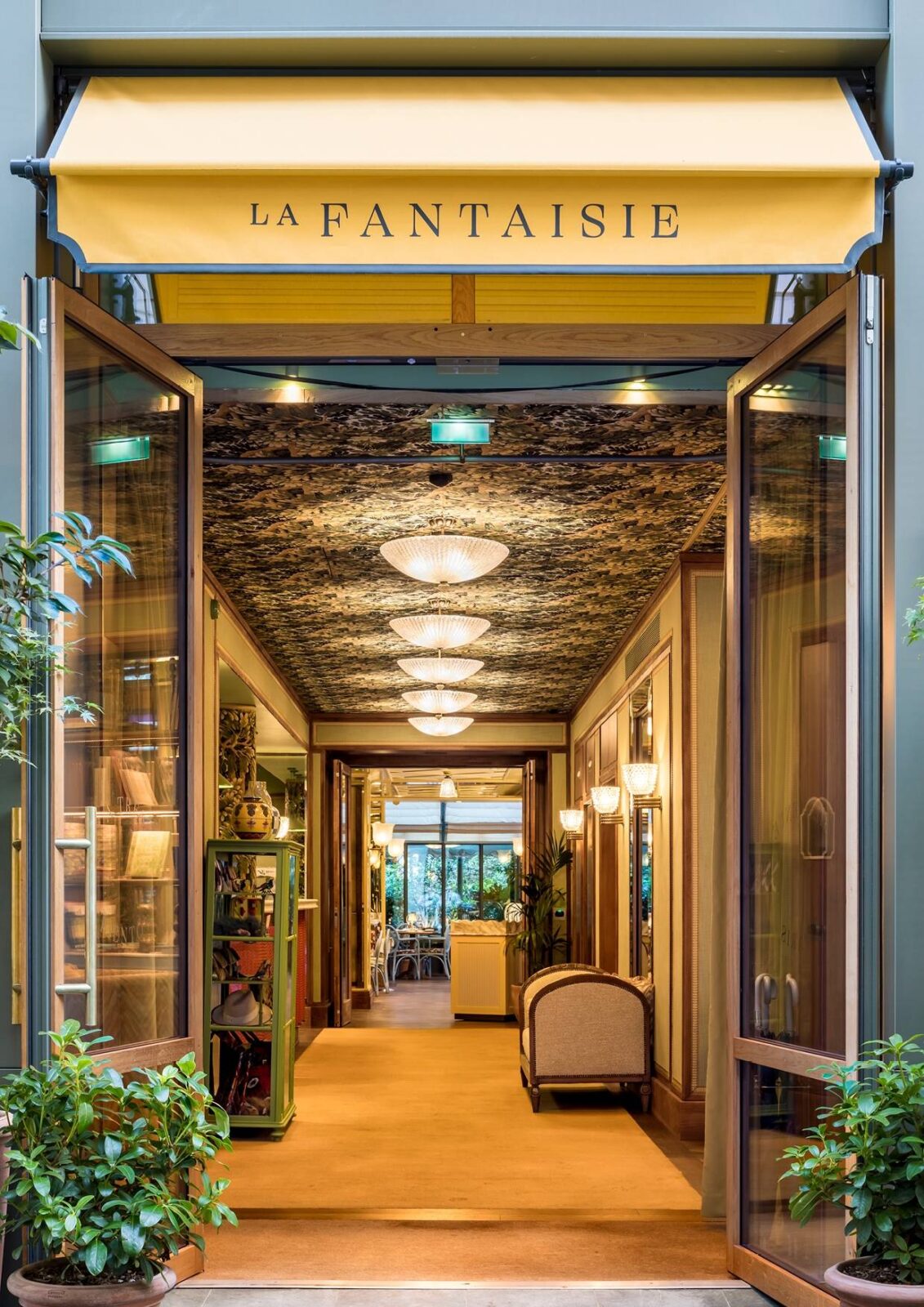
Inside, the designers focused on making the rooms feel connected to something beyond their walls. The rooms were enlarged and their original layout rethought so that each one has either a street or garden view. Alongside PPX Architectes, the project team included MBDS for interiors, Atixis for construction engineering, Cobalt for lighting design and SPIE Batignolles Île de France for construction.
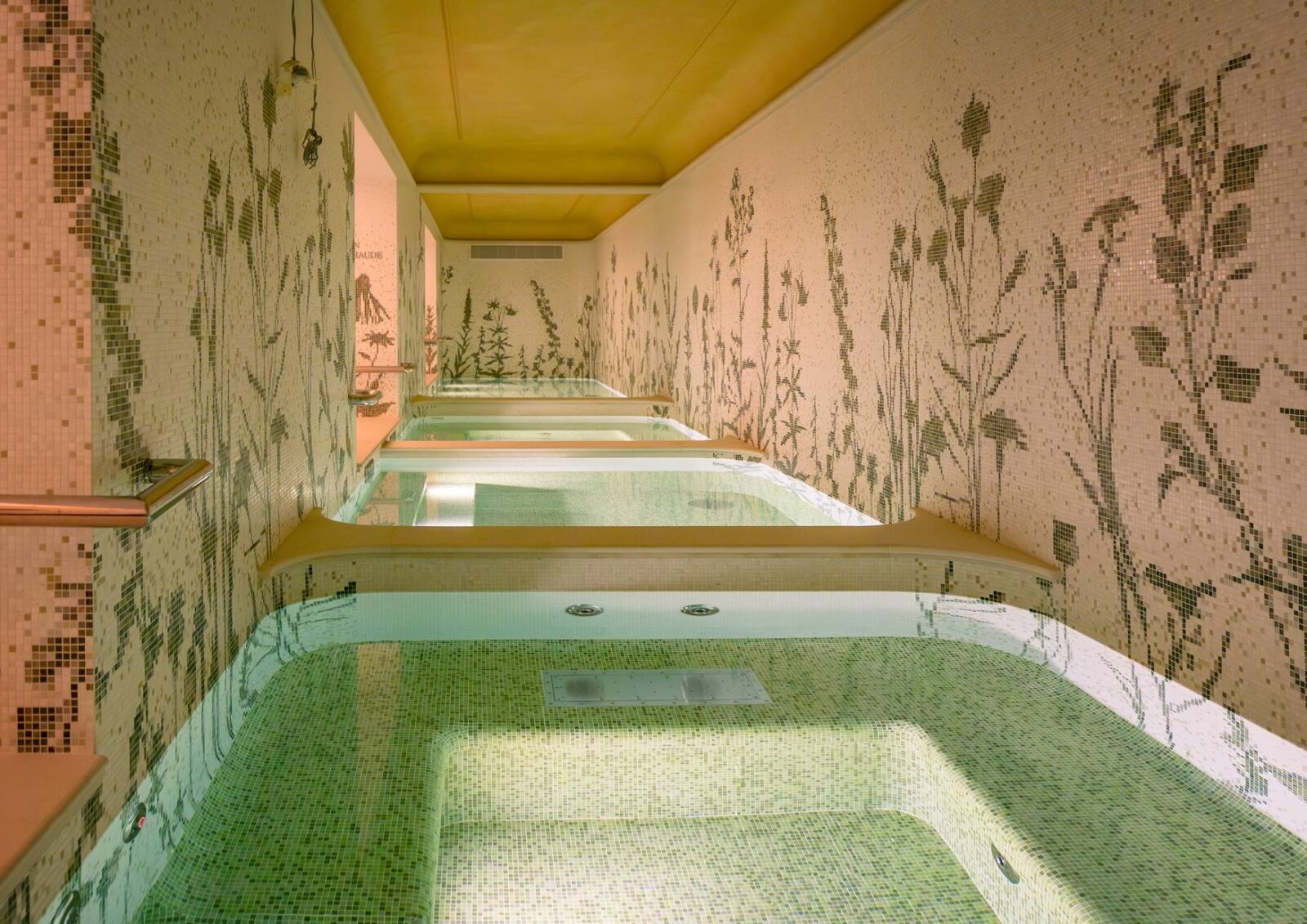
Mövenpick Grand Hotel Wroclaw
Mövenpick Grand Hotel Wroclaw is located in Wroclaw, Poland, opposite the main railway station, with the Old Town Square and the city’s main landmarks within walking distance. The hotel is a local landmark in itself, with this renovation bringing the city’s Grand Hotel back into use with a deep respect for its history and influence always present.
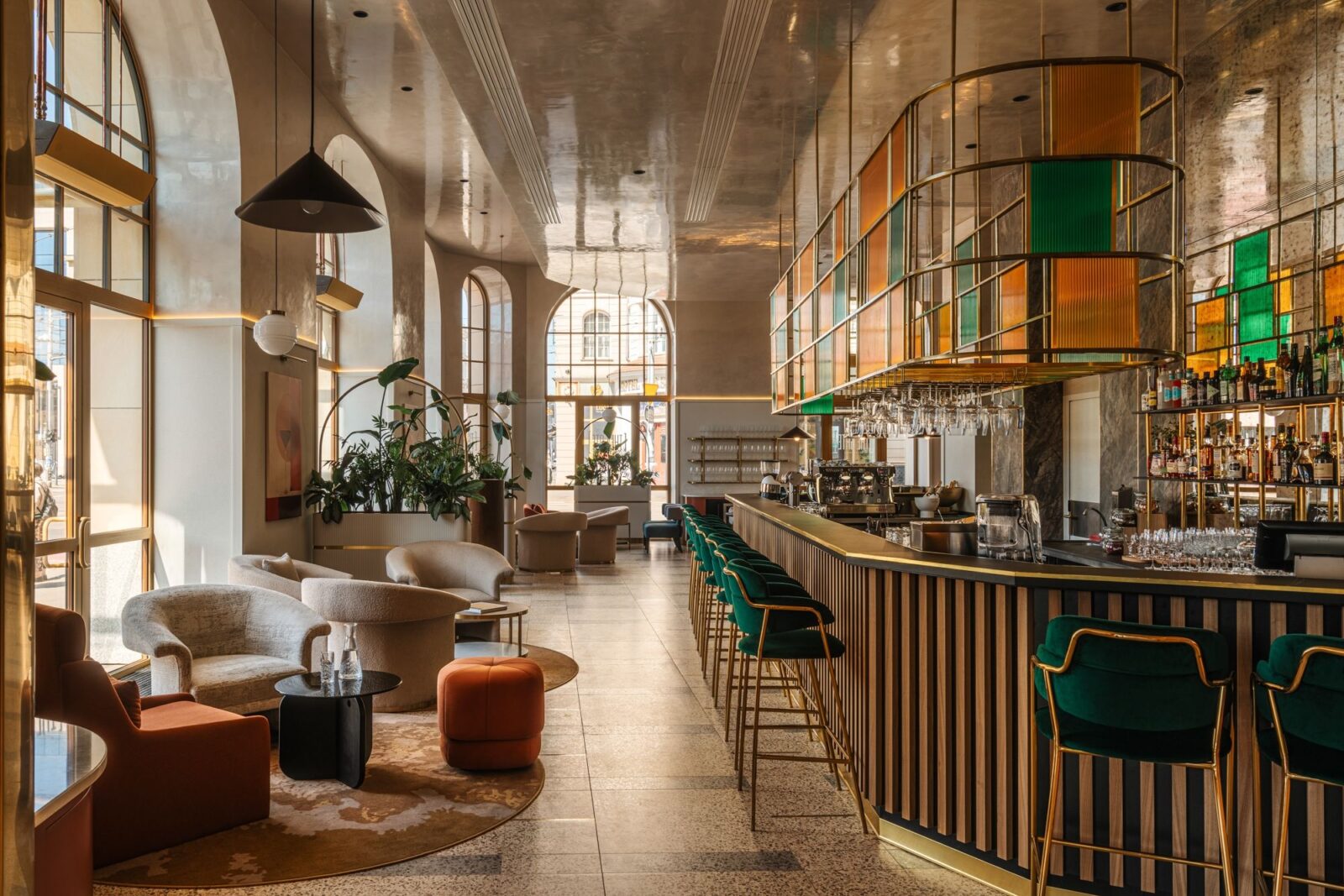
The interiors by MIXD were inspired by the hotel’s past, which is more than a century old. References to a luxurious Art Deco and Art Nouveau past can be seen everywhere, down to the details, plus the best from Wroclaw’s early 20th-century architecture. That historical approach is combined with materials from the Mövenpick brand, particularly because of its association with food and hospitality. MIXD gave the design the title “Feast of Senses“, with the interiors being built around that idea: a sweet buffet at the entrance, an eye-grabbing bar, a prominent restaurant and a variety of surfaces chosen for their texture and appearance.
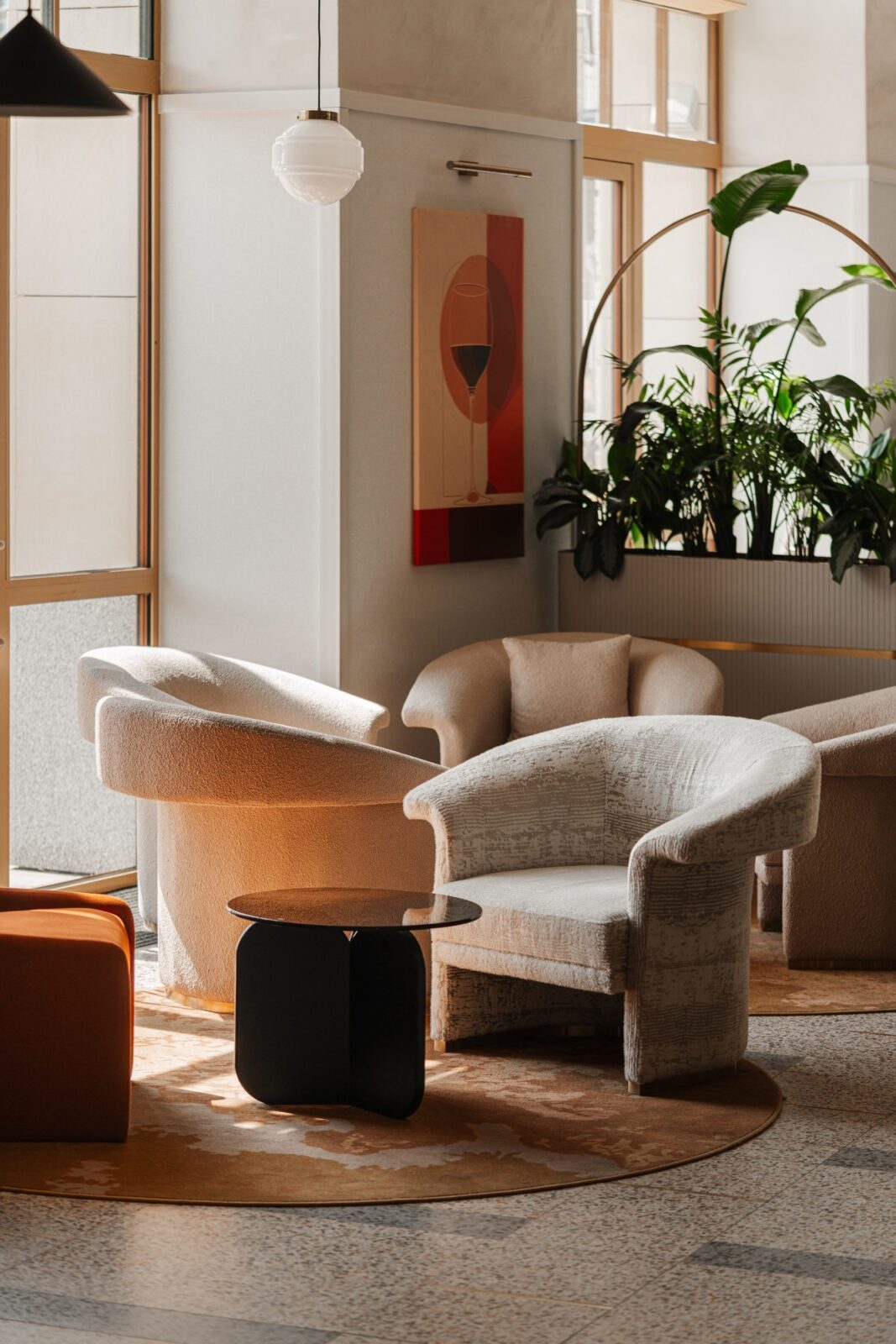
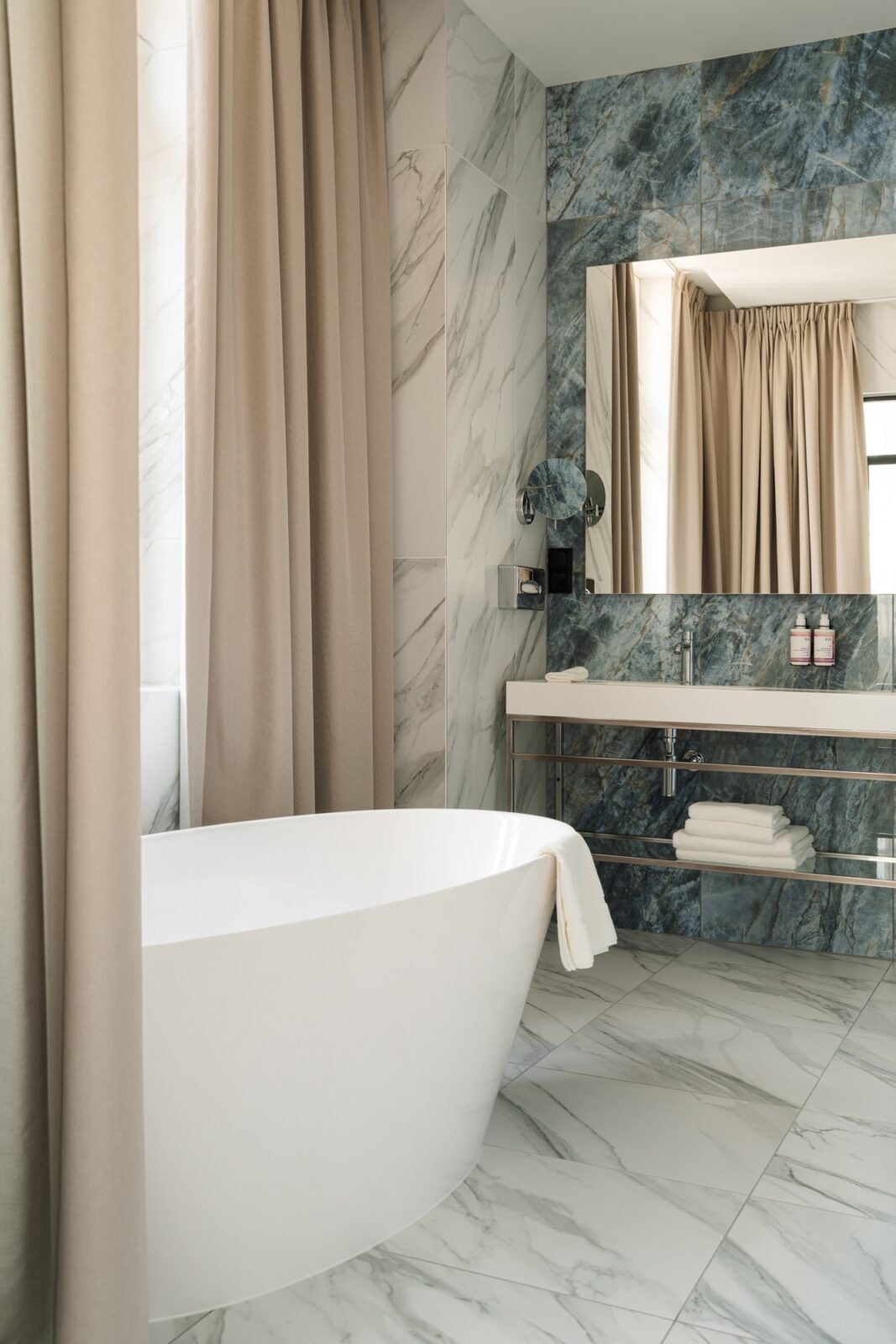
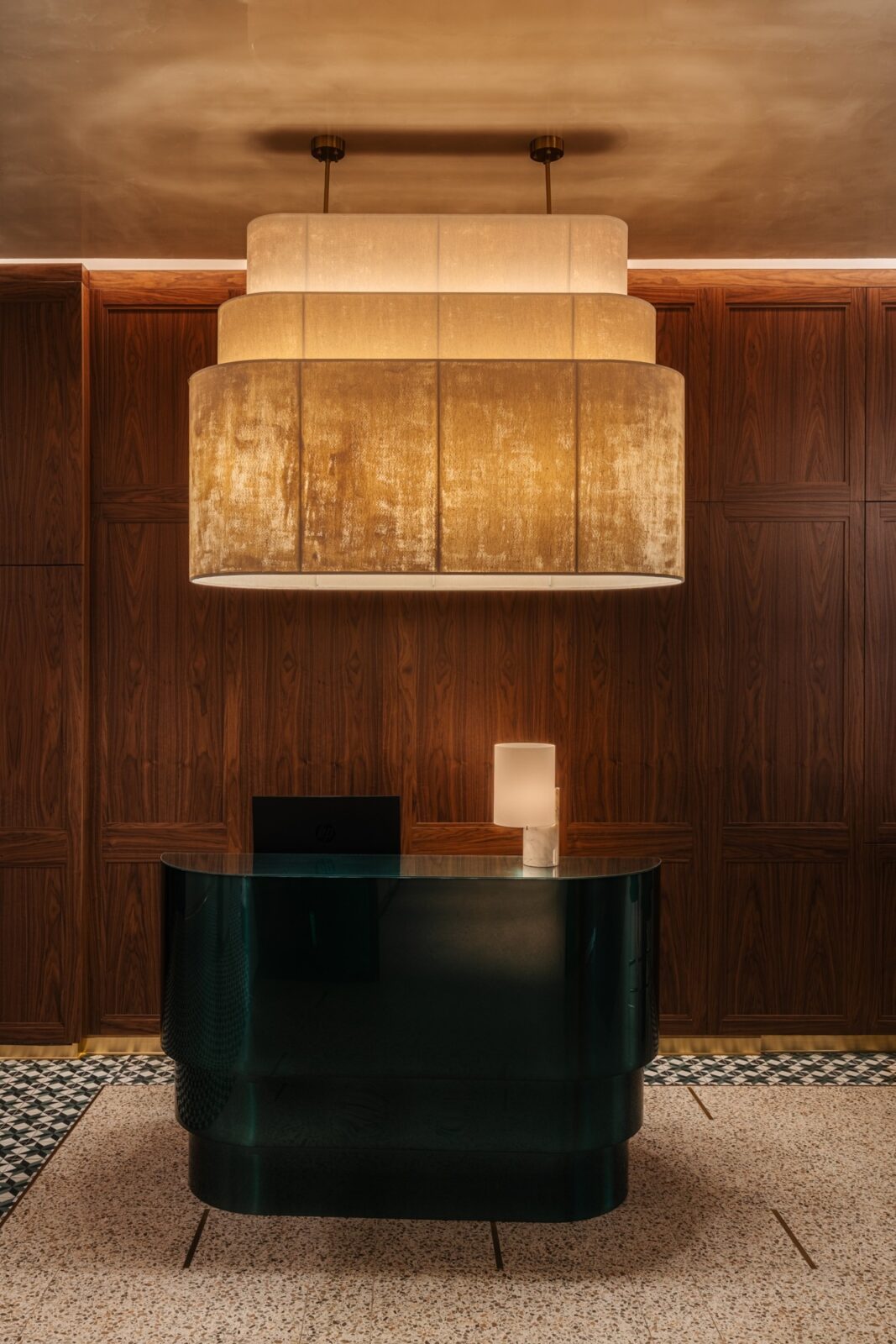
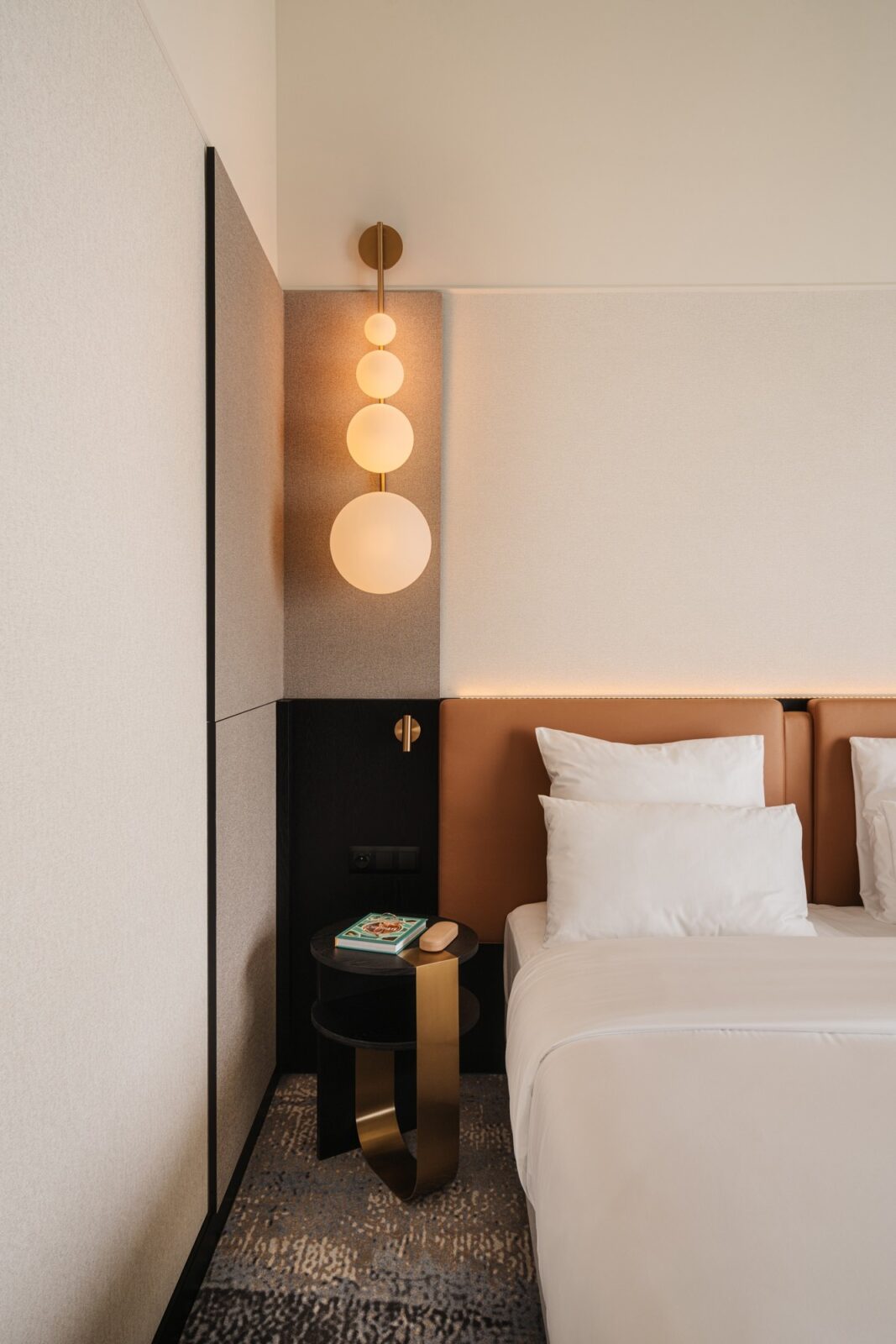
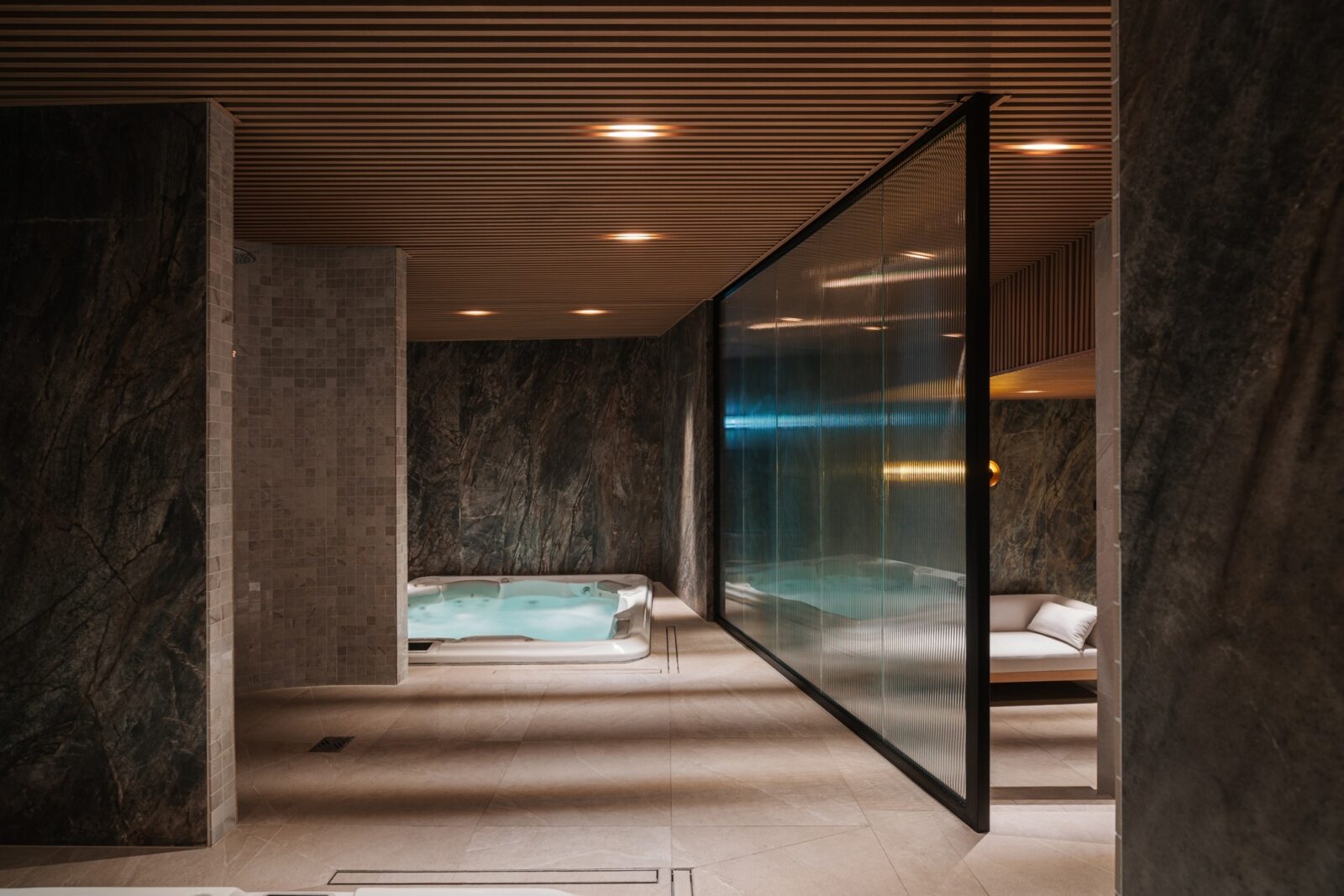
Brass, veneers, pressed glass, ceramics and stone are used alongside softer elements such as fabrics and rugs. The finish is tactile and layered, with hard and polished materials set against warmer surfaces that wear in a different way over time. That mix gives the hotel its character and fits perfectly with its history, as the building itself can be considered as the hard material in contrast with the new hospitality setting.
The Trafalgar St. James Hotel
The Trafalgar St. James Hotel is located at 2 Spring Gardens, directly off Trafalgar Square, one of the busiest parts of central London. The area is dense, formal and heavily trafficked, so one of the main challenges DLSM Studio had to deal with was circulation and arrival, not looks. The front-of-house areas were redesigned to remove elements that interrupted circulation, having, in the meantime, made the arrival feel less formal and stiff. In a hotel of this kind, in this part of London, that change affects the whole building: how guests enter, how they move through the ground floor and how the hotel meets the street.
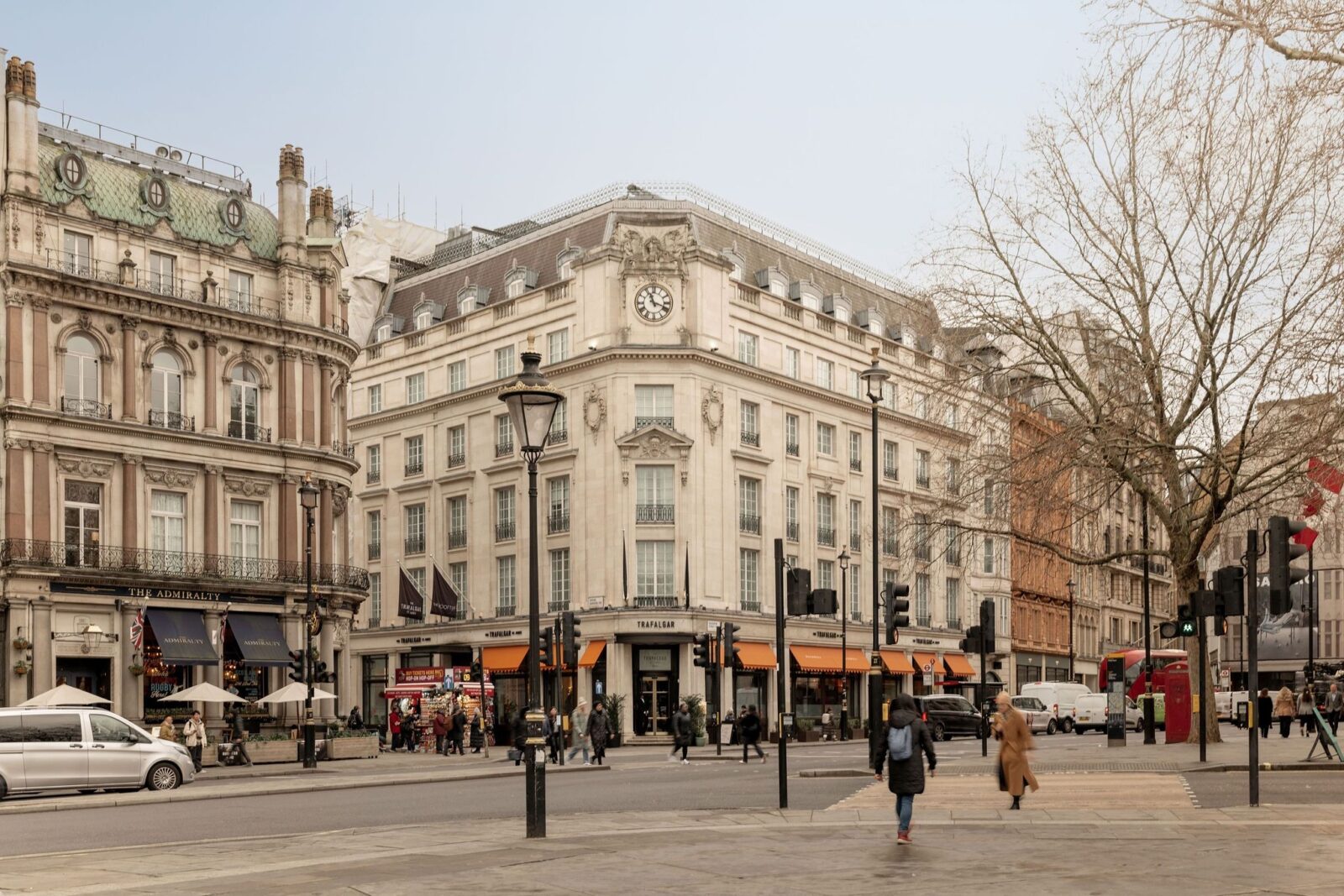
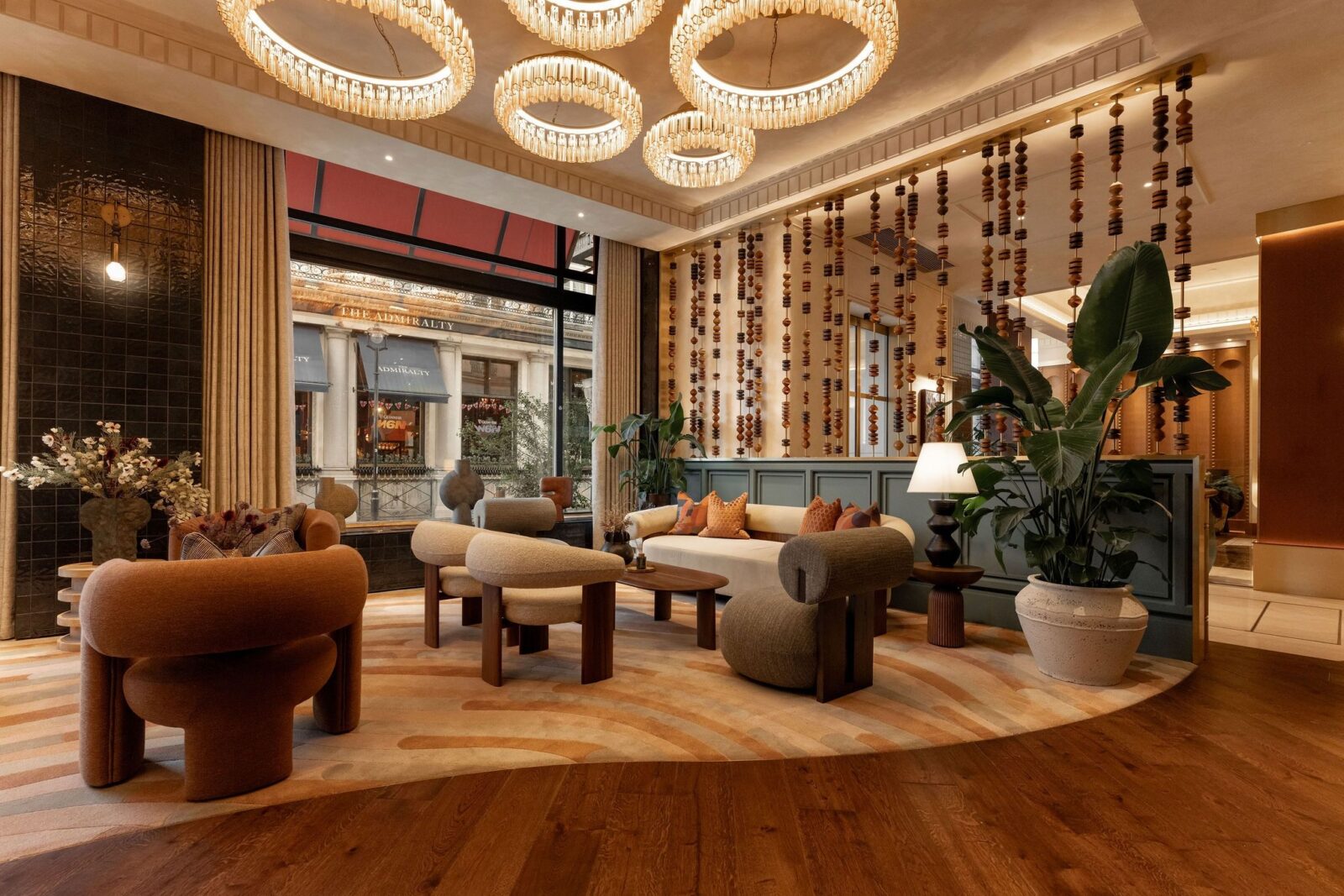
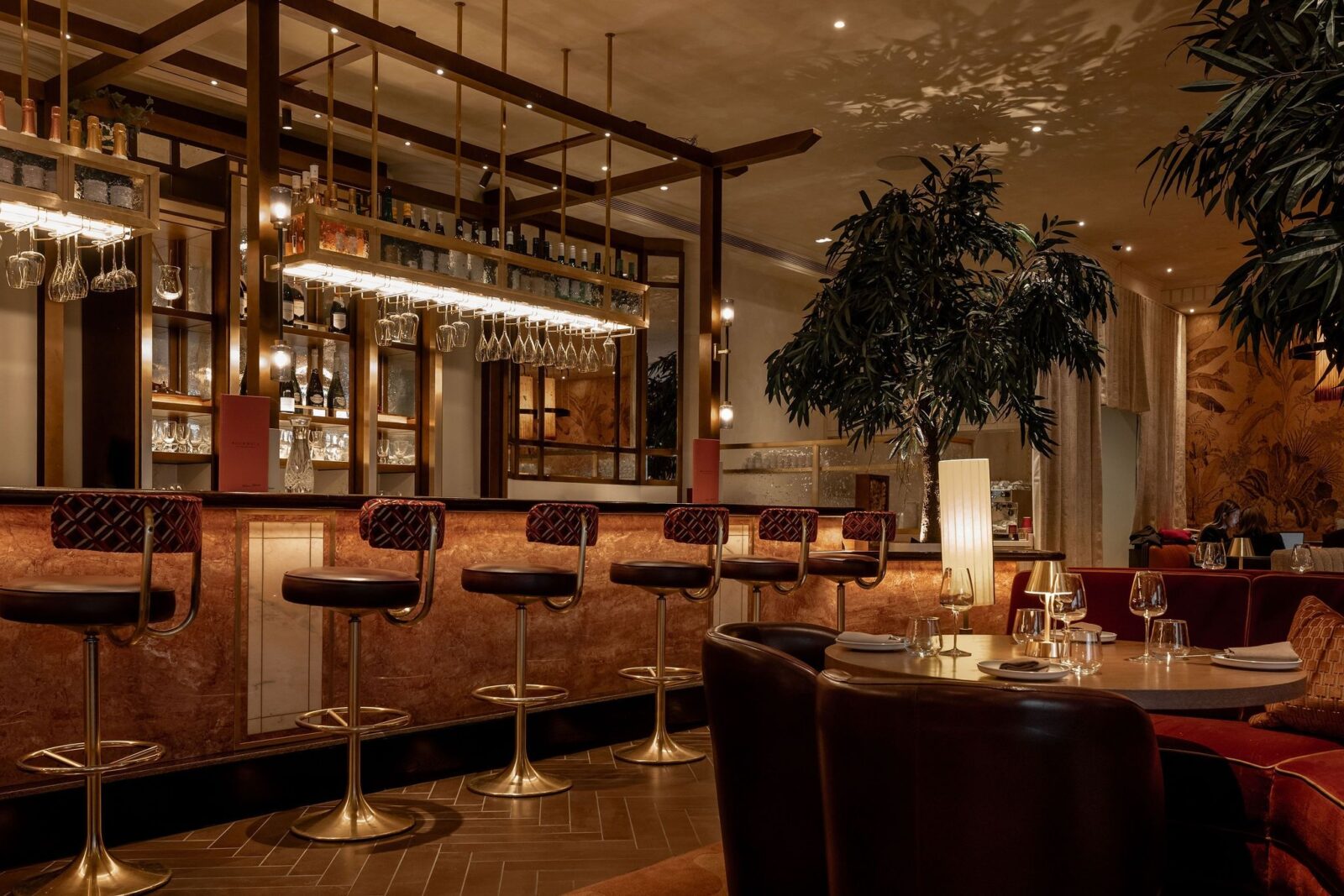
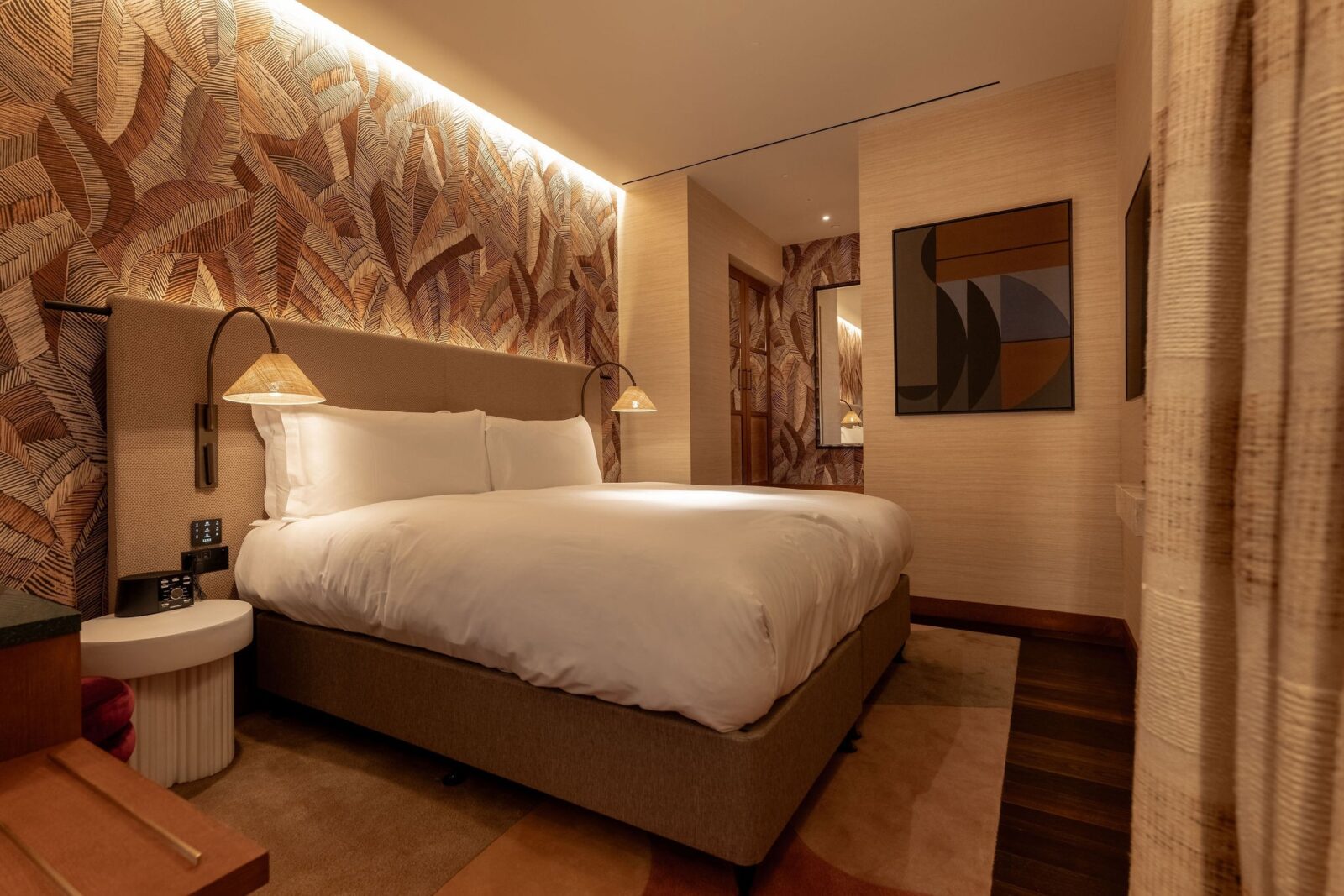
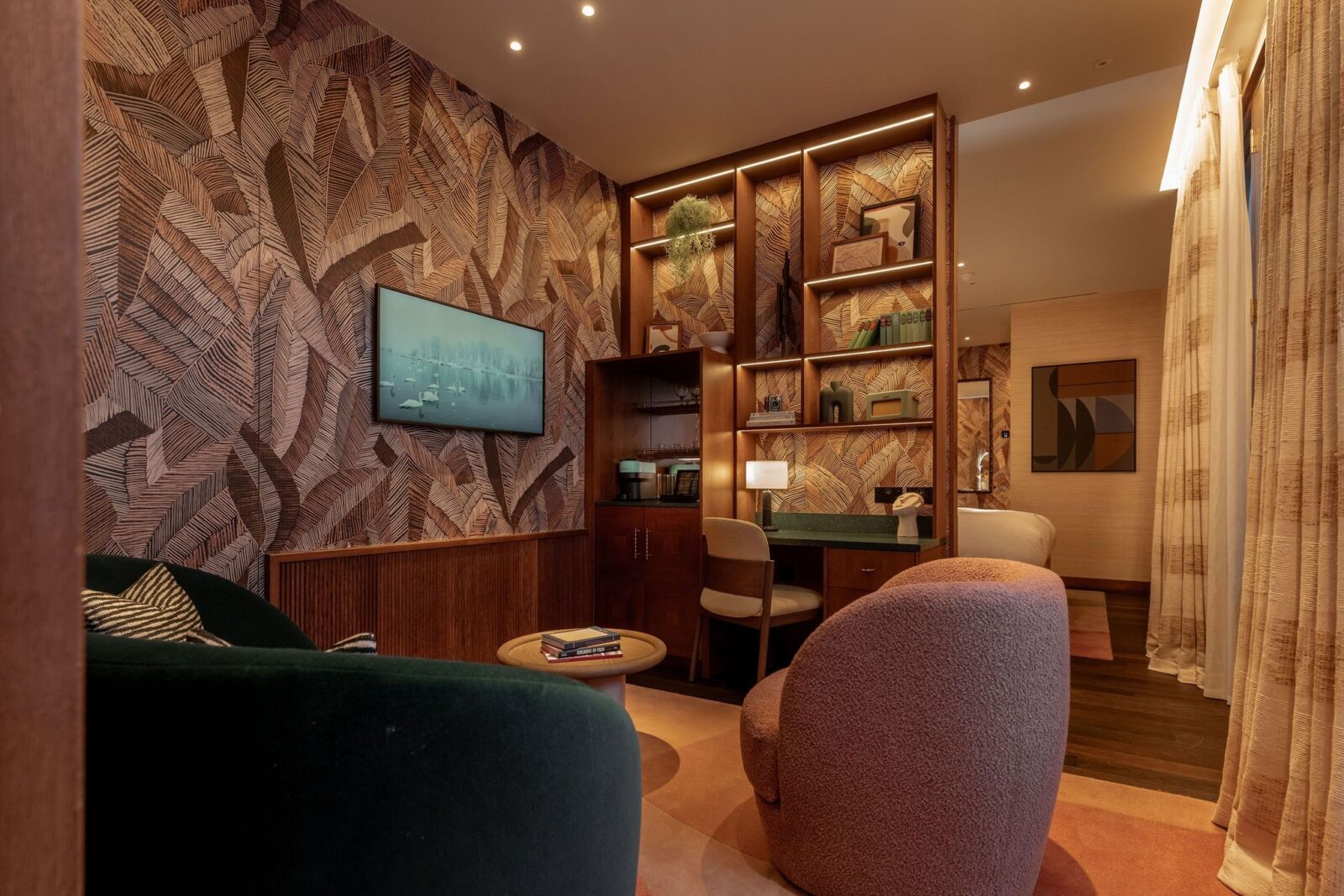
The interior concept, titled “Exotic Ports of Call“, was inspired by the building’s earlier life as the headquarters of the Cunard Shipping Company, with a reference to the 1922 world cruise of Cunard’s Laconia having been added to the design. DLSM Studio uses that maritime background as a design base rather than a theme, with rich textures, earthy colours and more decorative finishes used to bring some variation into the public spaces. This gives them a softer and less formal character than a conventional grand London hotel interior.
Beach holidays
Theros All Suite Hotel
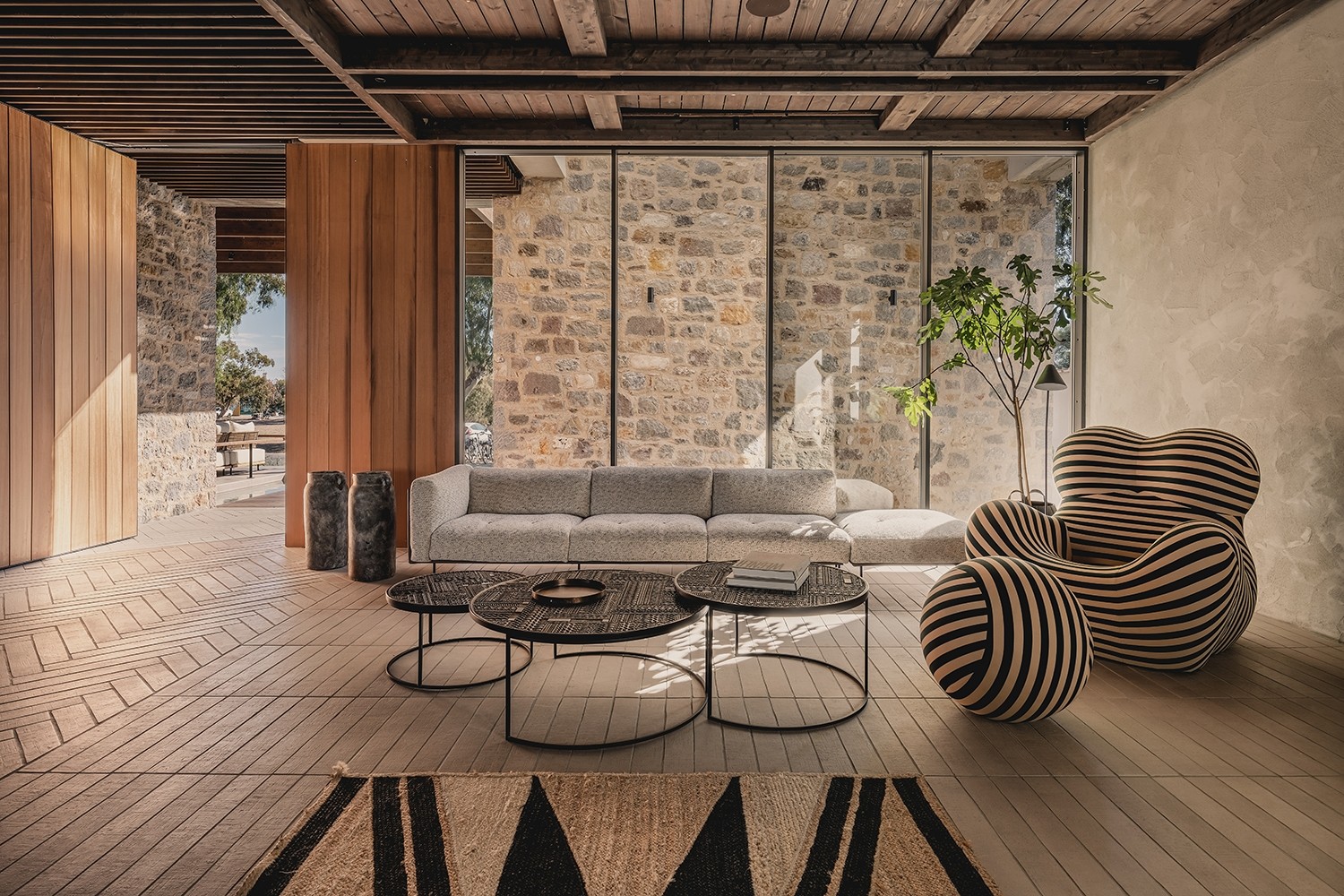
Theros All Suite Hotel is a dreamy hotel in Kos Island, having been built with techniques, forms and materials that are intrinsic to that part of Greece. Mastrominas Architecture describes it as a contemporary reading of the Greek village, with its team of architects having used cubic volumes, stone masonry and rough timber to achieve the all-stone, all-luxurious final form of the hotel. The project comprises a myriad of accommodations, little buildings that form a little village.
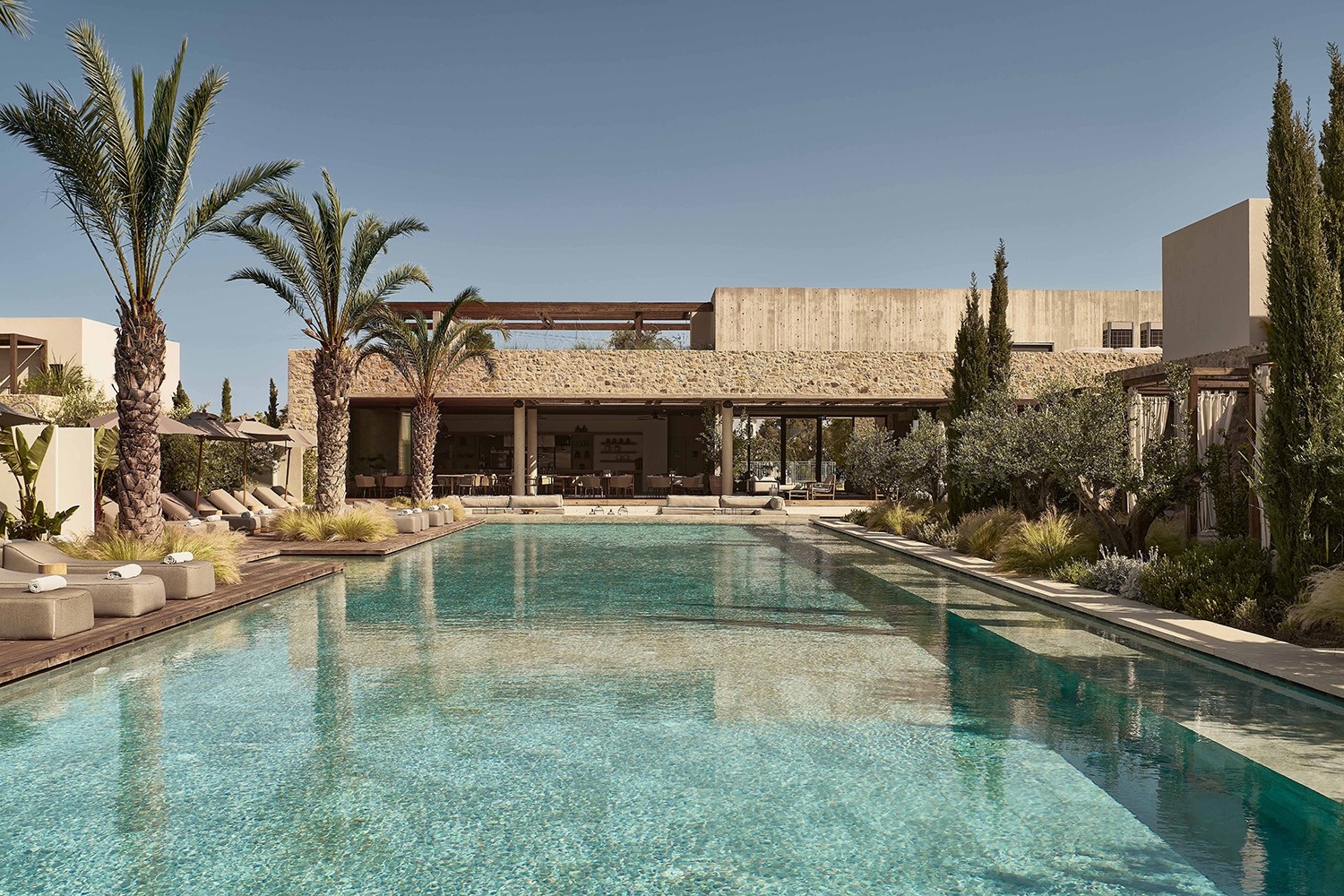
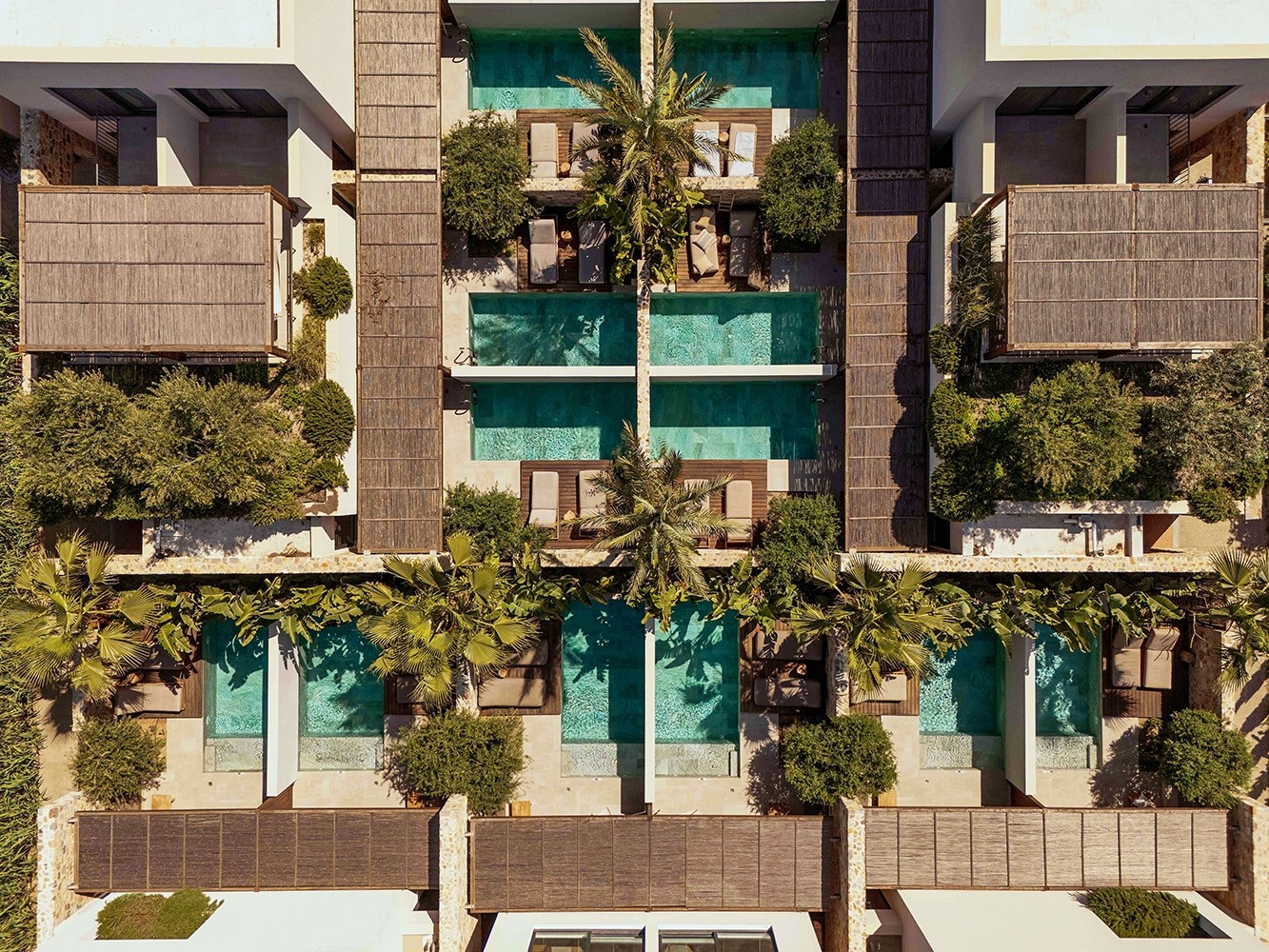
The layout revolves around two orthogonal axes. One is inward-looking, grouping the suites into small neighbourhoods enclosed by reed beds and stone walls. This part of the hotel is made up of courtyards and shaded passages, providing privacy, light and air movement. The second axis is more open, housing a long central pool framed by Mediterranean plants.
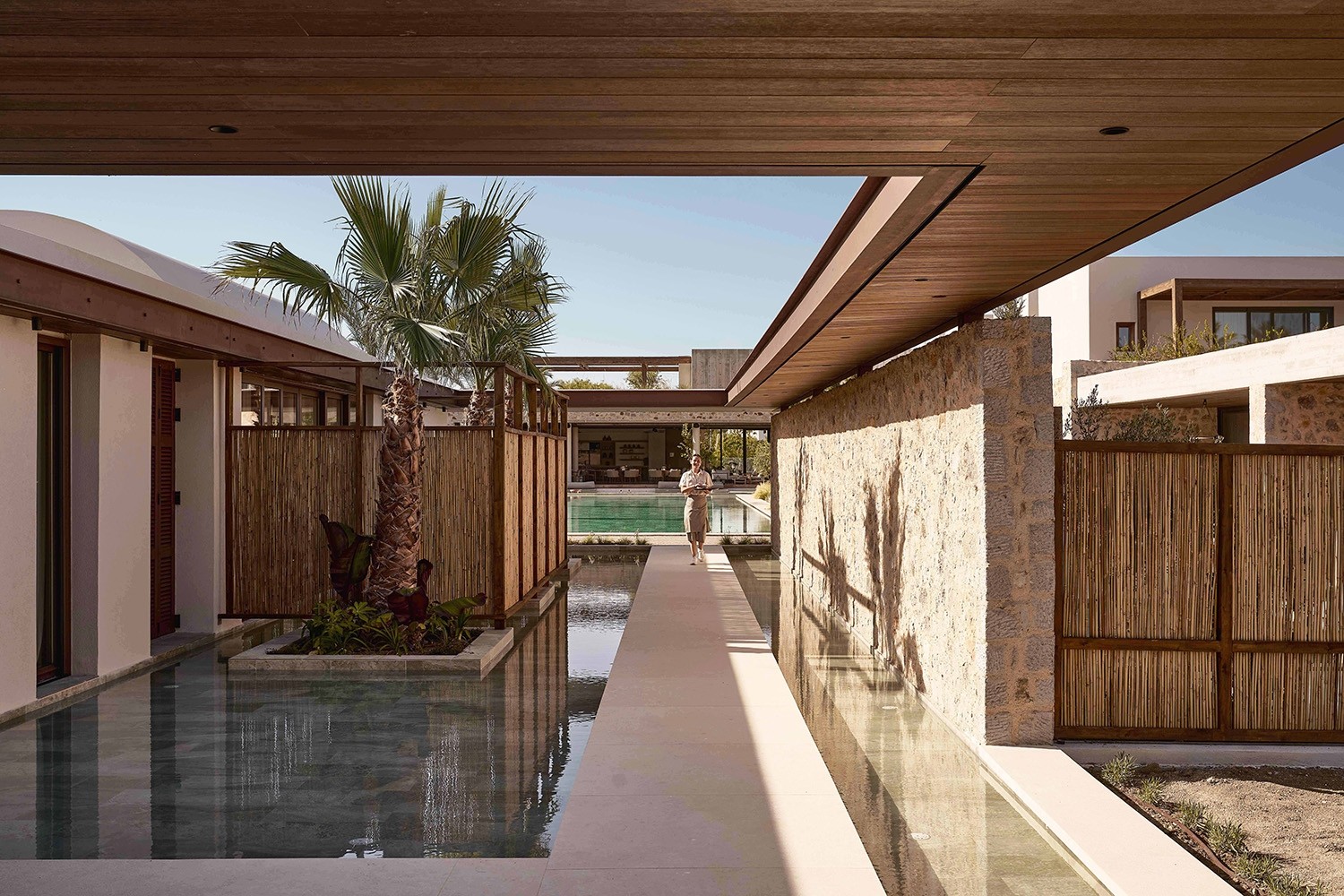
A wellness building was placed where the two axes meet, with its design having been inspired by Byzantine domes and baths. Around it, the landscape introduces Greece to guests, enveloping the hotel perfectly with native flora, natural materials and an organic garden. Sustainability was a big part of the project, as the architects were careful to include bioclimatic planning, solar integration and the use of local, tactile materials into the plan, so the hotel is shaped as much by climate and landscape as by the buildings themselves.
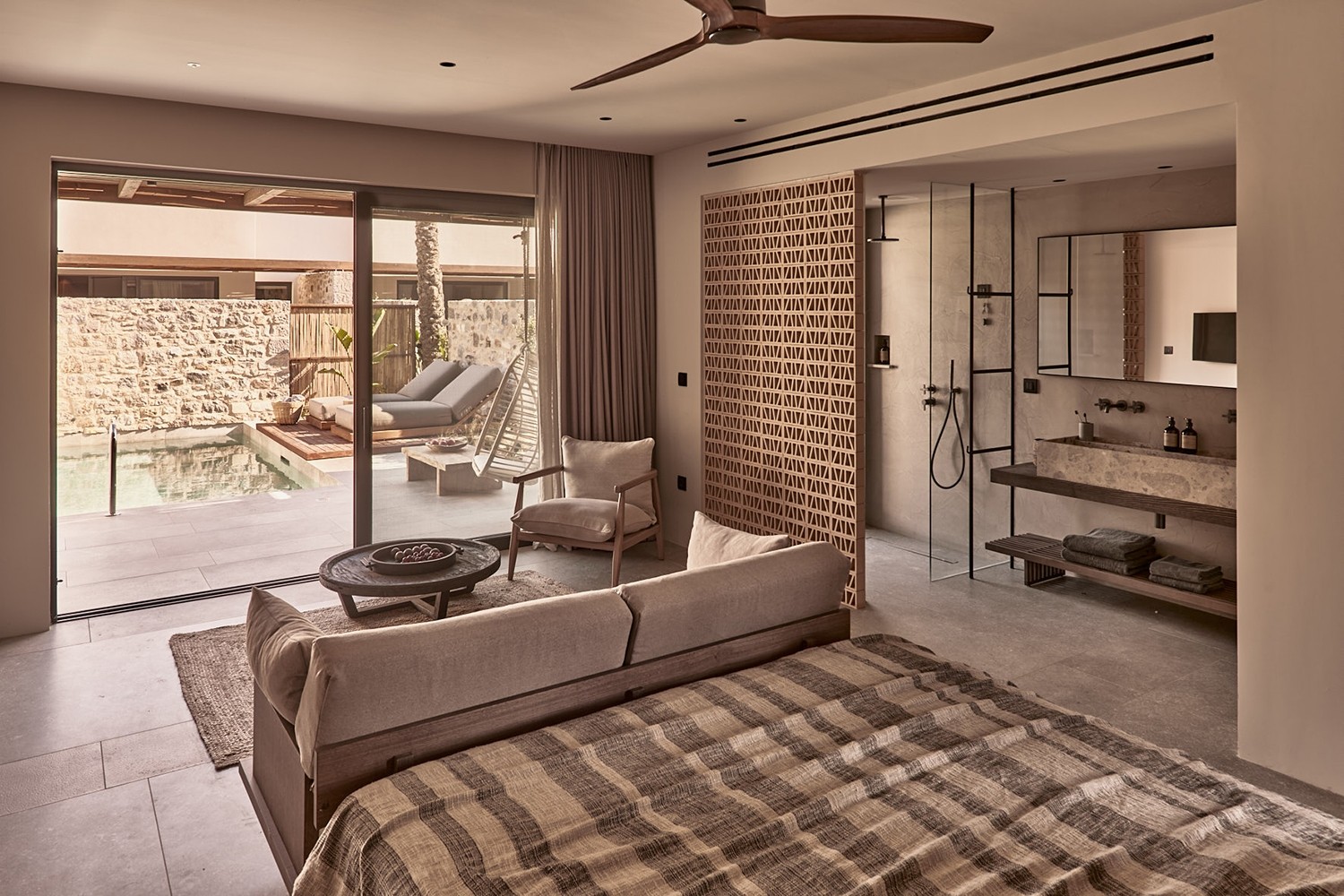
MYKONOS flow
MYKONOS flow is set on a steep site above Super Paradise beach, which gives it an amphitheatrical view over the bay. The hotel is divided into two zones, ensuring that both the suites and the shared areas enjoy unobstructed views of the water. It is this detail that shapes the entire building, as rather than flattening out the terrain, gnb architects used its pressure and curvature as the starting point for the architectural plan.
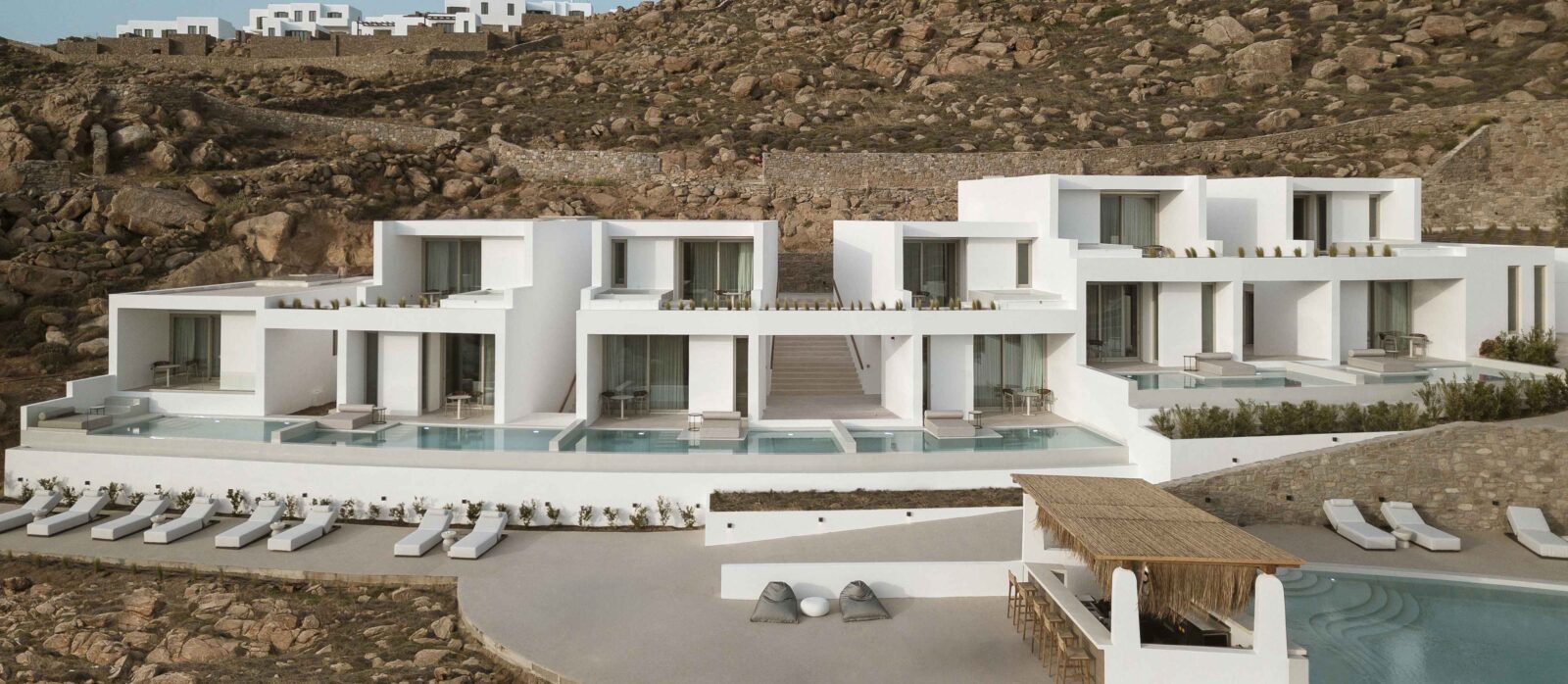
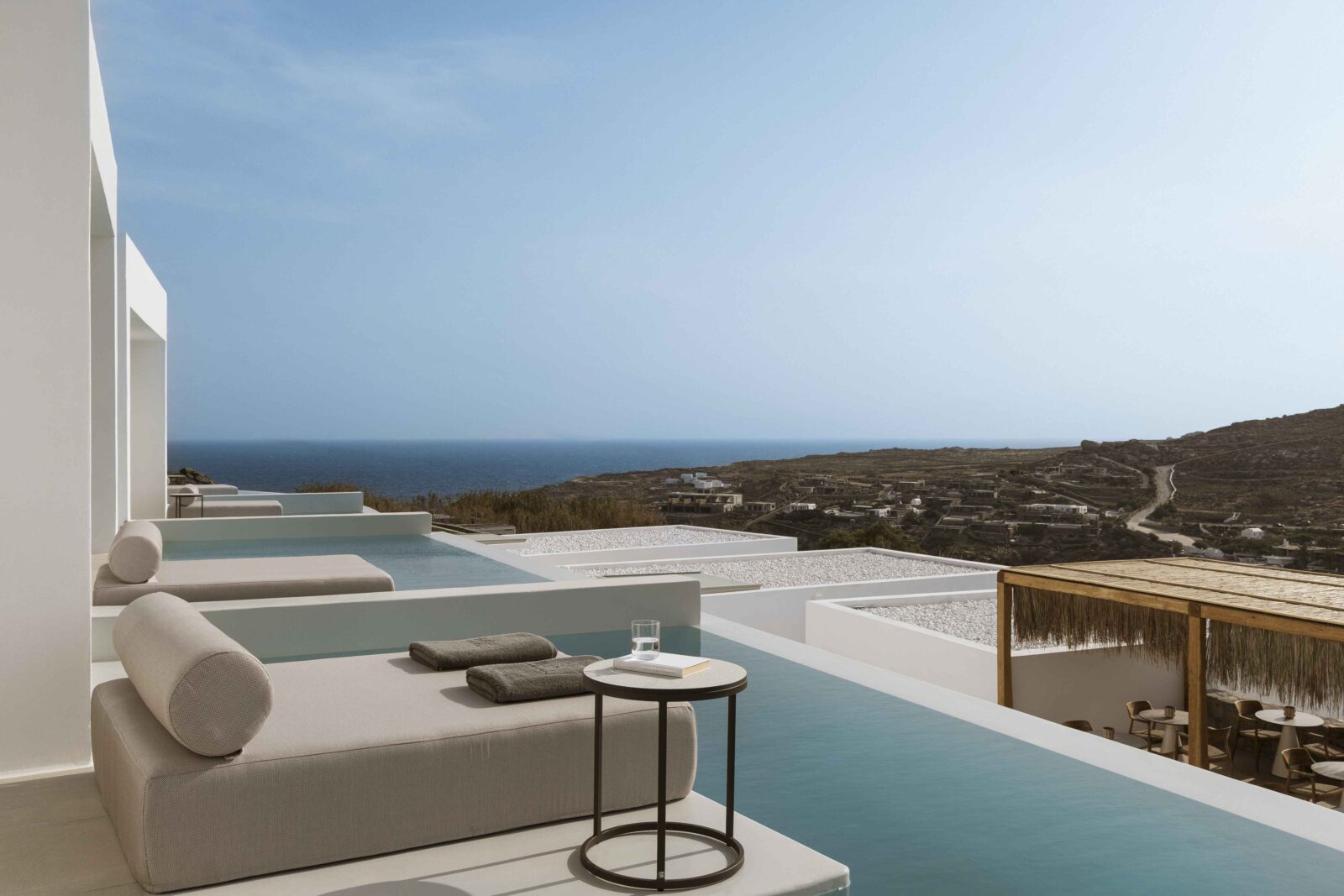
The project is organised around what the architects describe as longitudinal flow lines, which shape the main structures and continue through the outdoor areas, making the hotel look like it’s moving in the same direction. The curved forms that define the look come directly from the terrain, with a structural system having been used to organise them and the constructions without flaws.
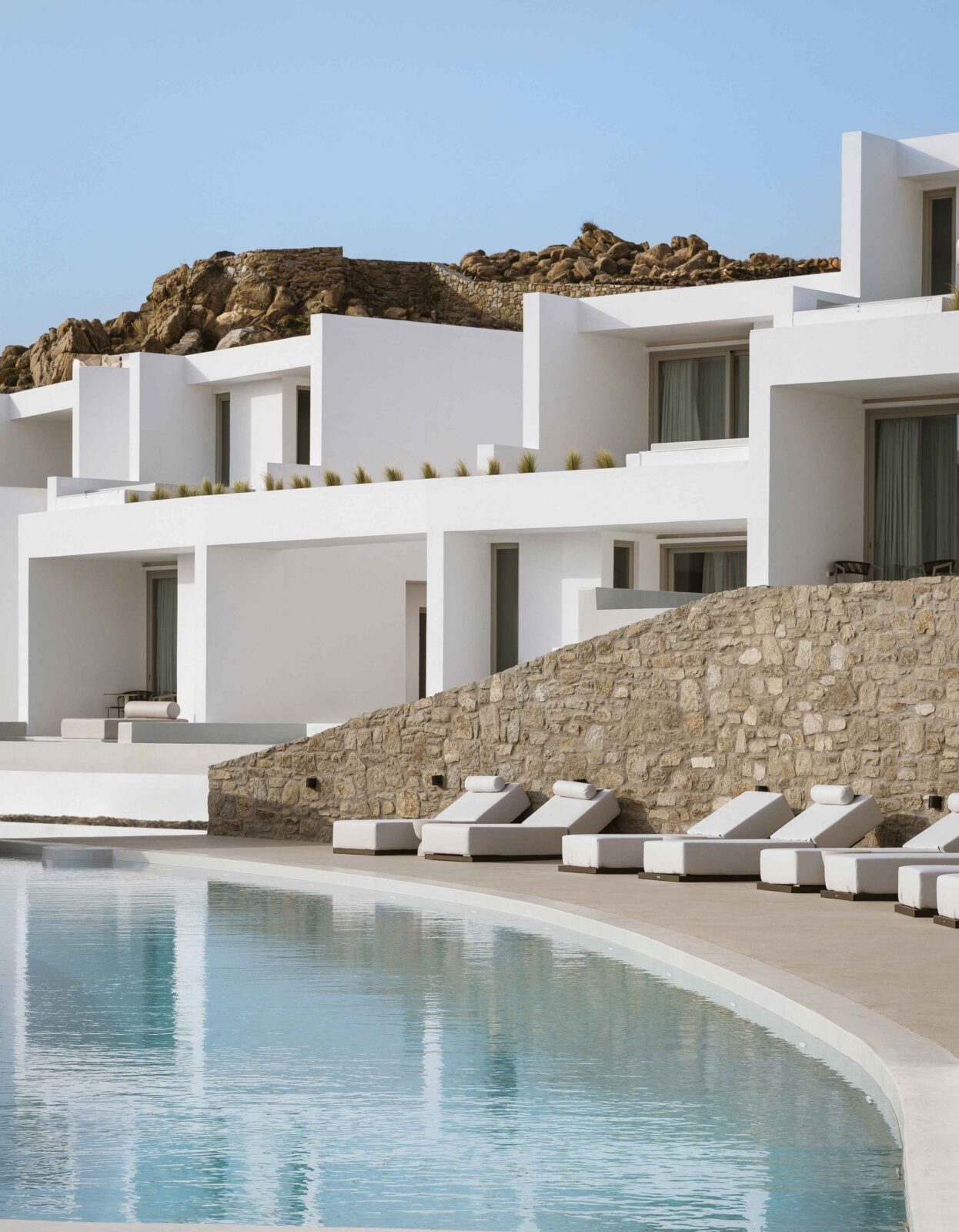
The lower-level rooms each have private pools, and together these form a larger water pool that follows the same lines as the buildings. Across the hotel, the layout continuously changes from enclosed to more open, from secluded room areas to shared spaces such as the lobby, pool bar, restaurant and business centre. That range of spatial conditions is built into the plan from the start, with the site, the view and the flowing structure all working together to make that happen.
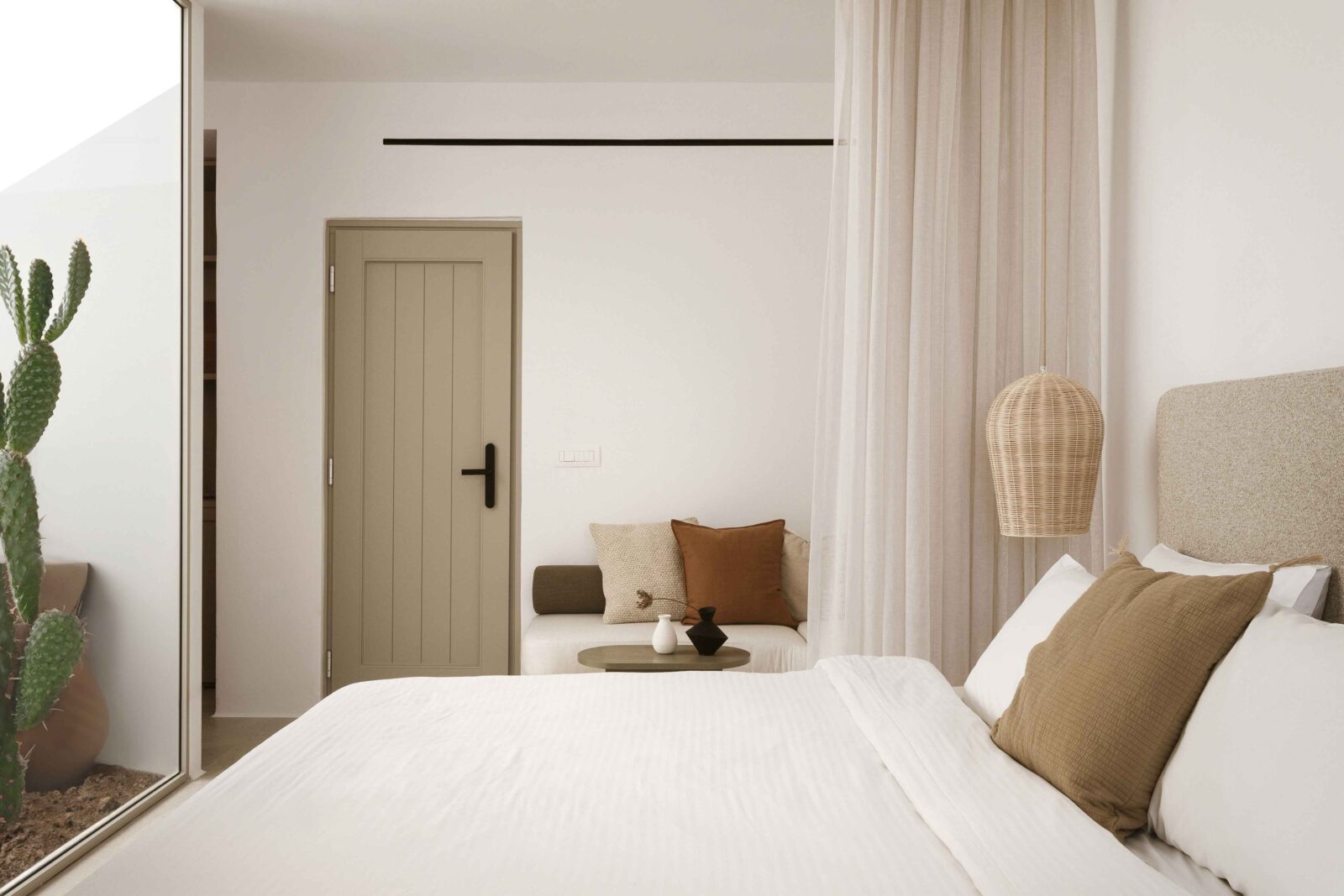
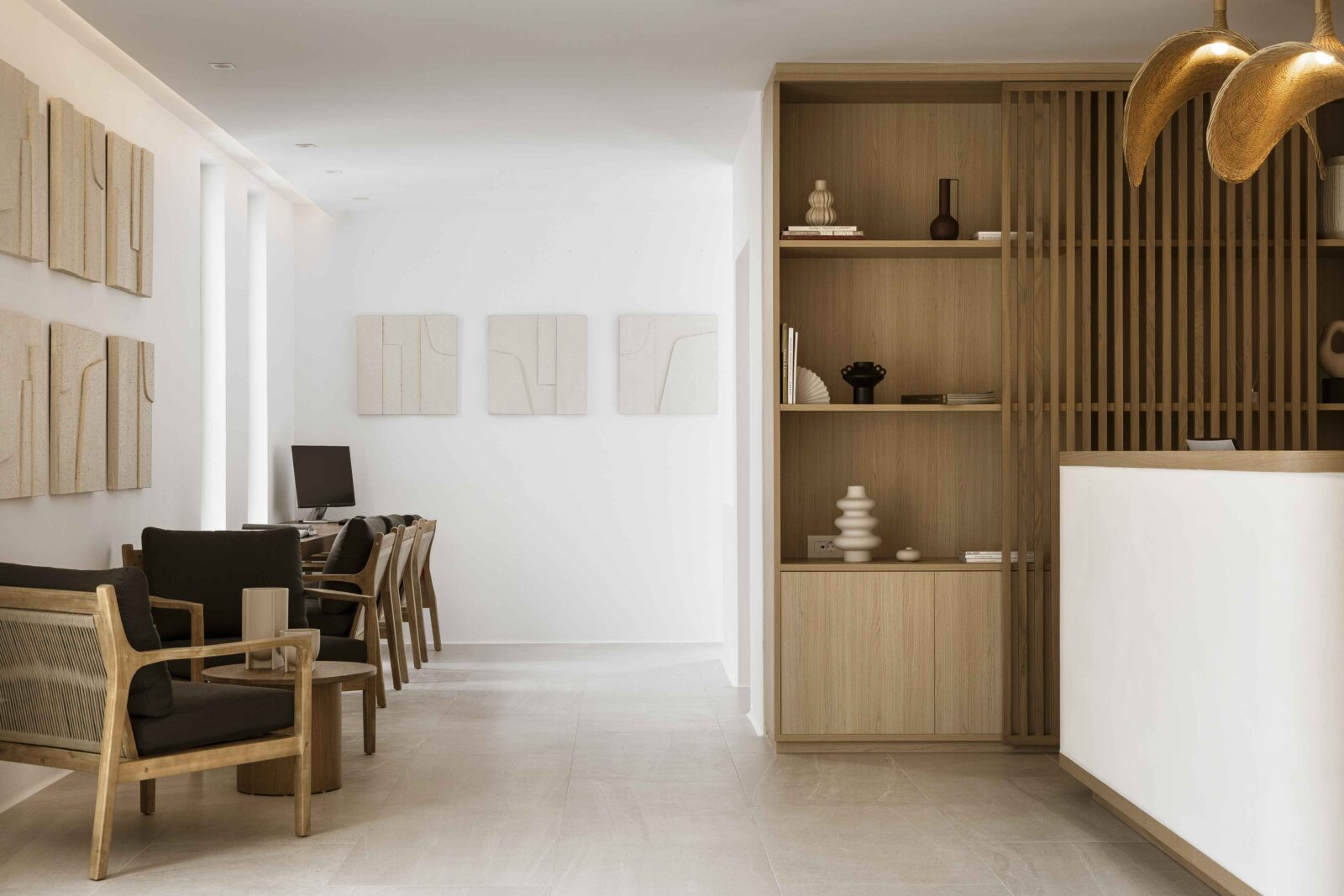
W Sardinia, Poltu Quatu
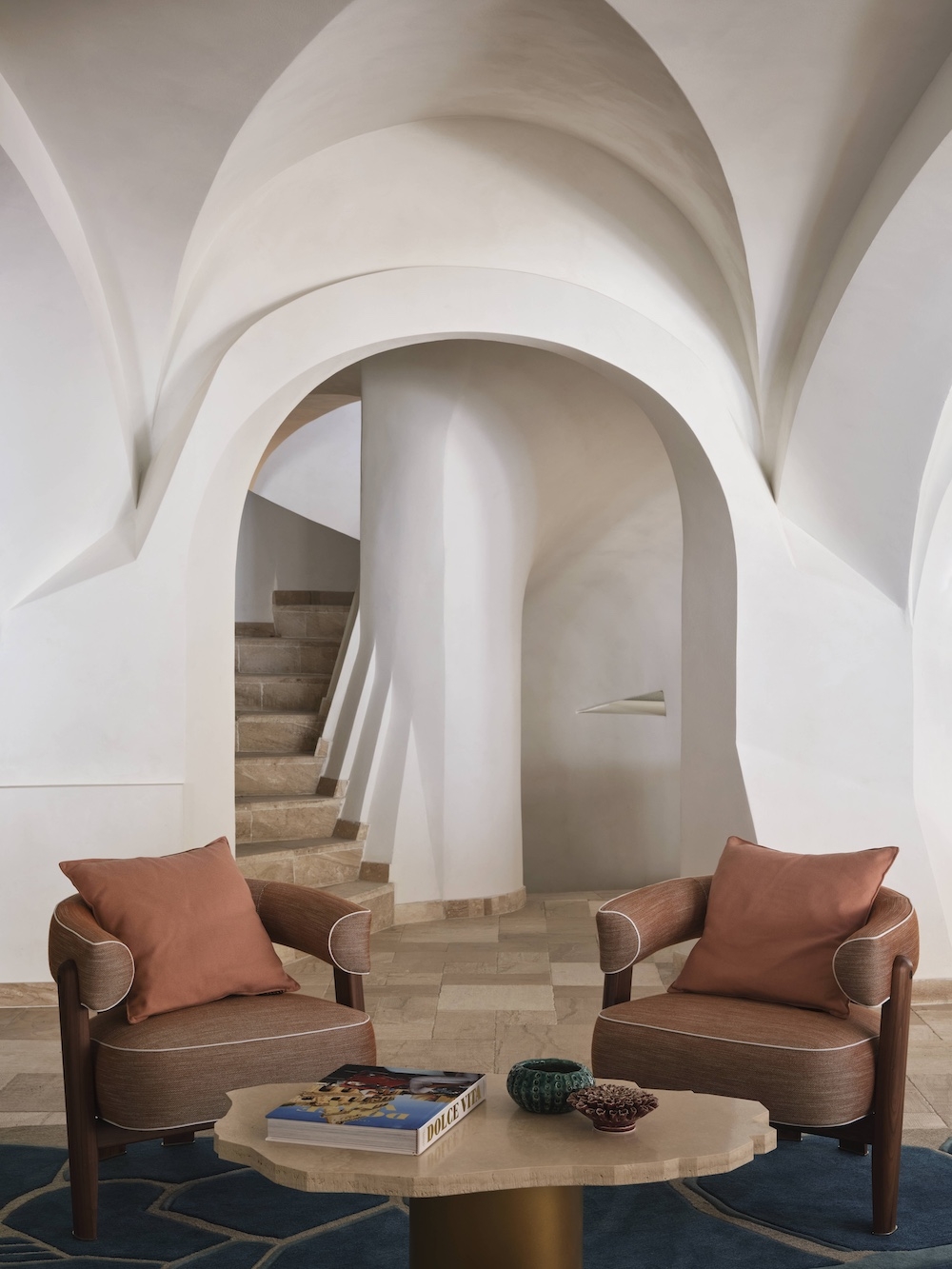
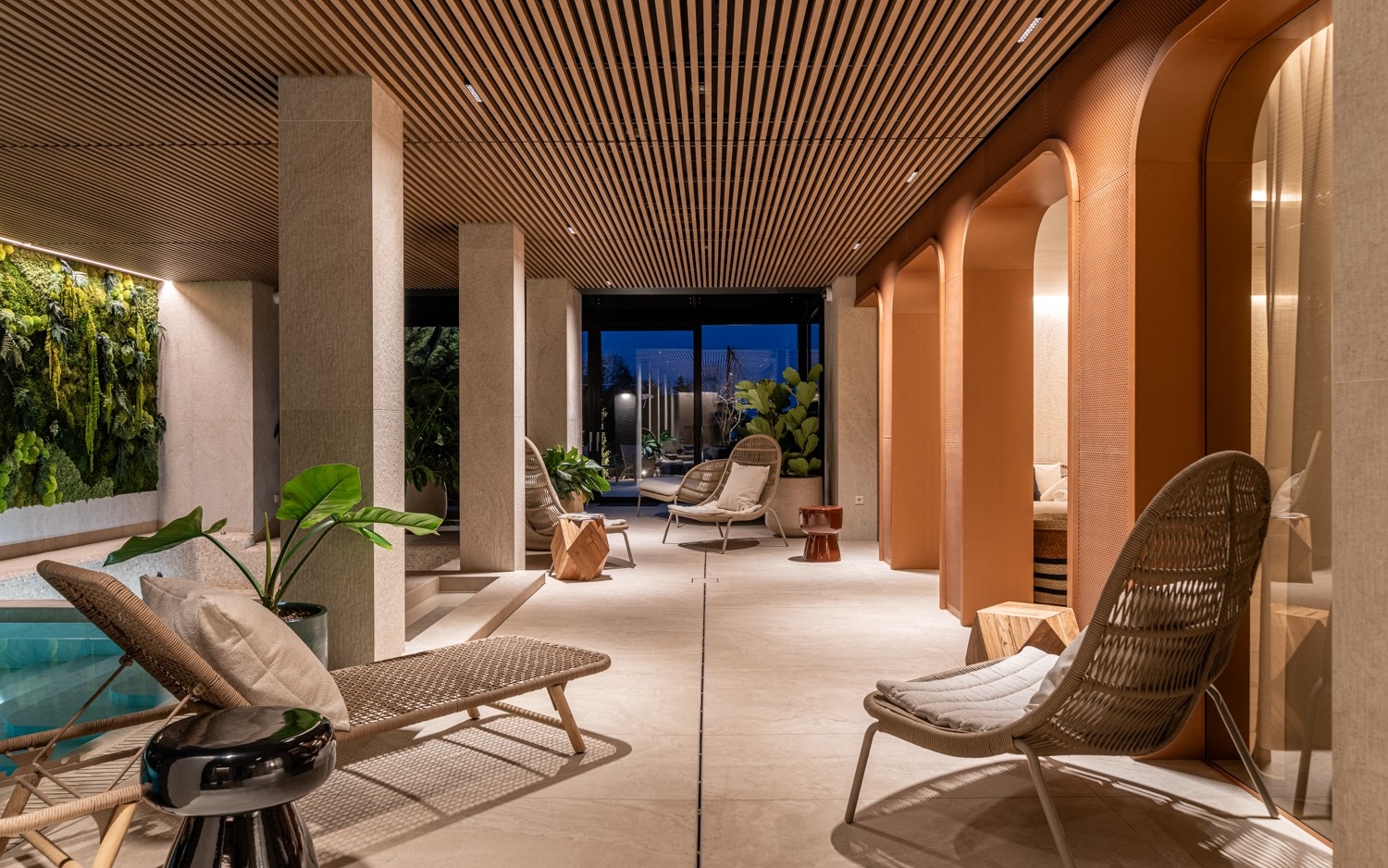
W Sardinia – Poltu Quatu was developed for Sardinia’s hip marina landscape, where changes in the topography level forced some movement into the architecture of the resort. The interiors by Meyer Davis use that terrain to their advantage, moving from tighter, grotto-like (in English, cave-like) corridors into larger social spaces facing the water.
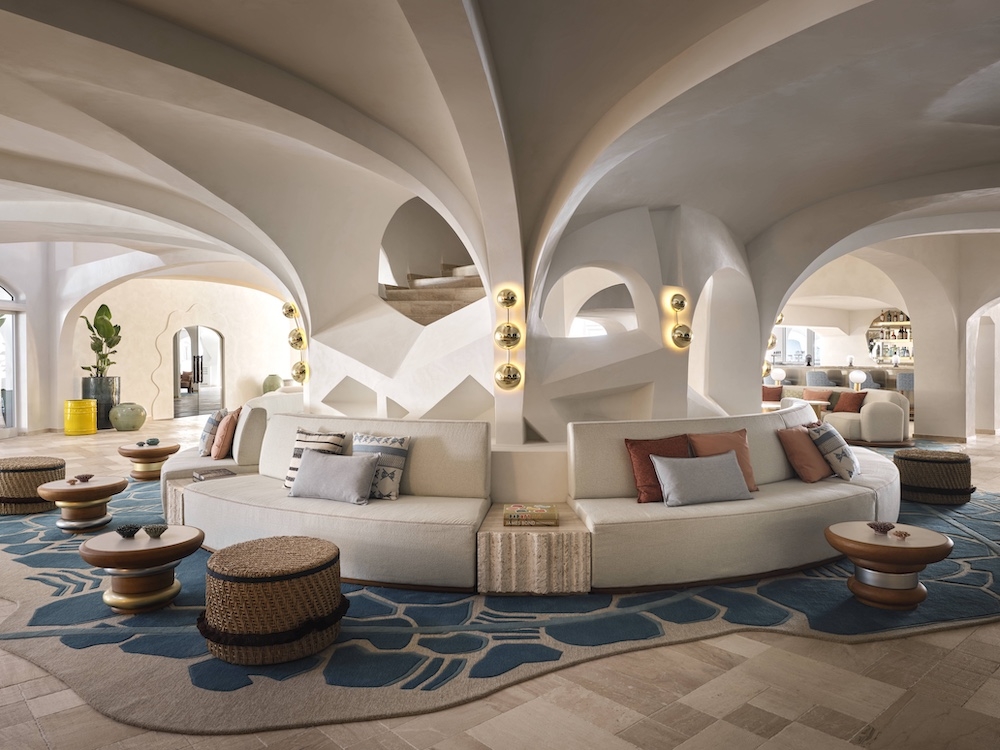
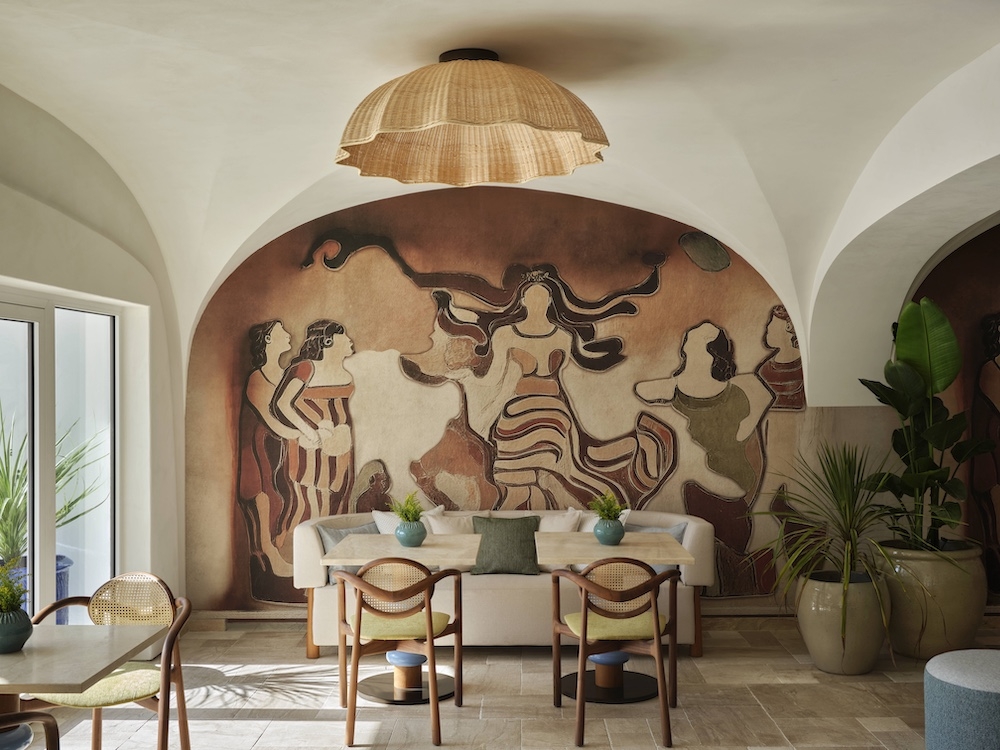
In the lobby, the design was deeply inspired by the Sardinian legend of the Janas, mythological figures said to inhabit caves, and adapts that into sculptural elements and thoughtful layered lighting. Coral gardens, shipwrecks and shifting sand are referenced through surface treatment, colour and finish, and sun-washed neutrals, sandy tones and deep marine blues are paired with ceramics and reflective materials. Original arched openings and preserved Orosei marble flooring complement the look.
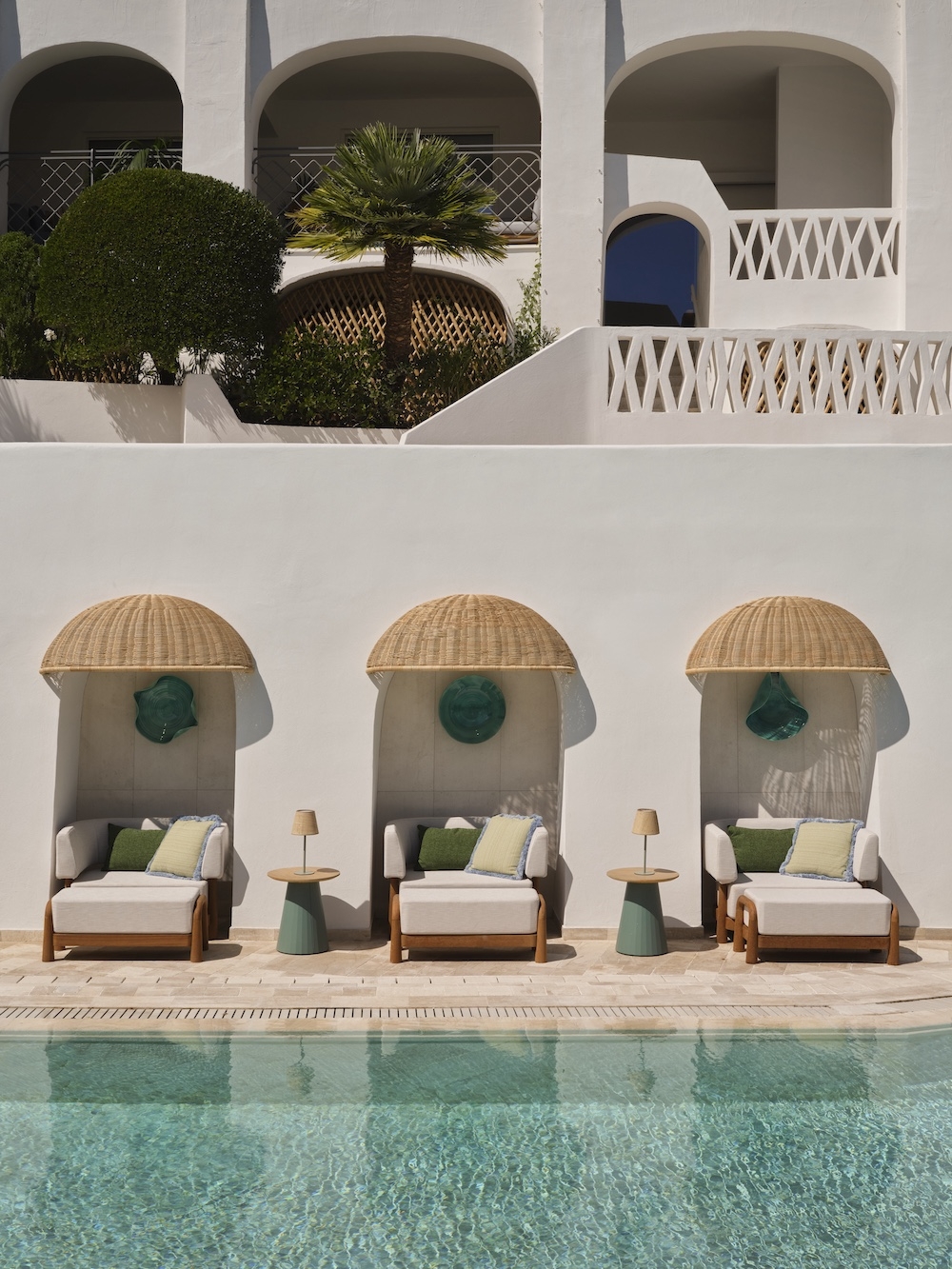
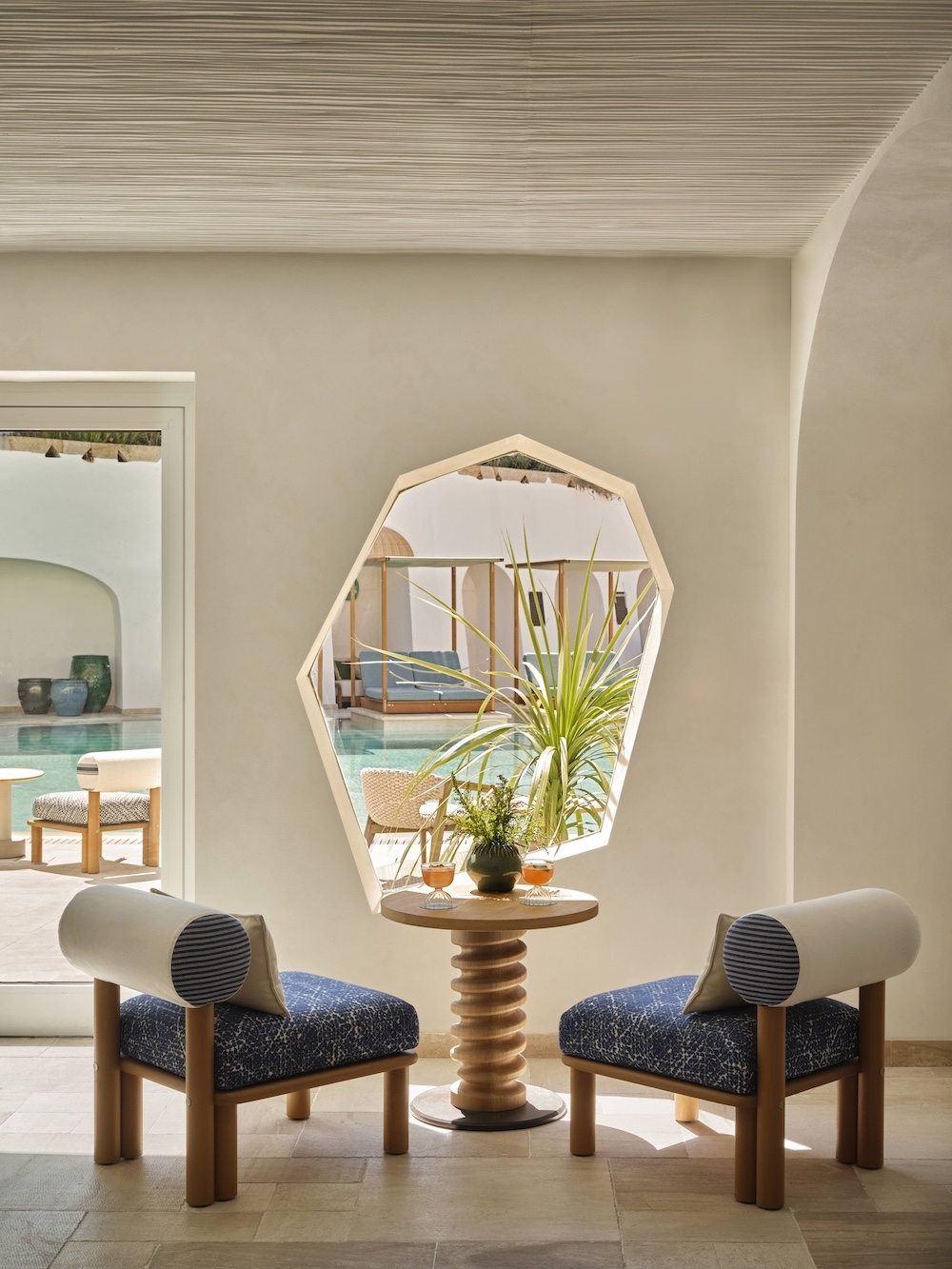
The W Lounge is perhaps where this inspiration is most noticeable, as rope lighting, ceramic surfaces and a commissioned mural by Kooness build a textured interior around the marina setting. At Tanit, the seafood restaurant named after the Phoenician goddess, organic plaster is set against wide views over the harbour. Across the resort, Meyer Davis worked with contrast: enclosed passages and open terraces, preserved architectural elements and new details, mineral surfaces and glossy finishes.
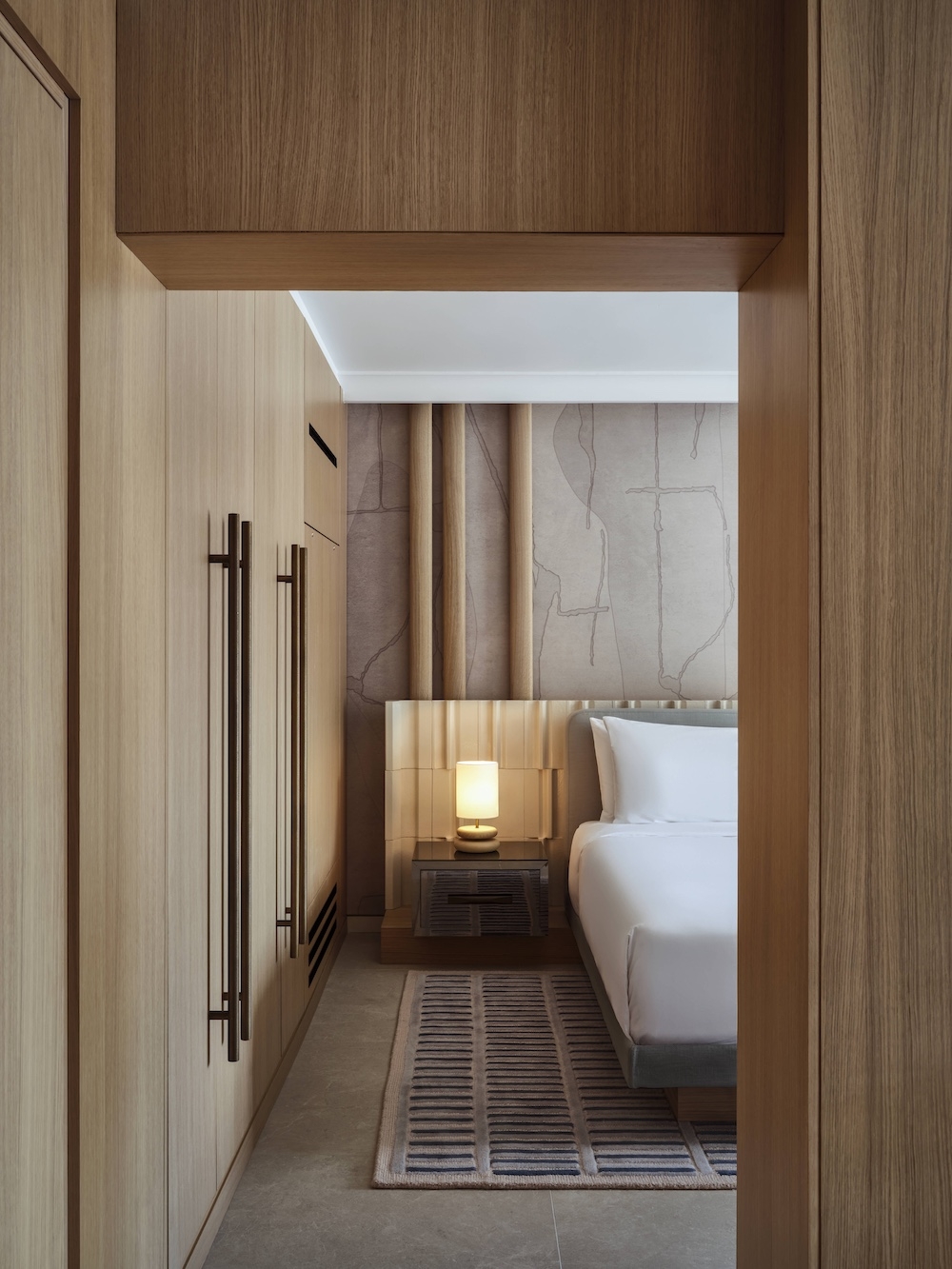
Kimpton Los Monteros Hotel Marbella
Kimpton Los Monteros Hotel Marbella is a landmark hotel in Marbella, Spain, developed during the city’s earlier golden period and now reworked through a more contemporary Mediterranean interior aesthetic. The project by El Equipo Creativo developed a hotel that couldn’t be placed anywhere else in the world, as they used Marbella’s climate, local materials and outdoor living culture as the main points of reference.
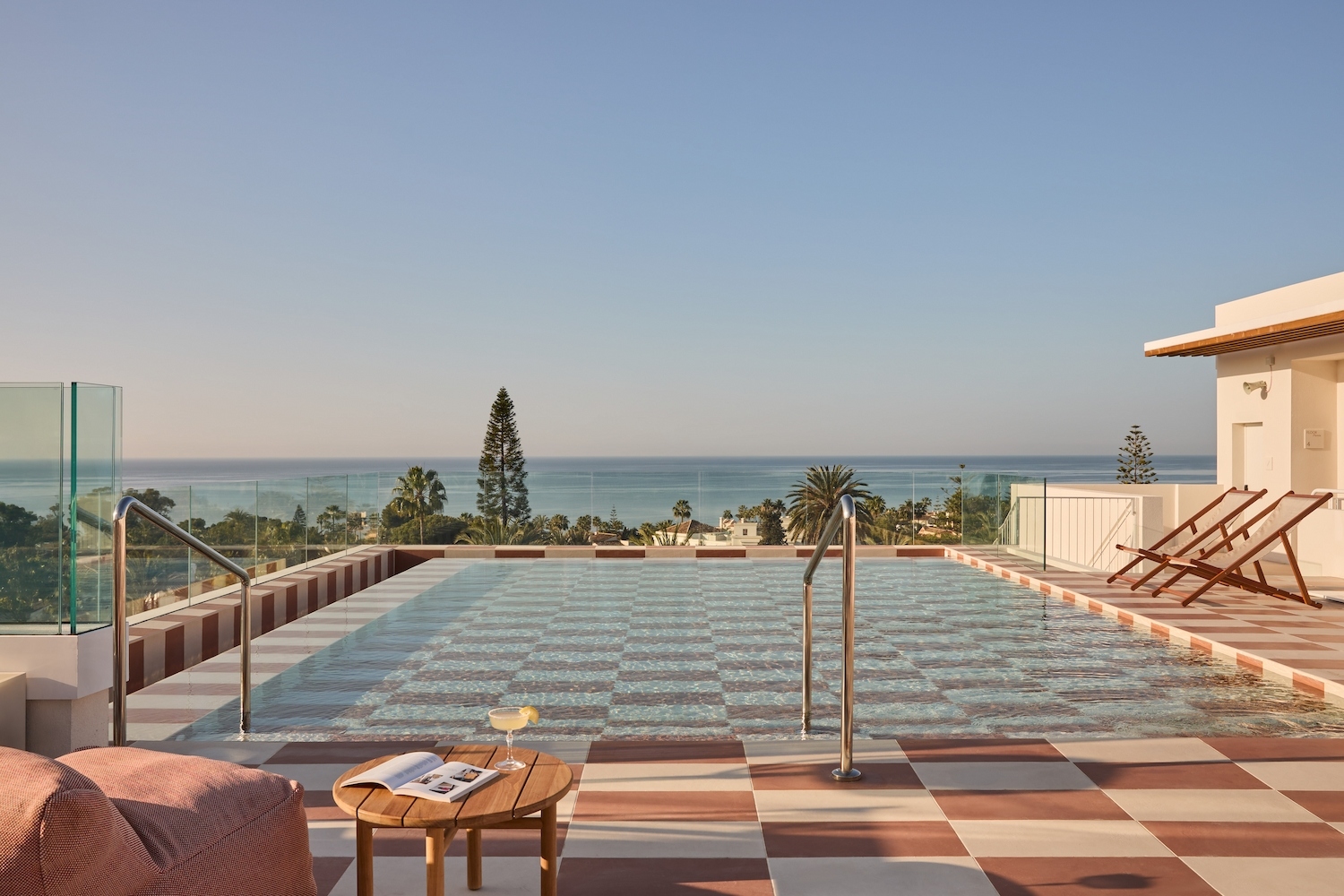
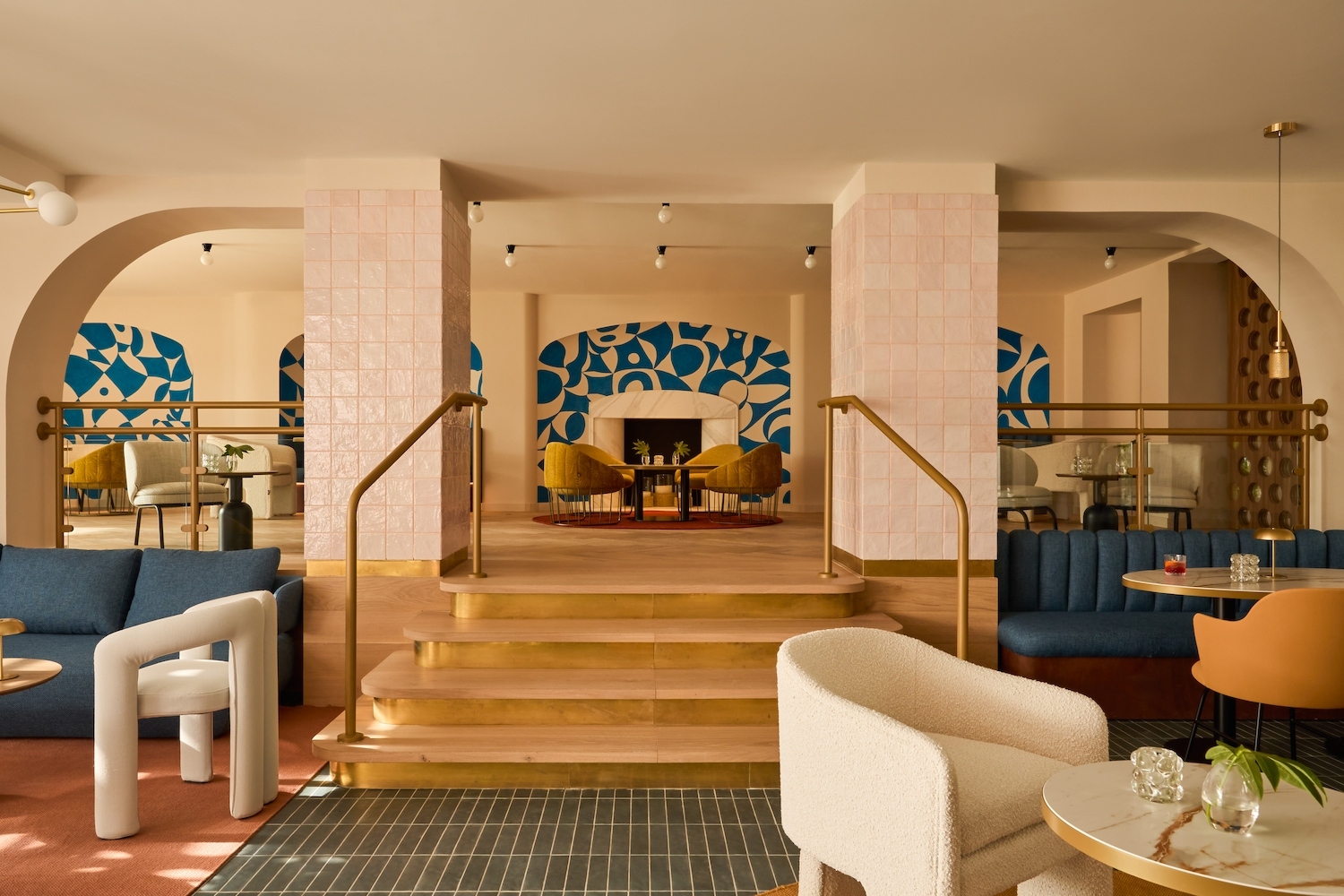
The materials used throughout the building are all known to the region, just like the architects envisioned, so guests are enveloped by warm terracotta, white plaster, natural wood, handcrafted ceramics and dense planting. These elements bring the interiors close to Andalusian architecture, but their modern look makes them suitable for all guests, no matter their nationality, as they look and feel comfortable and luxurious.
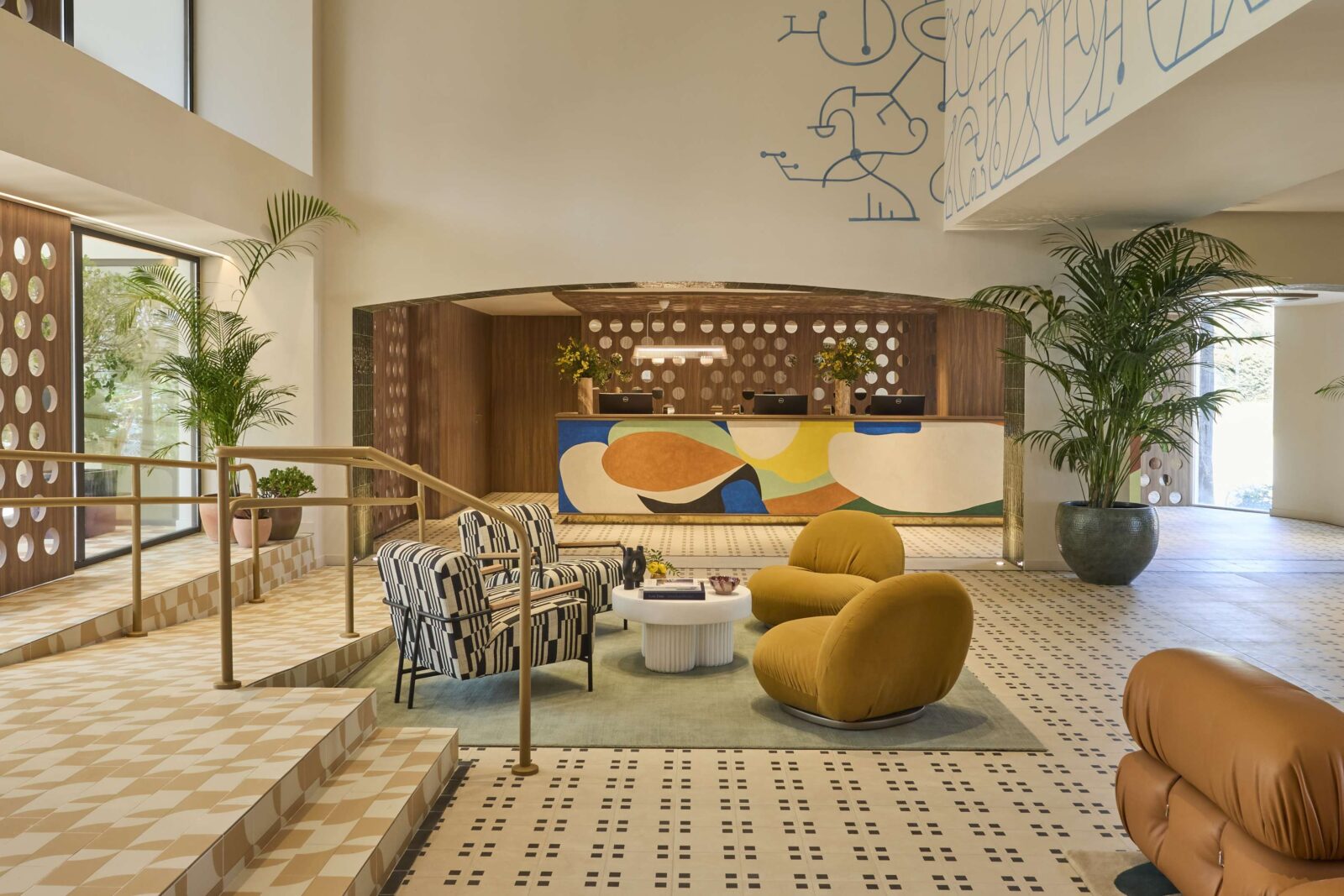
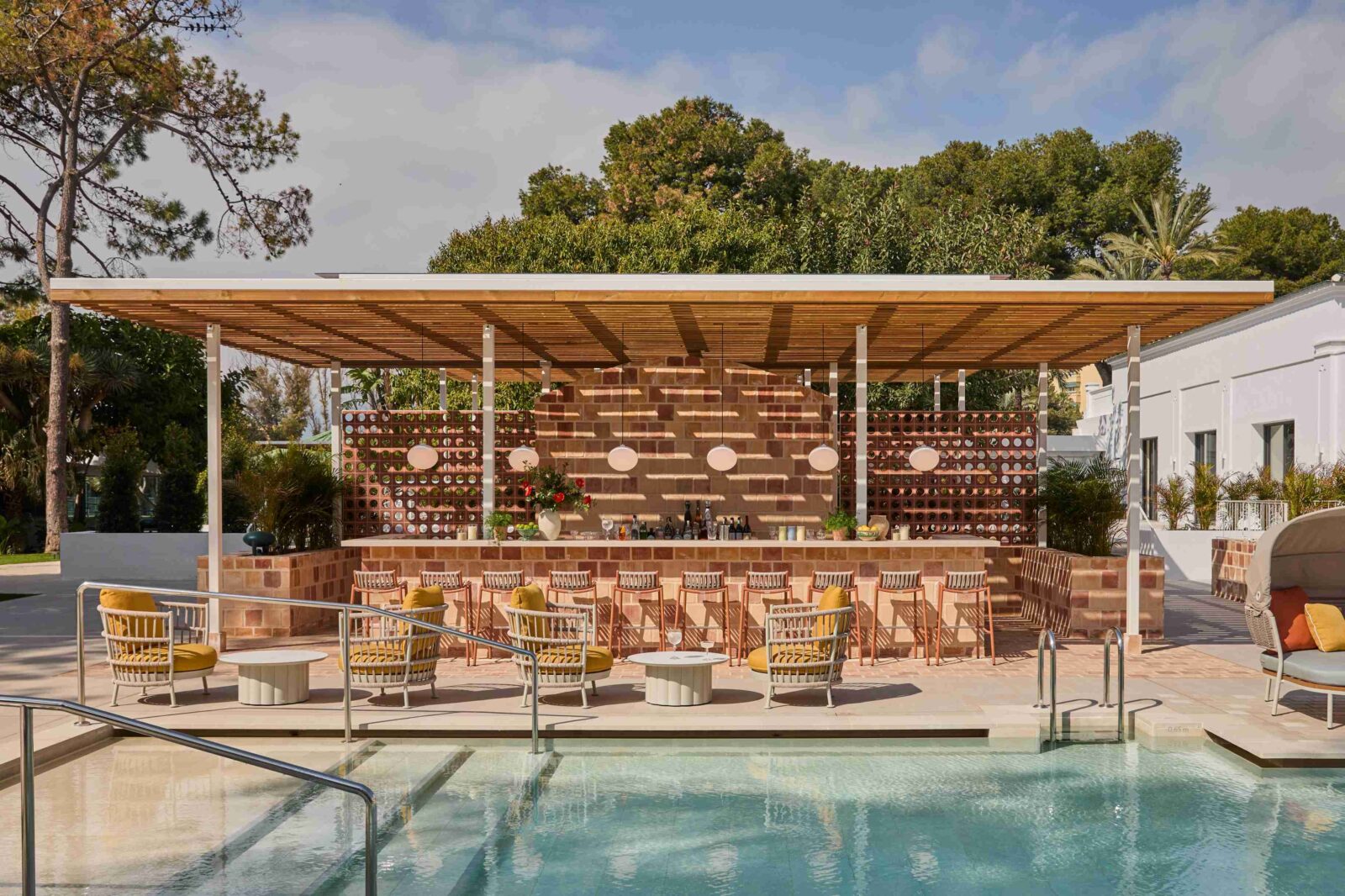
In the lobby, this mix of materials helps visually connect different parts of the hotel, including the main circulation areas, lounges, planted patios and Jara Restaurant. The restaurant continues the same layout with stepped terraces, so the dining spaces sit among greenery instead of being enclosed in a single room. The social spaces were given their own unique identities. Azul Bar is defined by a saturated blue palette and a ceramic bar, while the rooftop, Escondido, presents guests with unmatched Mediterranean views.
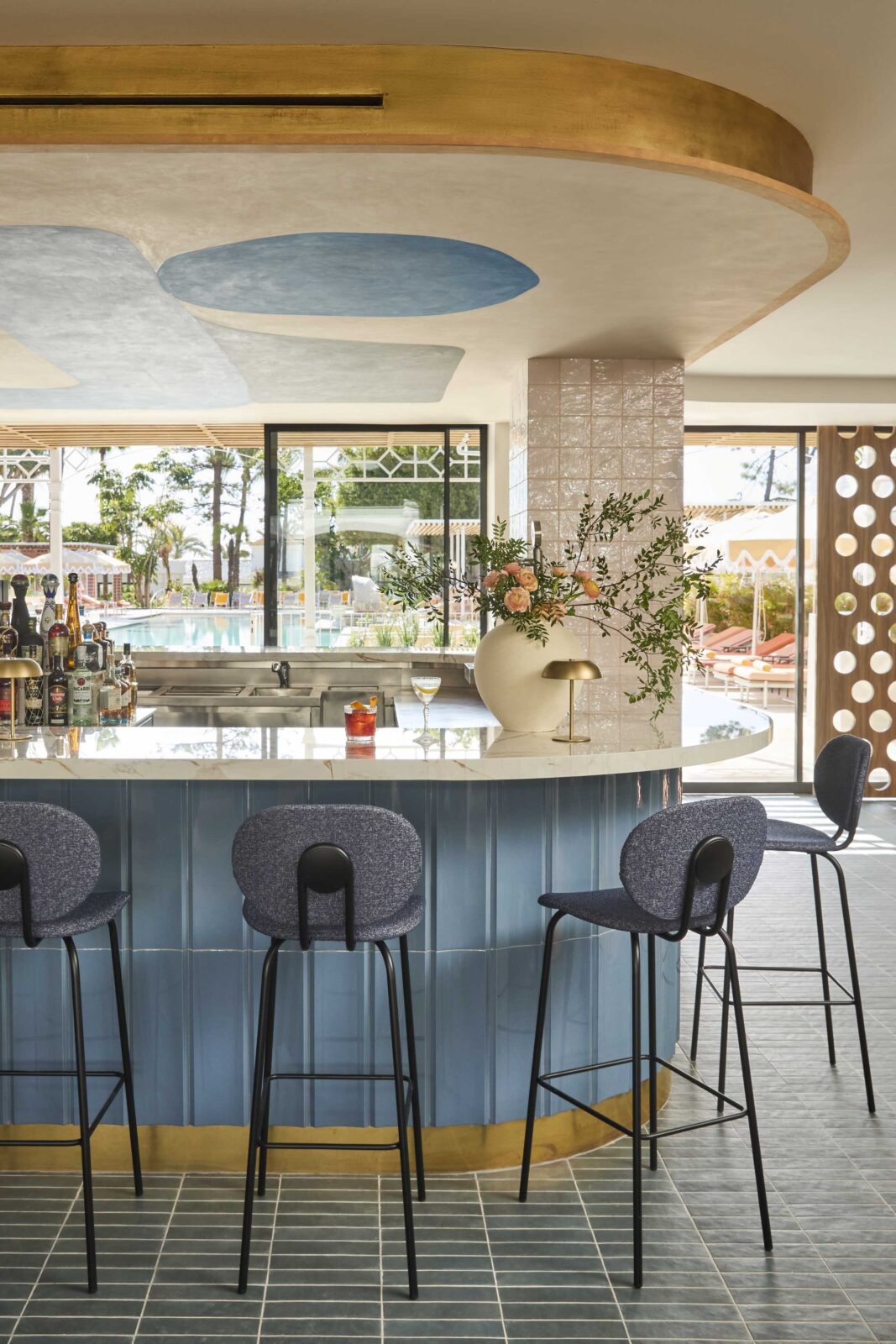
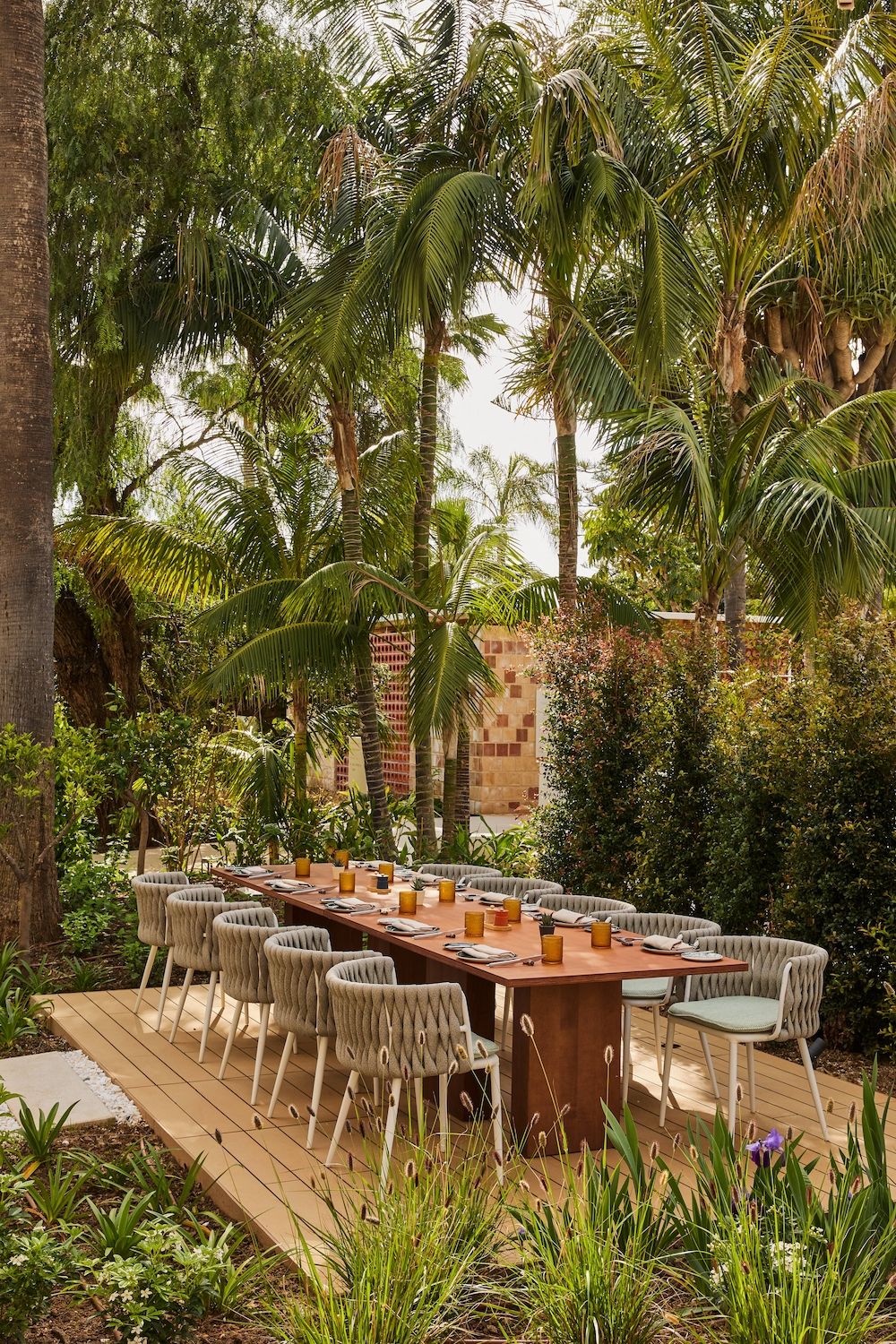
Throughout the hotel, the redesign kept original elements where possible, bringing in natural light and ventilation whenever possible and used local materials and craftsmanship to further connect the guests with the region.
Countryside escapades
Noise of Silence
Noise of Silence is a nature resort in Istra, Russia, on a site defined by uneven grounds and the edge of the Istra Reservoir. Instead of one main hotel building, the team from ZROBIM architects decided to spread the buildings across the land, compiling areas for accommodation, leisure and shared recreational use. A central pier acts as the centre of the resort, connecting the wellness spaces, recreation areas and residential neighbourhoods.
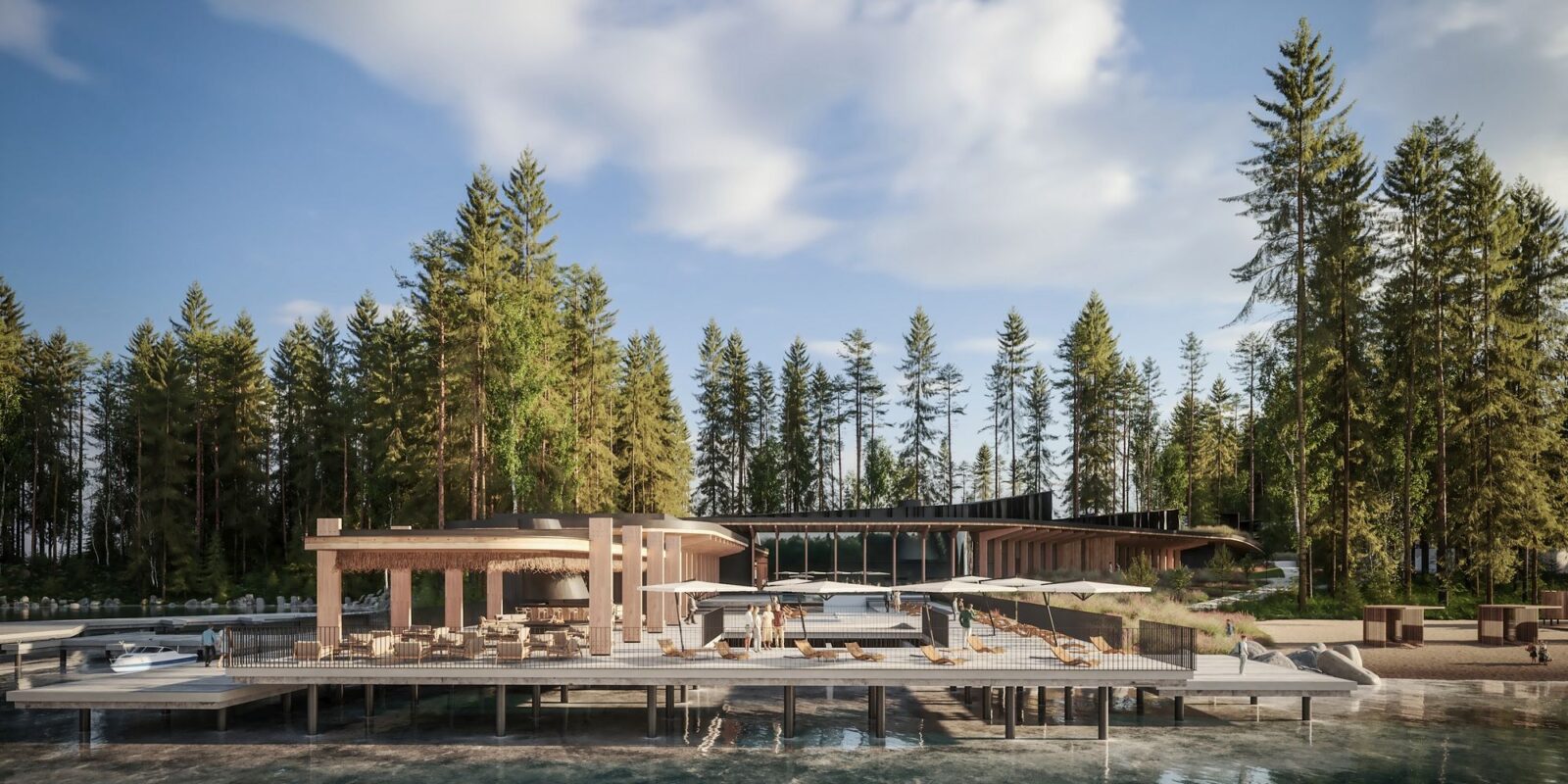
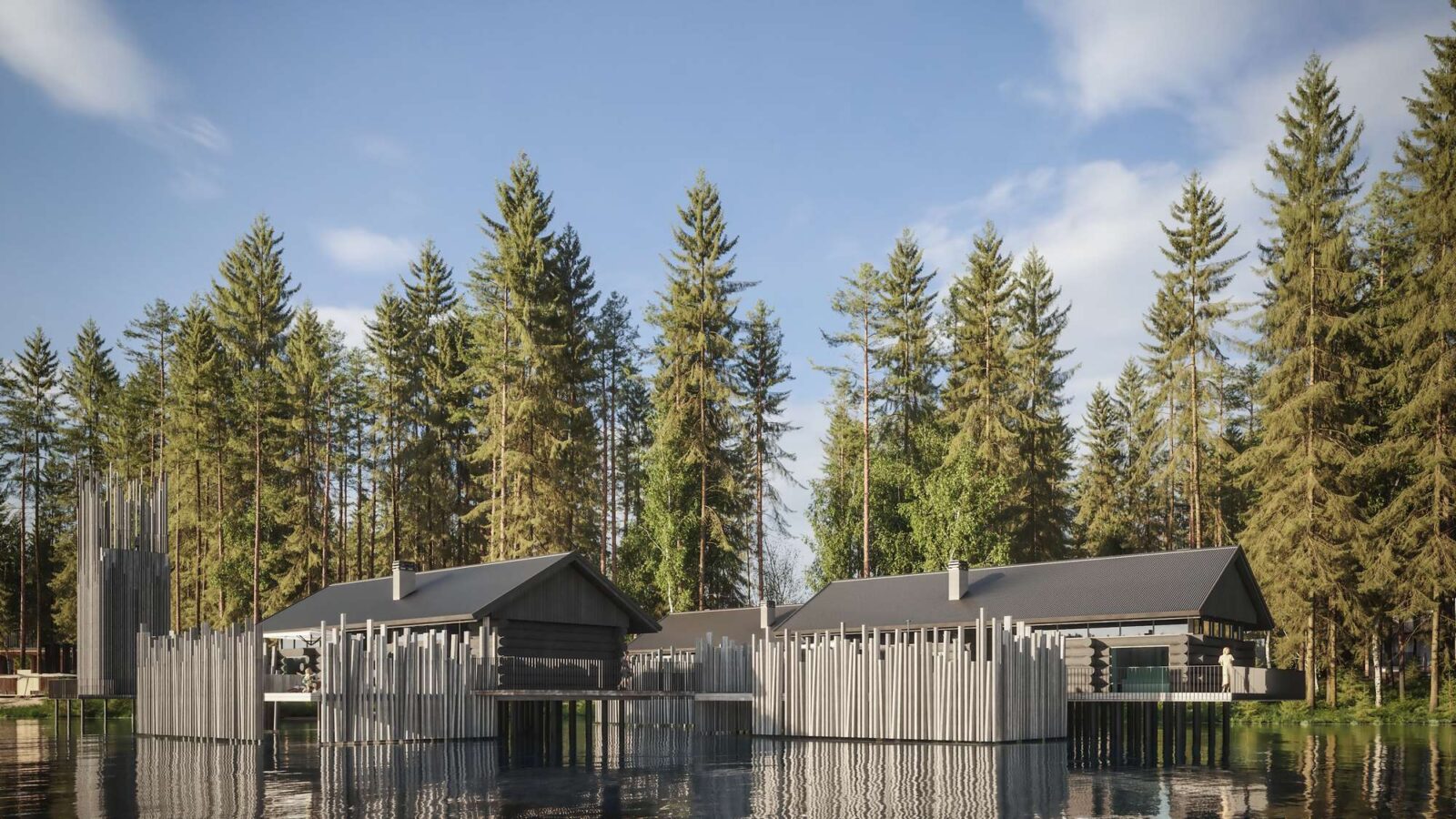
The resort will include a hotel block, glamping units, private residences, boathouses, a floating bathhouse, sports areas and small pavilions, with their positioning having been carefully selected to follow the topography of the site. The spa and restaurant form the main shared area, offering thermal spaces, treatment rooms, outdoor pools, a jacuzzi and terraces looking onto the reservoir for the enjoyment of the guests. This is the most active part of the resort, while the rest of the site is arranged in smaller and more private zones.
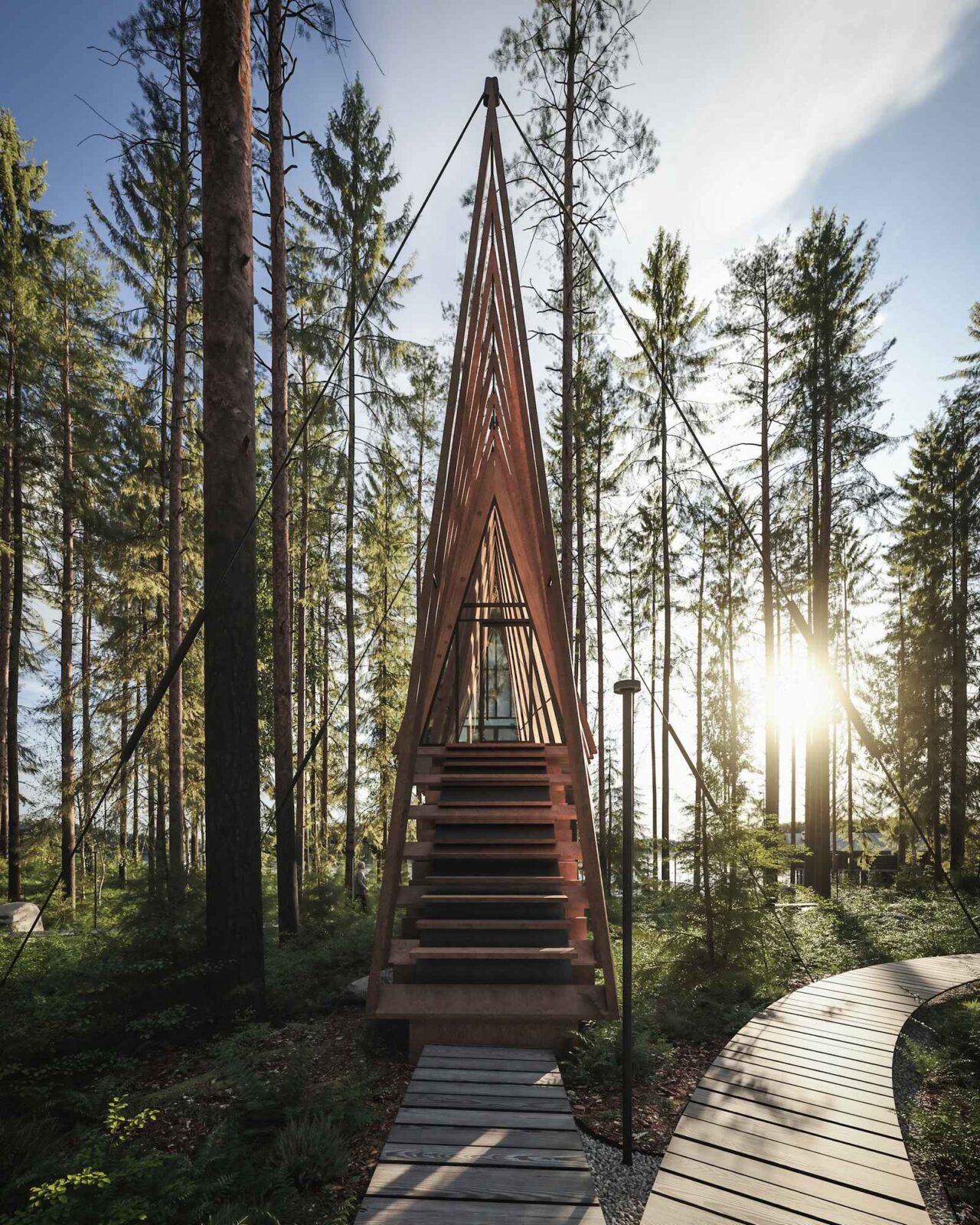
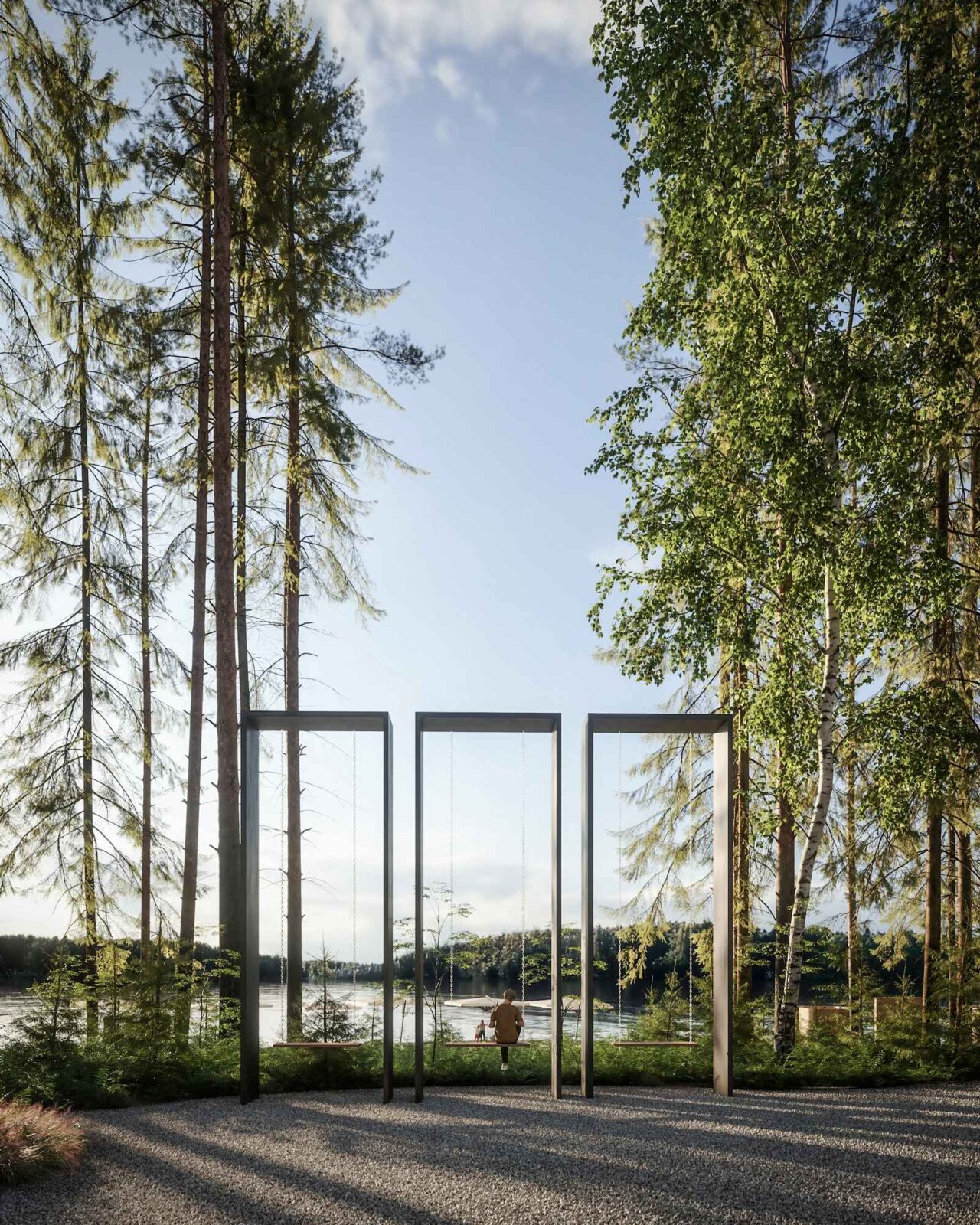
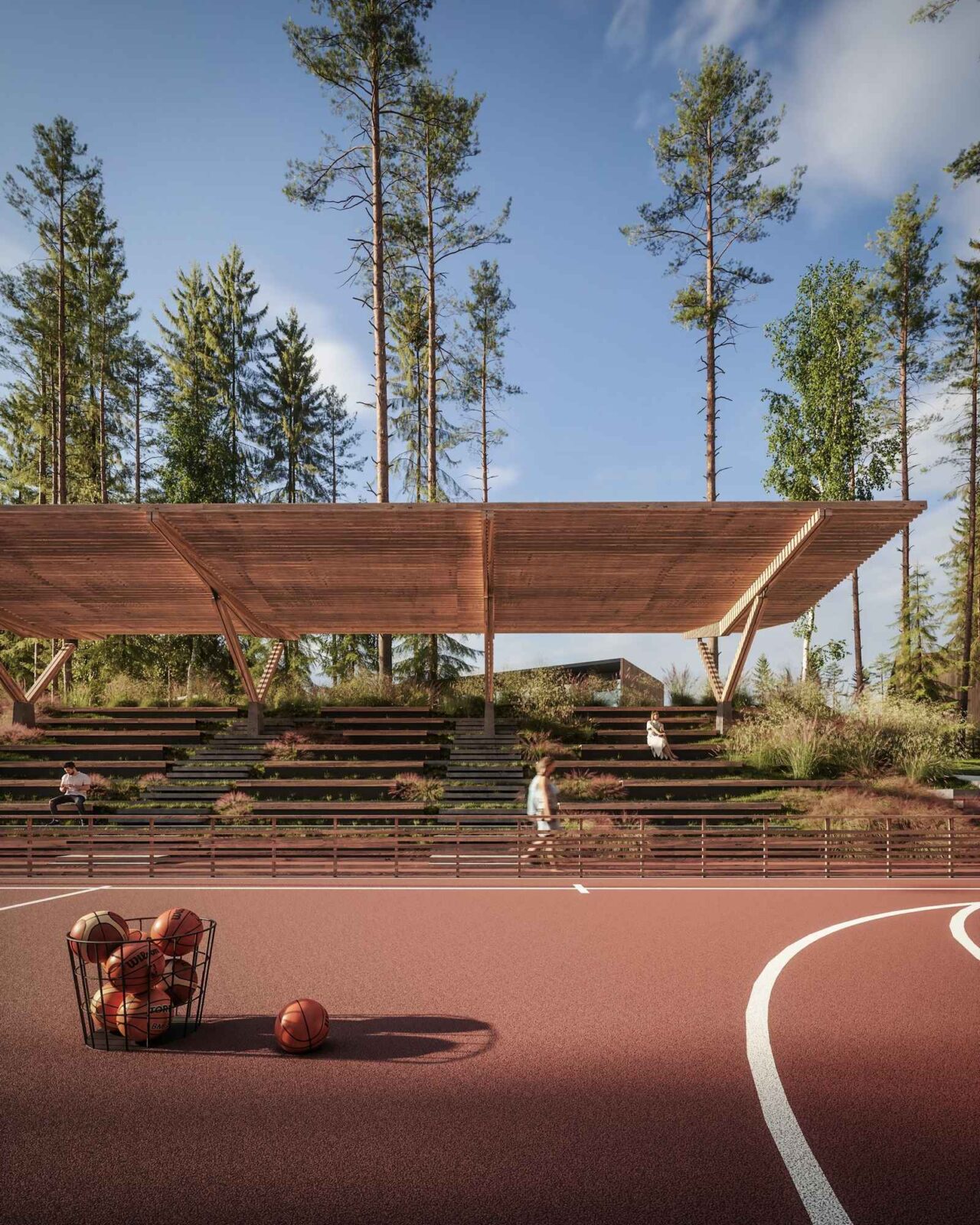
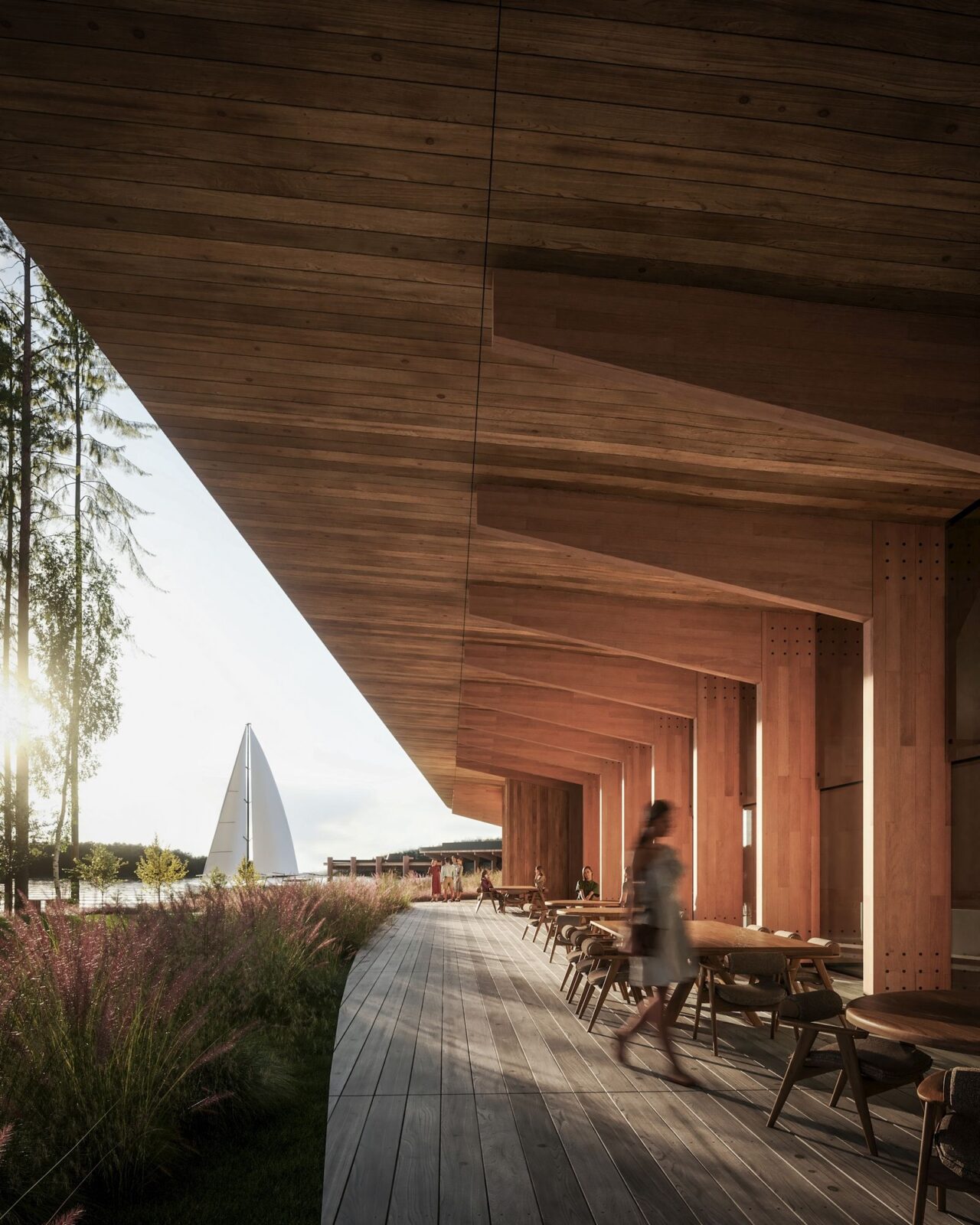
The resort offers 38 compact houses and 13 larger residences. The smaller units are grouped with shared gazebos and fire areas, while the larger houses are given more distance and privacy. Natural materials and soft forms were used for the design as a way to not clash with the natural surroundings.
Petit Bois Hotel Balatonfüred
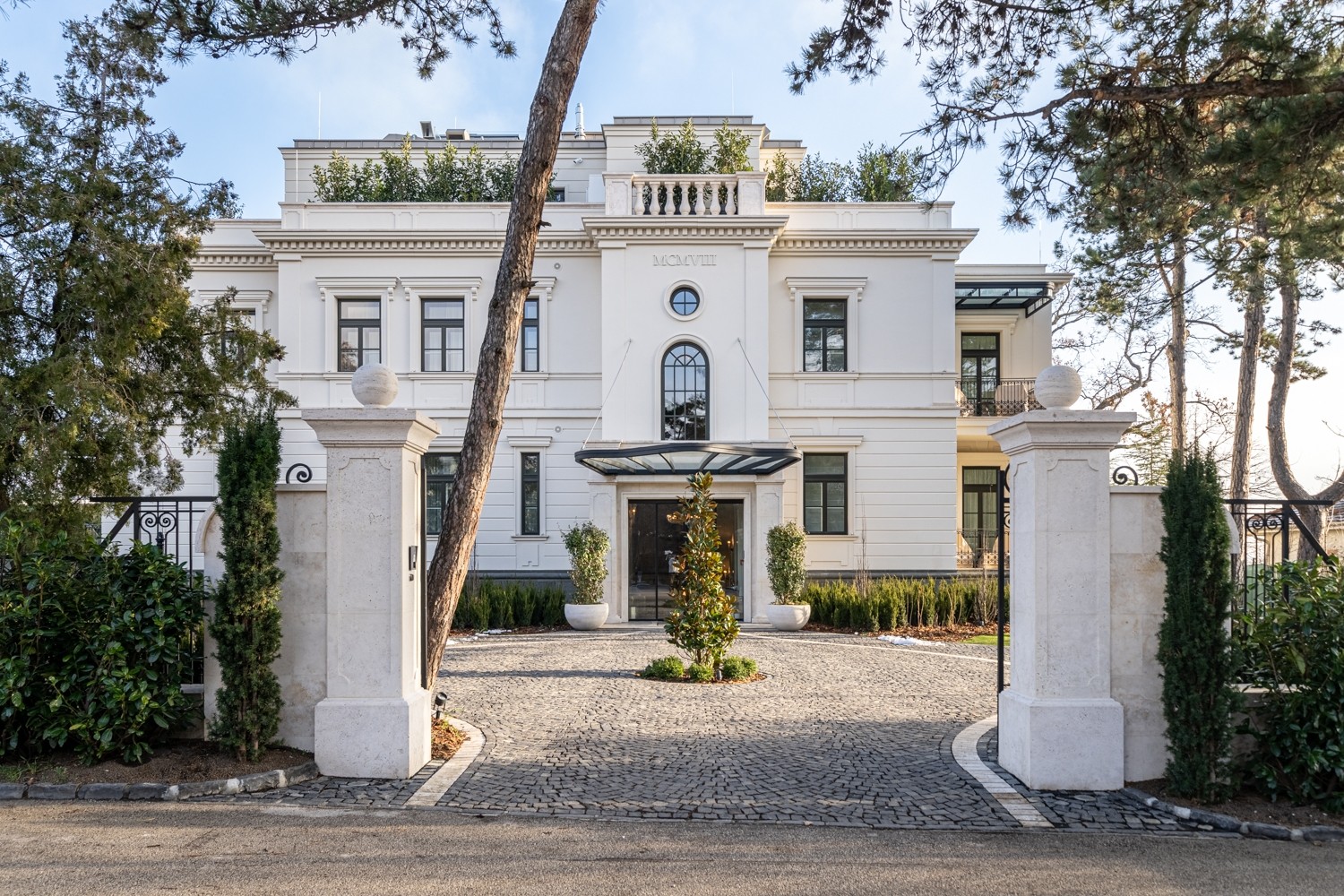
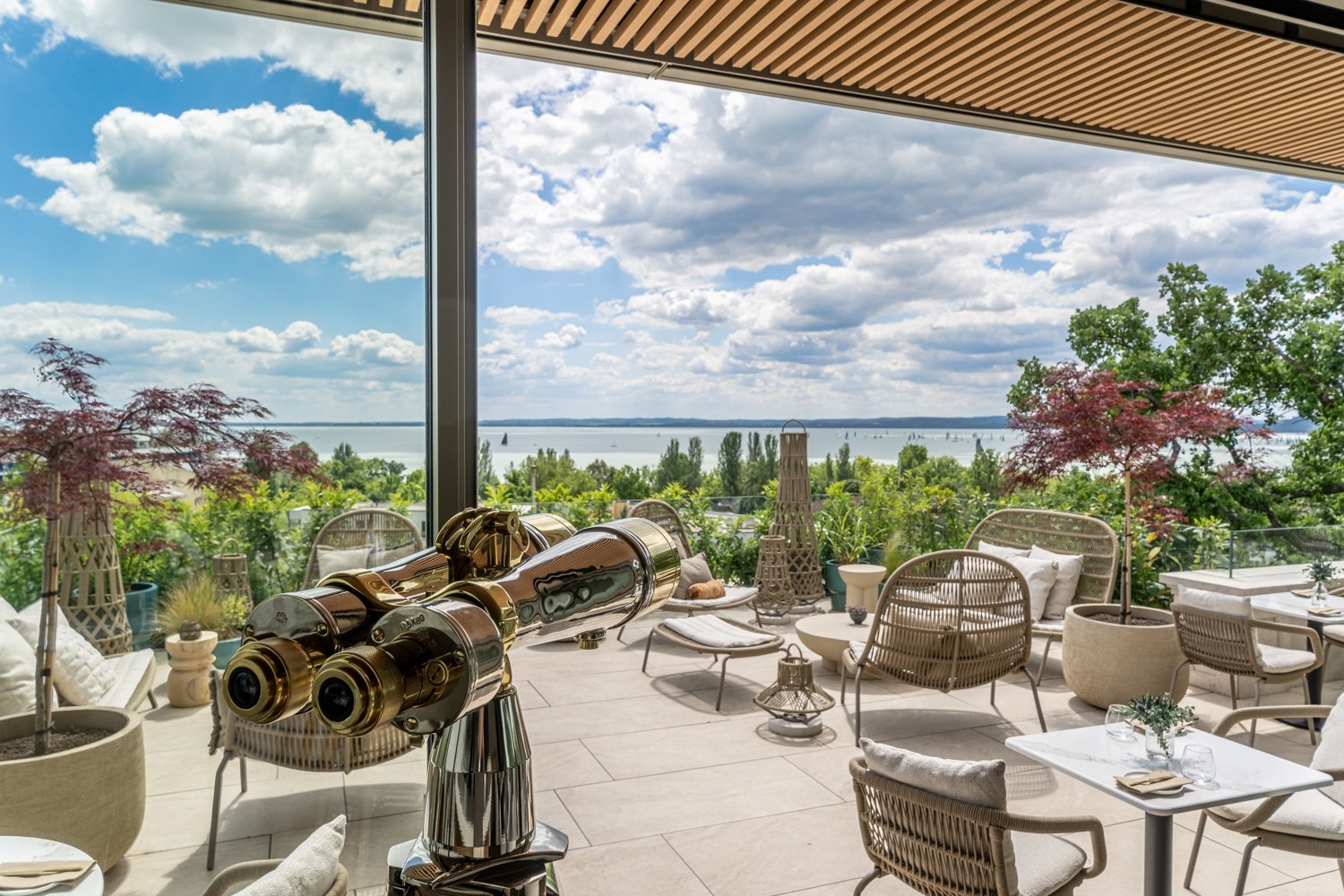
Petit Bois Hotel is located in Hungary’s Balatonfüred town, on Lake Balaton, one of Central Europe’s long-established resort villages. The hotel occupies the Rodostó villa, built in 1908 and reopened in 2024 after reconstruction and renovation. The villa’s original architecture was restored and safeguarded, with the site having been transformed into a five-star hotel, with five apartments on each floor and three additional modern apartments.
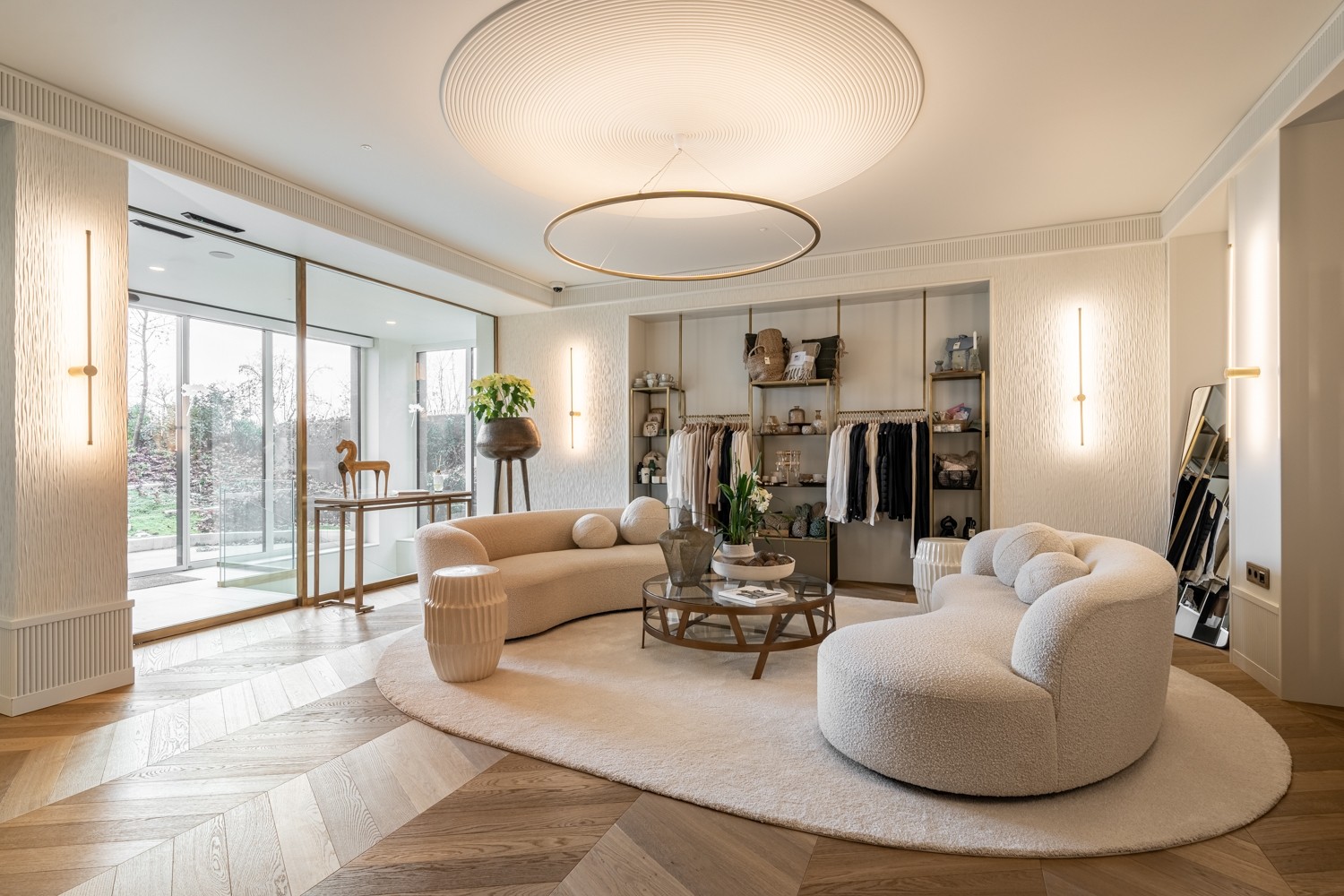
The interiors by Eszter Radnóczy were inspired by stylistic movements from the turn of the century, when Balatonfüred, known for its thermal waters, was a star in the spa culture and seasonal town life. In the lobby, that reference appears in an atmosphere that is quite formal, made possible by period details. A local motif is, perhaps, the hotel’s clearest inspiration: Balatonfüred’s protected flower, the anemone, appears in the wallpaper graphics and signage.
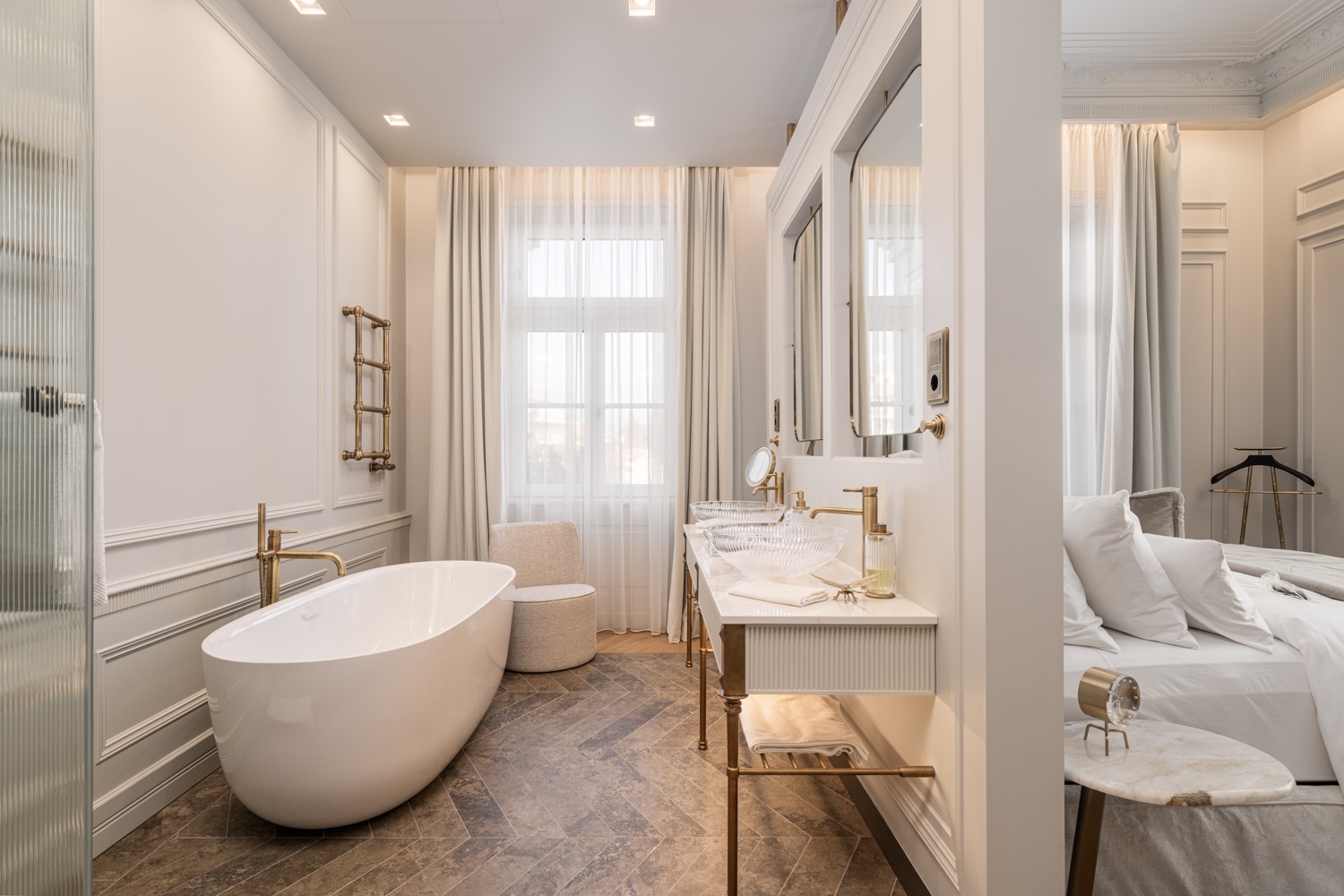
A large part of the design was based on the balance between preserved elements and newer additions. Original stone cladding and old timber windows were saved and restored, while stucco details and a mix of classic and contemporary furnishings bring the villa closer to the comforts and looks of present-day use. The materials are layered and rich, which suits a building of this age.
Whether the plan is a few days in the city, a week by the sea or a slower stay in the countryside, these hotels show how much good design can shape a summer trip.


