

Header: Mark Scott / Jack Hardy
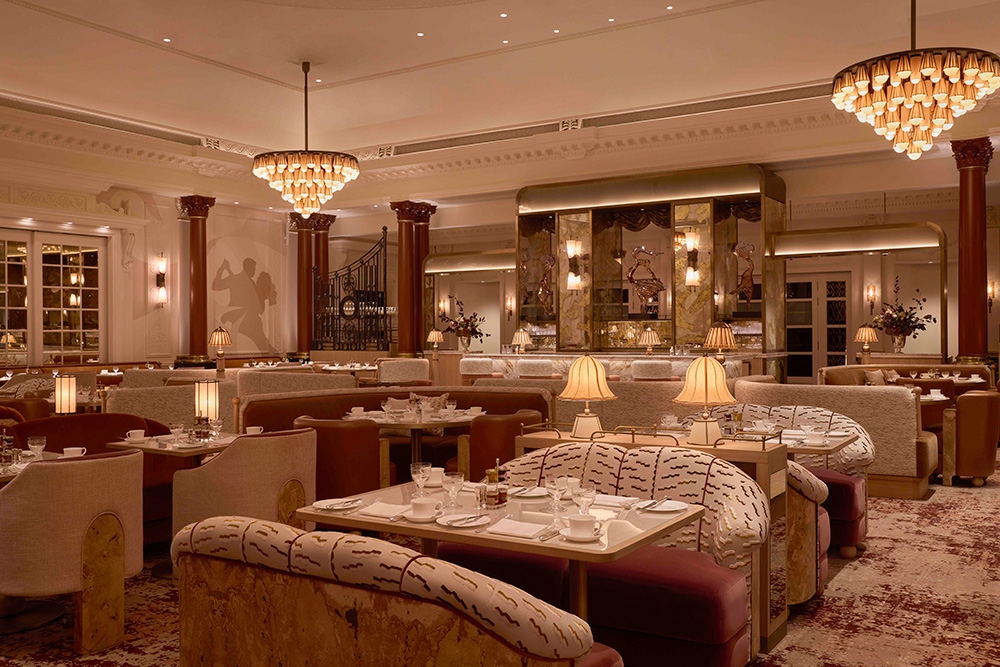
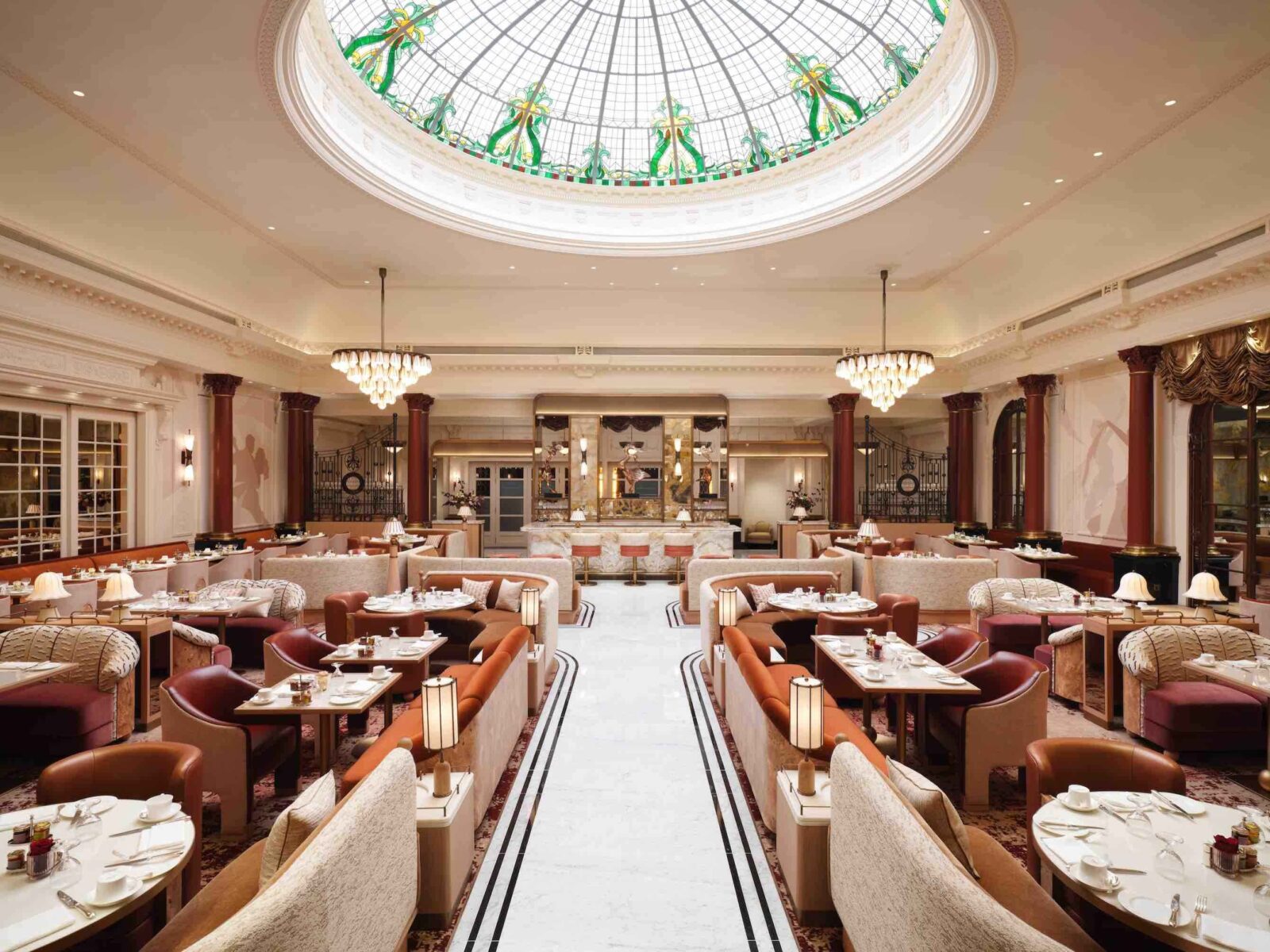
The Gallery at The Savoy in London is one of those projects that appear in conversations between interior and lighting designers, were it not the perfect blend of class and luxury. Completed in November 2024 for Fairmont Hotels, Atelier Lighting created the unique lighting design in collaboration with Brady Williams Studio, responsible for the interior design, having even received an honourable mention at the LIT Lighting Design Awards.
An ambitious brief
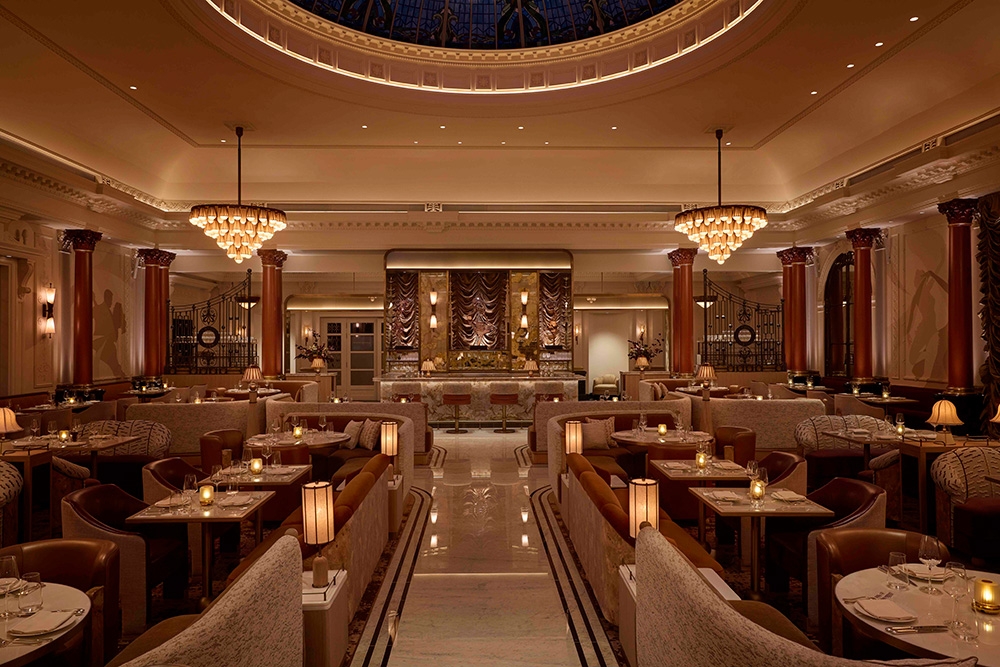
The brief focused on the former Thames Foyer, long associated with tea at The Savoy. Its generous proportions, high ceilings, and large glass dome made it perfect for breakfast and afternoon tea, but by midday and again in the evening, it struggled to keep people in. The objective was to counter this by reworking the space. Through a modern and thoughtful lighting design, the team hoped the Gallery would remain popular from lunchtime to pre-dinner, encouraging guests to stay and have a drink rather than just pass by.
Architectural challenges
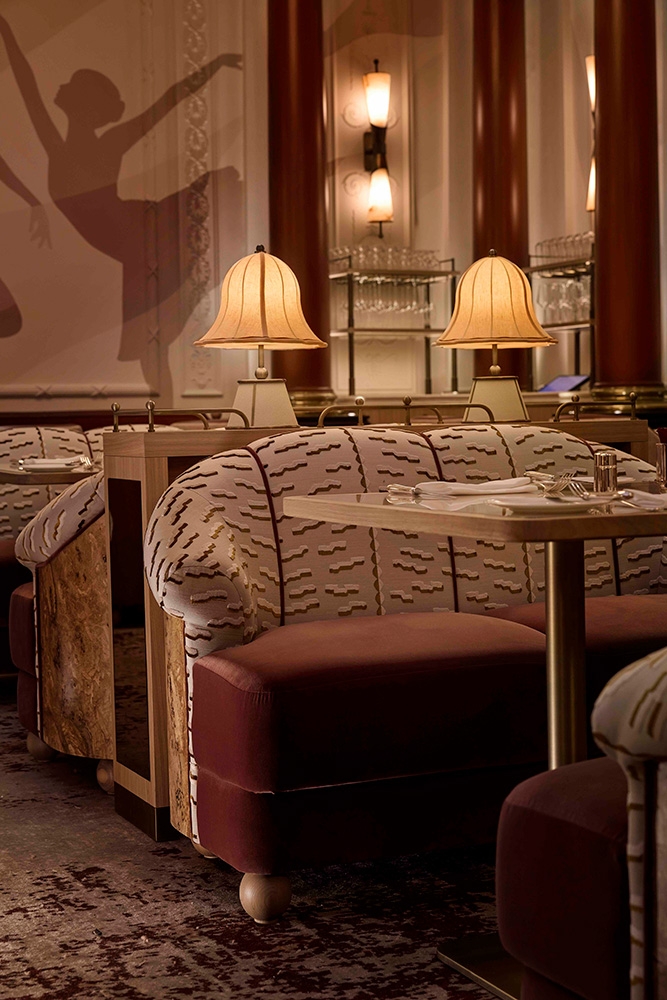
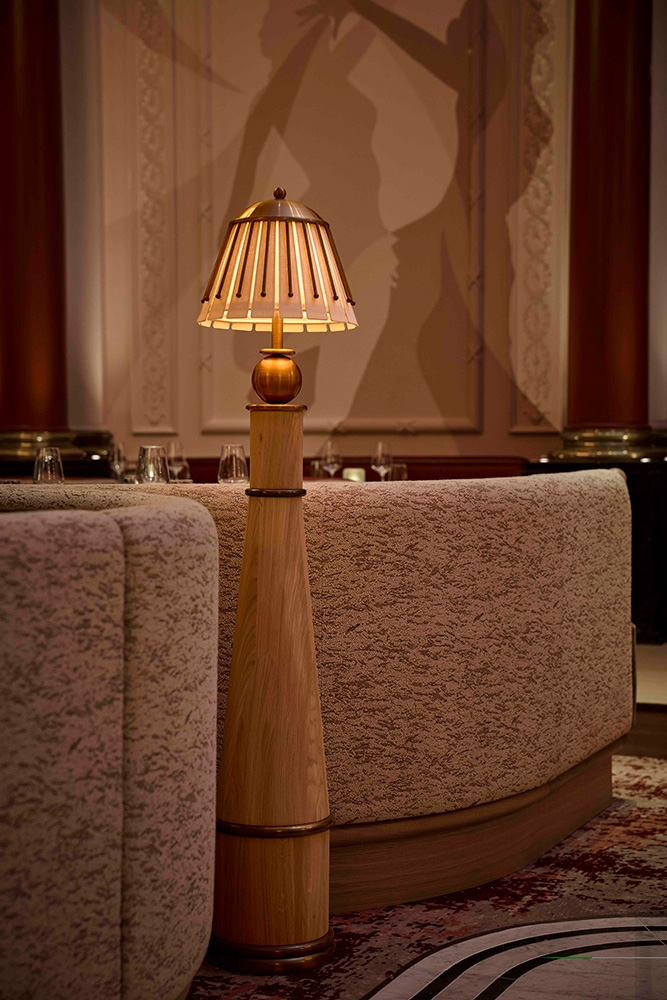
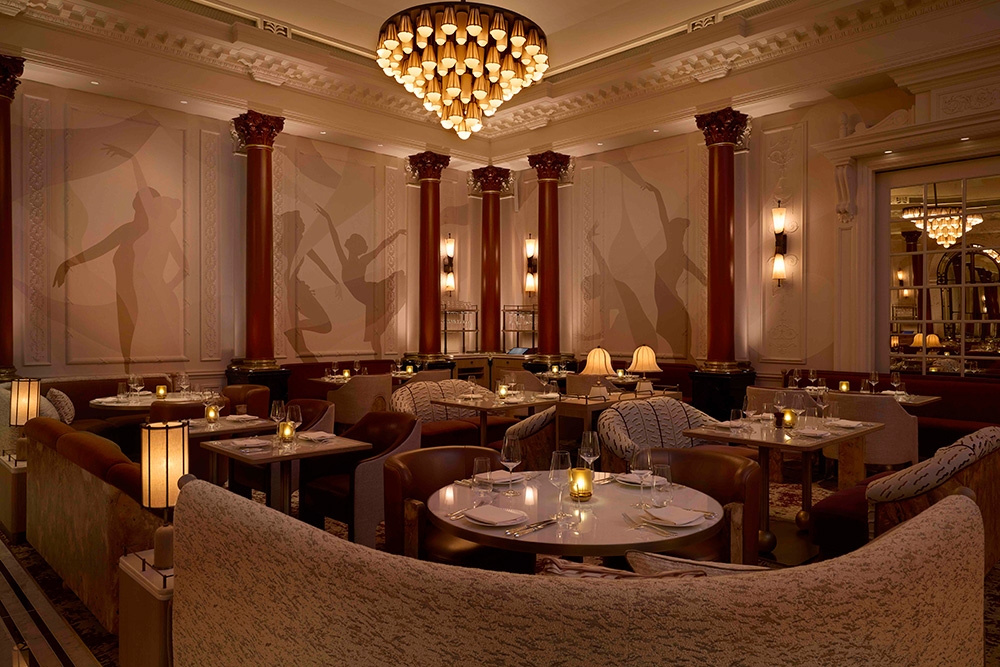
Scale proved to be a challenge right away, as the Gallery is a large, open volume where any changes would be immediately noticeable. It was important for the space to be flexible, as it would need to cater to different needs throughout the day without relying on physical changes to furniture or layout – a late afternoon drink demands a different ambience from a morning coffee. This put pressure on lighting, as it was the key element to hold everything together.
The 25-foot glass dome made things harder. Because it was open to the sky, the daylight kept changing with the weather and the time of day. That meant the room could look different from one hour to the next, which was a problem, as sudden changes in light could disrupt the atmosphere and risk putting people off staying in the space. With this in mind, a big part of the job was finding a way to keep the lighting consistent without losing what already made the space feel like The Savoy.
Recreating the London sky
The decision was made to block all natural light from the dome and replace it with concealed RGBW luminaires installed behind the glass. These fixtures were individually programmed to mimic the sun’s position, colour, and intensity, allowing the lighting to move through a controlled sequence from morning to evening.
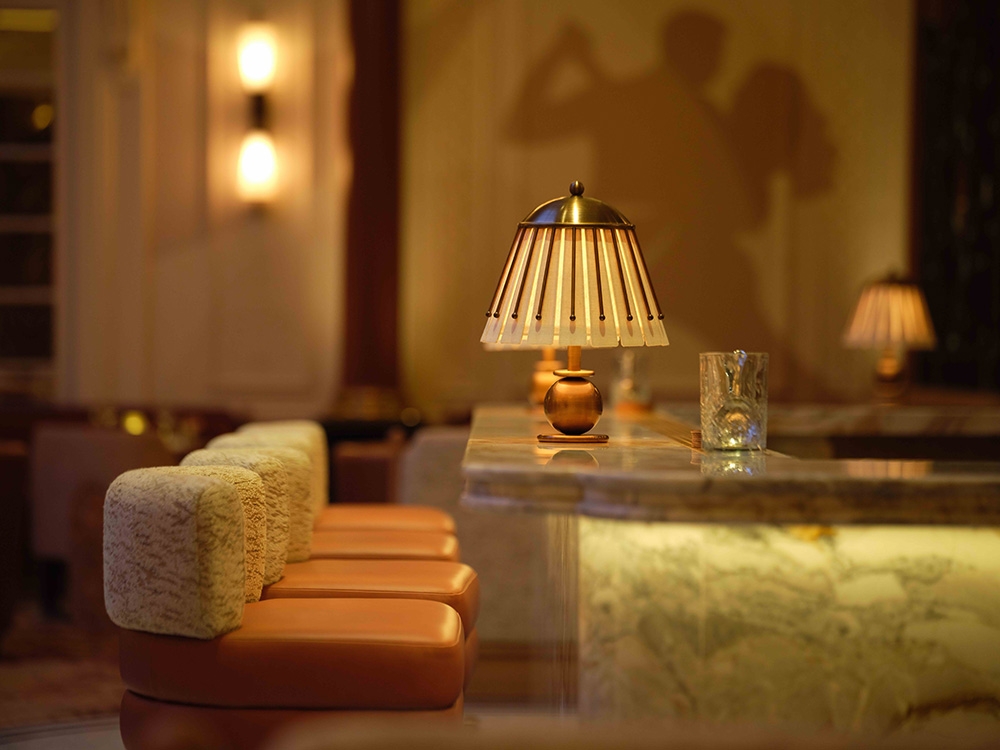
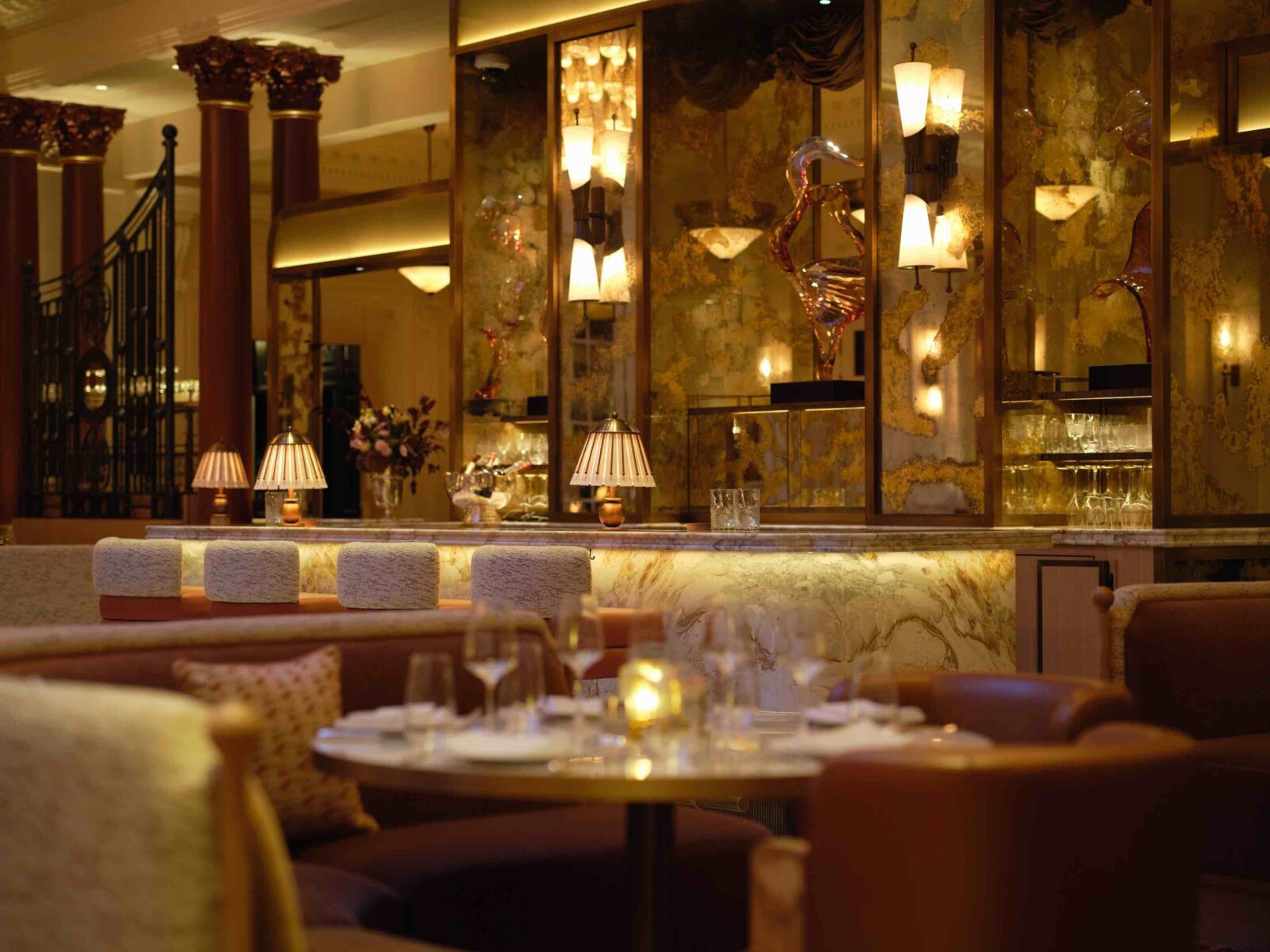
With this system in place, the team could recreate a bright morning, a warm sunset, or a deep blue twilight, regardless of the conditions outside. This gave the space a constant, predictable atmosphere and allowed other lighting elements to be introduced with more precision. Discrete architectural lighting and contemporary spotlights were then added to guide attention within the room and support its different modes of use.
Green intent
The team tried to keep the project as sustainable as they could. Where possible, they used materials with high recycled content and selected manufacturers that could substantiate their circular-economy claims. The lighting design also relies on high-efficiency luminaires and automated control systems, which help reduce energy use day-to-day.